Historic Dunfermline
William Schaw: Architect of the Scottish Renaissance
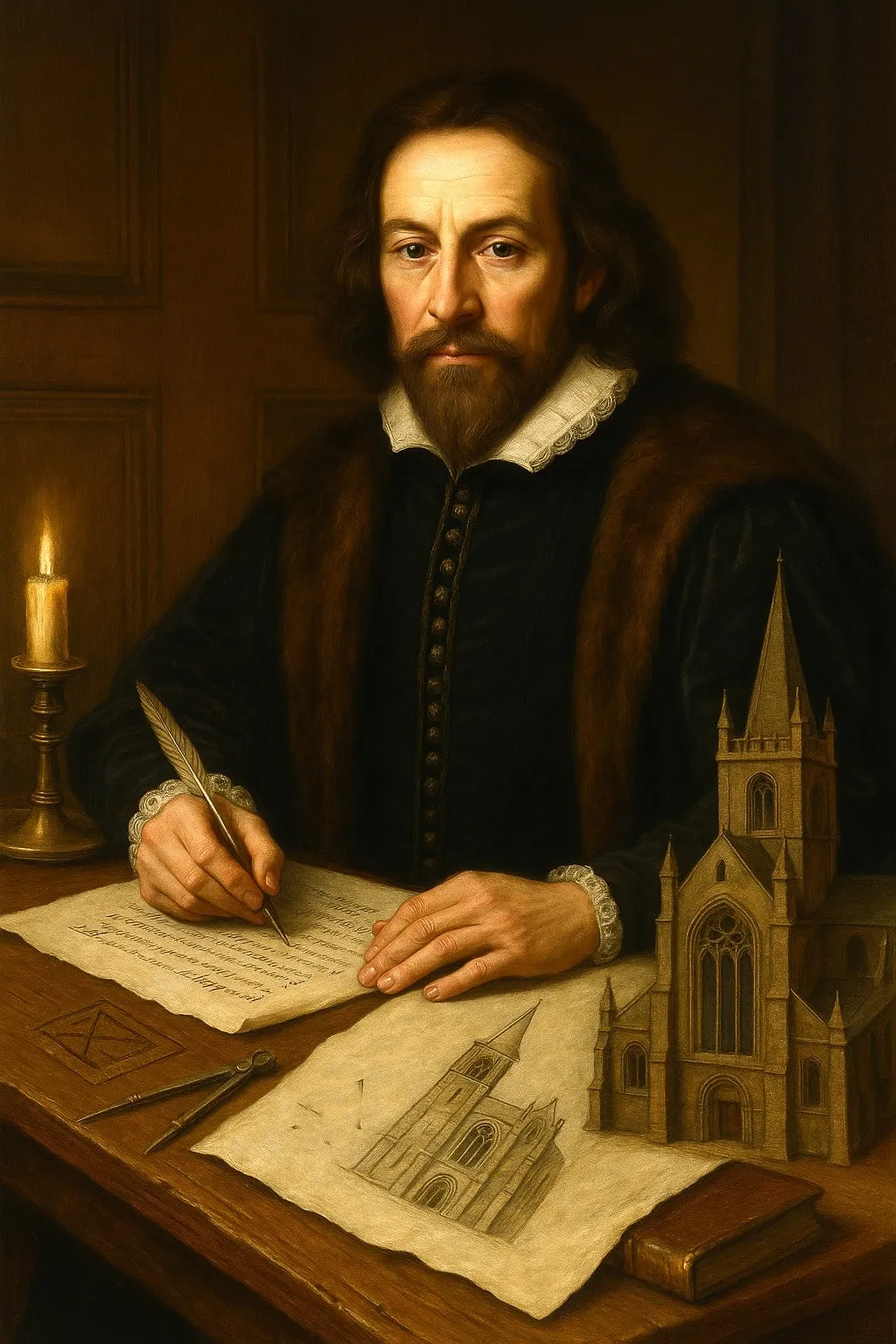
William Schaw: Architect of the Scottish Renaissance and Guardian of Dunfermline’s Legacy.
William Schaw, a name often overlooked in broader Scottish history, stands as a cornerstone of cultural, architectural, and political development in late 16th-century Scotland. From his role as Master of the King’s Works to his foundational influence in the evolution of Freemasonry, Schaw’s legacy is deeply woven into the essence of Scottish identity. The Royal Burgh of Dunfermline is a striking example—a town whose fortunes were directly shaped by his architectural vision and administrative skill.
Born around 1550, William Schaw was the second son of John Schaw of Broich, a family with close connections to Scotland’s royal court, notably through their position as royal wine-cellar keepers. Despite early family scandals—including an accusation of murder and a temporary loss of their estate—the Schaws returned to royal favour. Young William began his courtly service as a page in the household of Mary of Guise, a formative experience that launched a remarkable career.
By the 1580s, Schaw had become a trusted royal servant. Aligned closely with Esmé Stewart, Duke of Lennox—King James VI’s favourite—he rose in prominence as a courtier, clock-keeper, and, in 1583, as Master of the King’s Works at the age of 33. This appointment was extraordinary in scope, placing him in charge of architecture, engineering, festival design, diplomacy, and royal counsel.
Schaw’s political and architectural talents earned him important diplomatic missions to France and a pivotal role in accompanying King James VI to Denmark in 1589 to secure his marriage to Anne of Denmark. Upon their return, Schaw was entrusted with preparing royal residences, including significant projects at Holyrood, Stirling Castle, and most notably Dunfermline—Queen Anne’s future favoured retreat and part of her Scottish jointure estate.
The Lordship of Dunfermline, including the Abbey Lands in Fife, was a part of her “Morning Gift”, which King James VI granted to Queen Anne. It was a traditional present given by a husband to his wife on the morning after their wedding night, an ancient custom prevalent in northern Europe at the time. Schaw was soon appointed her Chamberlain, becoming a trusted figure within her household.
In May 1590, Schaw was granted £2,400 by royal warrant to repair and restore the Queen’s properties in Dunfermline ahead of her visit. These works included the Queen’s House, the Abbey, and almost certainly the adjacent Dunfermline Royal Palace, which had long served as a residence for Scottish monarchs.
The palace, originally begun by King James I and later extended by James IV and James V, needed modernisation. Schaw likely oversaw improvements to the palace’s domestic quarters, ensuring they met the expectations of a Renaissance queen.
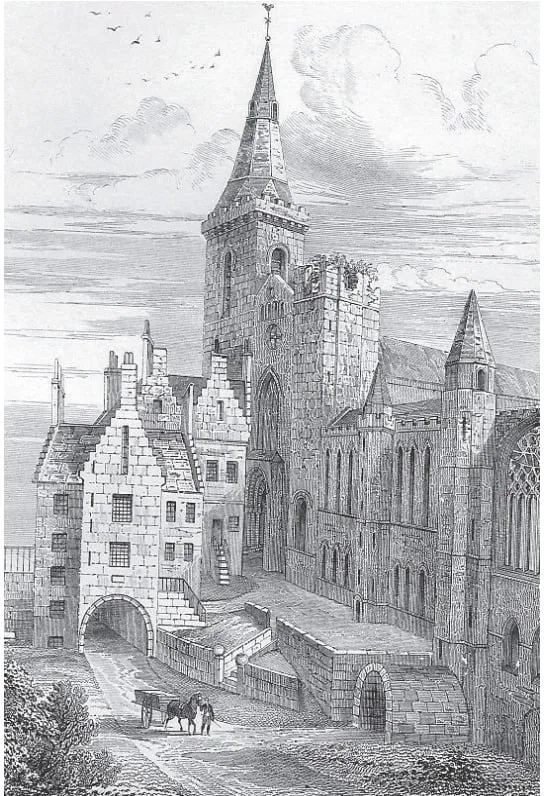
Under his supervision, the Queen’s House, positioned before the Abbey’s west front, was not just repaired but almost entirely rebuilt. A Latin plaque once commemorated this achievement, connecting Schaw’s work directly to royal patronage and Renaissance ideals of beauty, order, and civic pride.
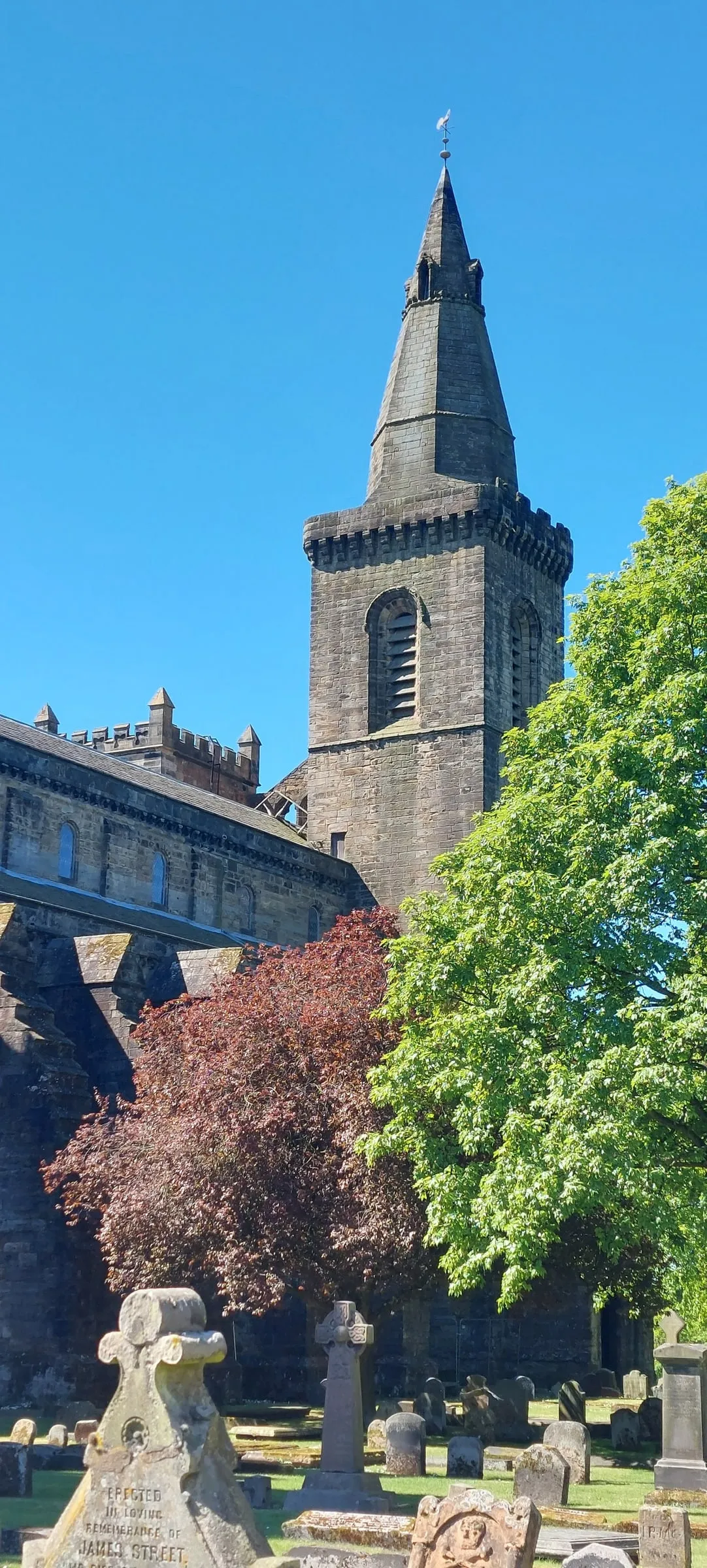
Schaw also undertook vital restoration work on Dunfermline Abbey, then in a state of decline. He paid particular attention to the nave, aisles, steeple, and north porch. His most enduring architectural contribution was likely the reconstruction of the north-west tower, completed in 1594 with a new upper stage, spire, and bartizans—a project that combined visual elegance with the structural language of fortification.
Despite his stature, Schaw wasn’t immune to the upheavals of the age. He was listed by the Kirk as a suspected Catholic, a reflection of the tense religious and political climate. In 1596, he was wounded in a duel while serving as a second to Walter Scott of Buccleuch, a legendary Border noble. The episode offers a glimpse into the volatile intrigues of the Scottish court, in which even trusted figures like Schaw could be drawn into personal and political conflict.
Yet Schaw’s influence extended well beyond building works. As General Warden of the Masons of Scotland, he issued the now-famous Schaw Statutes (Decrees) in 1598 and 1599. These documents standardised the practices of operative masons, laid the foundation for symbolic Freemasonry, and established lodges such as the Lodge of Dunfermline. As General Warden, he held authority over Scotland’s masons, and his statutes reflected not only administrative discipline but also a deep respect for knowledge, craftsmanship, and moral conduct.
William Schaw died suddenly on 18 April 1602, possibly from complications related to his duel wounds or, as some suspected, from poisoning. His premature death at 52 deprived Scotland of one of its most capable and visionary Renaissance minds.
At Queen Anne’s request, a grand monument was erected in Dunfermline Abbey. Its Latin epitaph, penned by his friend Lord Alexander Seton (later Earl of Dunfermline), praised Schaw’s intelligence, virtue, and architectural genius, marking him as a man of rare talent and dedication to crown and country.
Schaw’s work in Dunfermline was significant and transformative. By restoring its ecclesiastical and royal structures—the Abbey, Queen’s House, and Palace—he helped re-establish the town as a cultural and political centre, securing its place in the Stewart dynasty’s narrative. His legacy in Freemasonry laid the ethical and spiritual groundwork for a movement that would go on to influence Enlightenment thought across Europe and beyond.
(W. Schaw’s image: AI-generated based on the description of the historical character.)
Photographs