Historic Dunfermline
Remembering Andrew Carnegie, Who Died on 11 August 1919
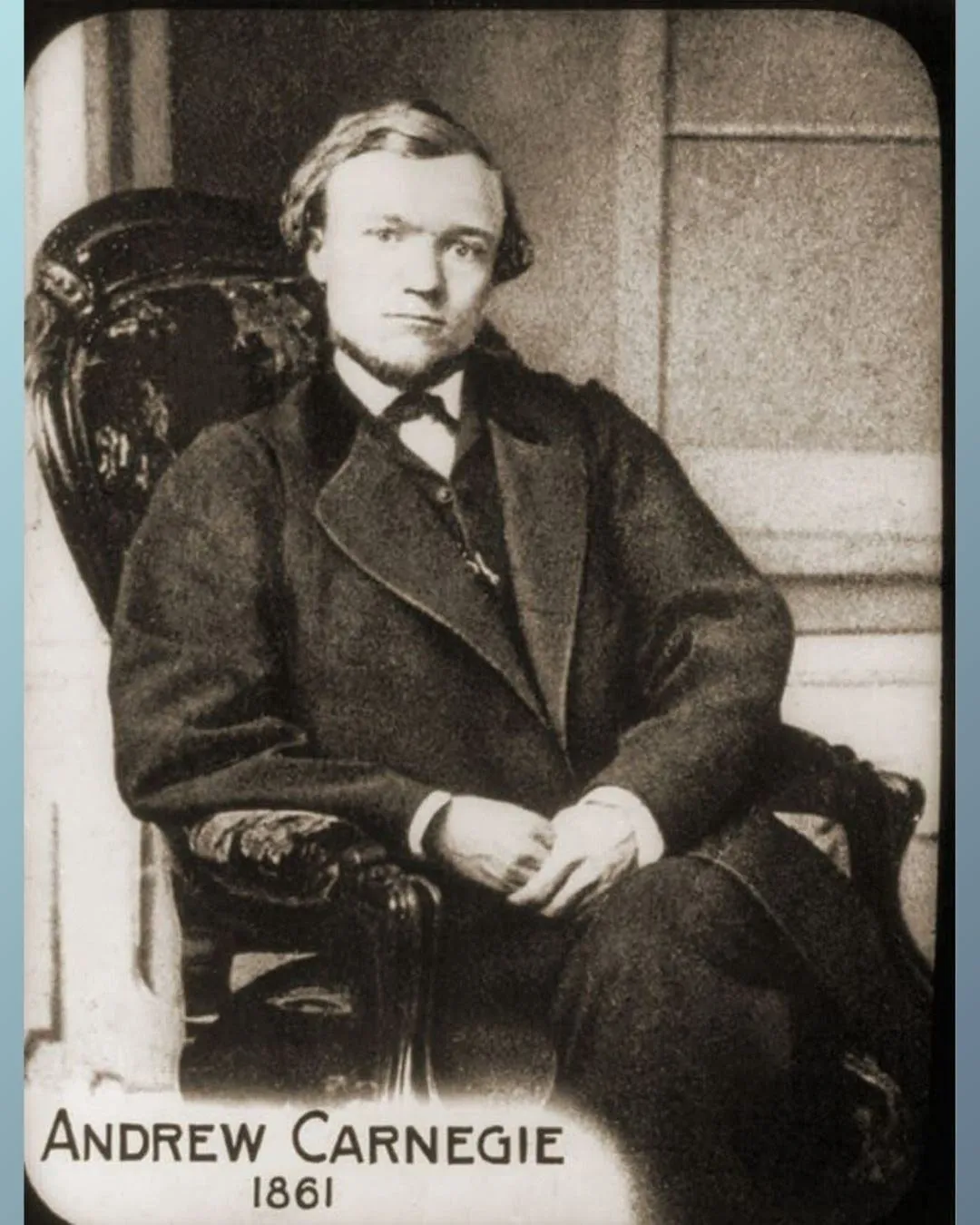
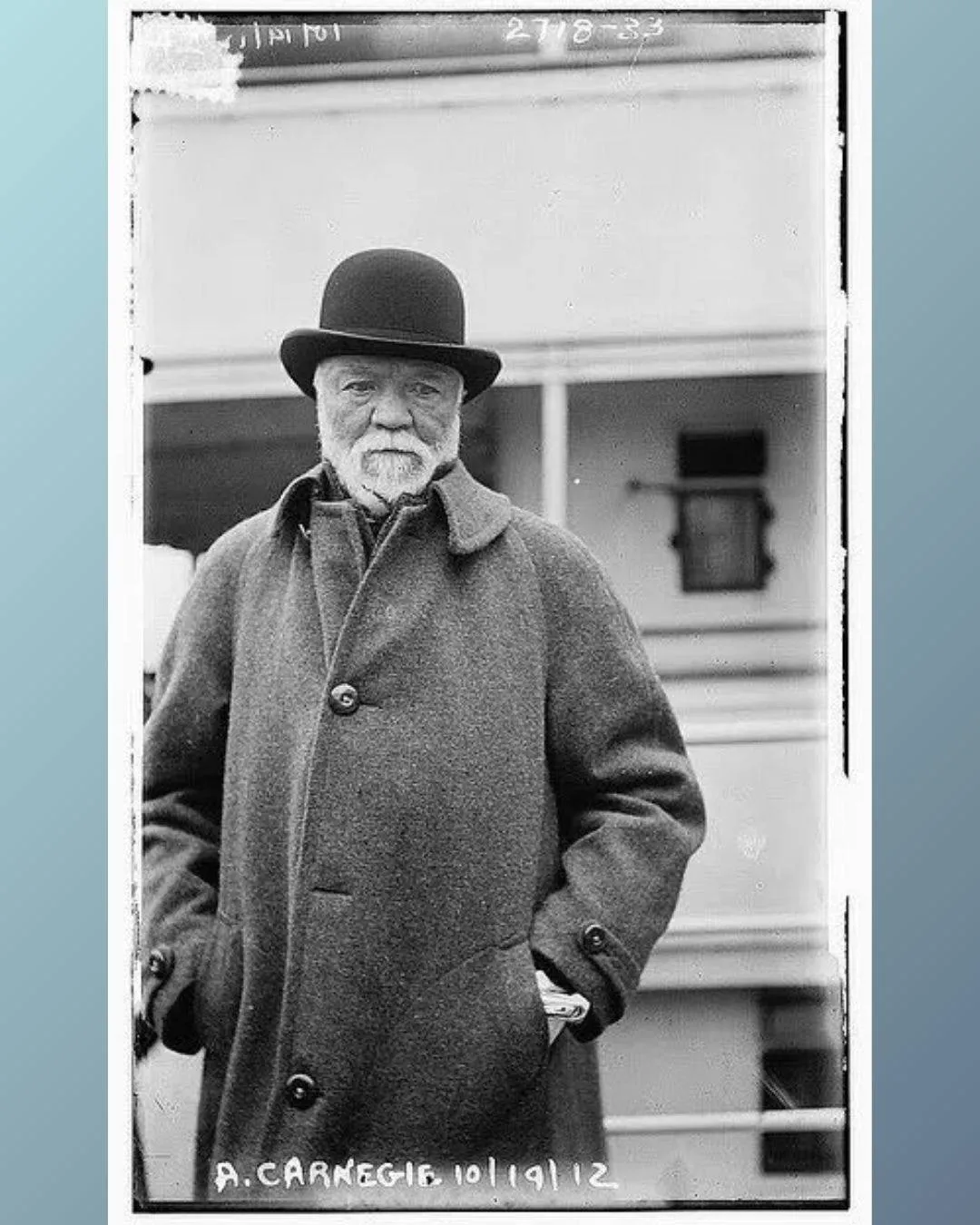
On this day, 11th August, 106 years ago (1919), Dunfermline lost one of its greatest and most devoted sons — Andrew Carnegie.
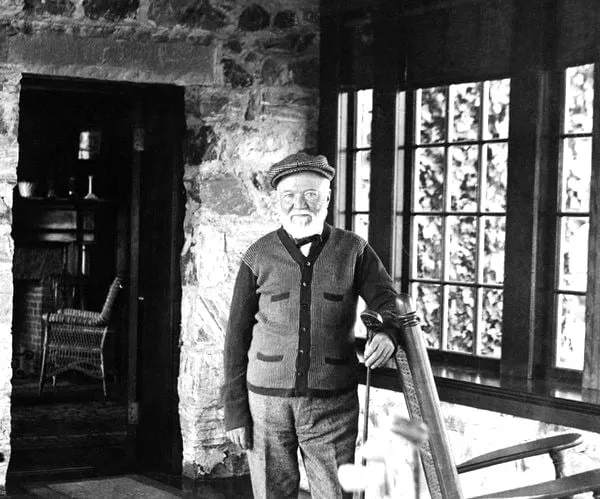
Carnegie, aged 83, died at his estate in Lenox, Massachusetts, thousands of miles from the place where he was born, separated from his beloved Scotland by the treacherous events of war.
“What Benares is to the Hindoo, Mecca to the Mohammedan, Jerusalem to the Christian — all that Dunfermline is to me.” - was one of his famous quotes.
Born in 1835 into the poor family of a Dunfermline weaver, “Little Andra” grew up witnessing the struggles of working-class life — the hardships, the riots of 1842, and the efforts to bring change and reform. His family eventually made the difficult decision to migrate to America.
There, Andrew, having learned the lessons of poverty, used his talents and opportunities not only to rise to become one of the richest and most influential people in the world but also to champion the belief that excessive wealth should be shared — not hoarded by one man or one family.
He believed that for people to grow, become educated, advance in science, and improve their careers, they must seize every opportunity to learn. Carnegie sought to provide these opportunities: libraries for reading and study, universities for higher education, scientific institutions to explore the world we live in, the promotion of world peace, and a lot of other things.
Among all his endeavours, Dunfermline and Scotland always came first. He dreamed of making his native town a special place for its people — a “wee advanced island” in a sea of inevitable change. Even today, it is hard to find someone in Dunfermline who has not heard of Andrew Carnegie or who cannot name at least one of his benefactions.
His legacy remains very much alive. The people of Dunfermline and Scotland loved and respected him in return. Despite his wealth, he was still seen as “one of us.”
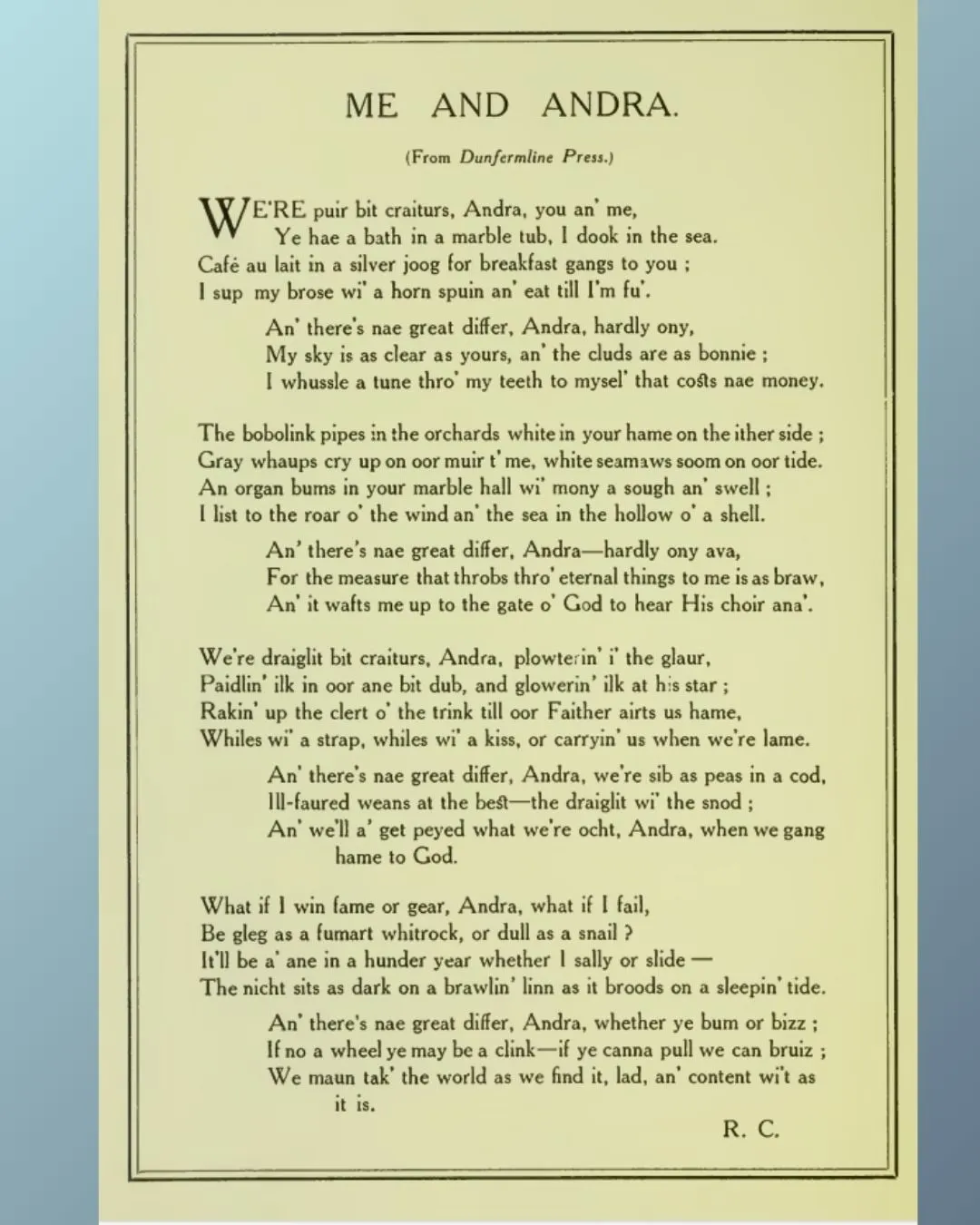
The so-called “grocery poet” Robert Couston (born in Torryburn) wrote his best-known poem Me an’ Andra around 1906. Published in several anthologies, it sparked lively discussion both in America and Scotland. The first verse contrasts Carnegie’s marble bath and silver jug with the speaker’s sea bath and horn spoon. The second verse highlights their shared joys — clear skies, beautiful clouds — showing that happiness is not determined by wealth alone.
Carnegie’s philosophy, the “Gospel of Wealth,” stressed the duty of the rich to use their fortunes for the benefit of society. Couston’s poem echoed this belief, suggesting that wealth should be used to uplift others rather than merely enjoyed by its owner.
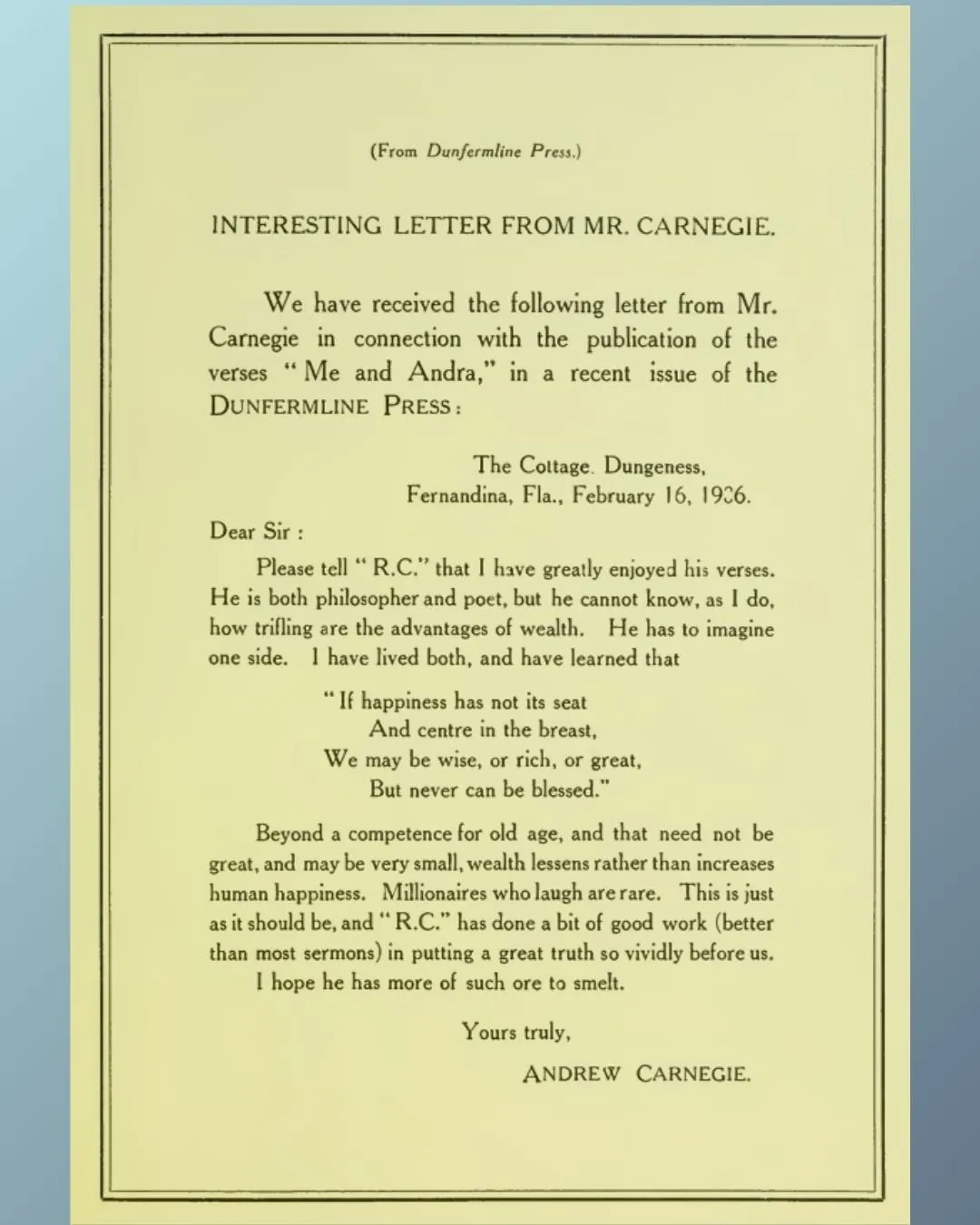
Carnegie himself was so touched by Couston’s work that he sent the poet the means to buy a handsome new writing desk and kept in touch with him for the rest of his life.
Photographs