Historic Dunfermline
The Miracles of St Margaret
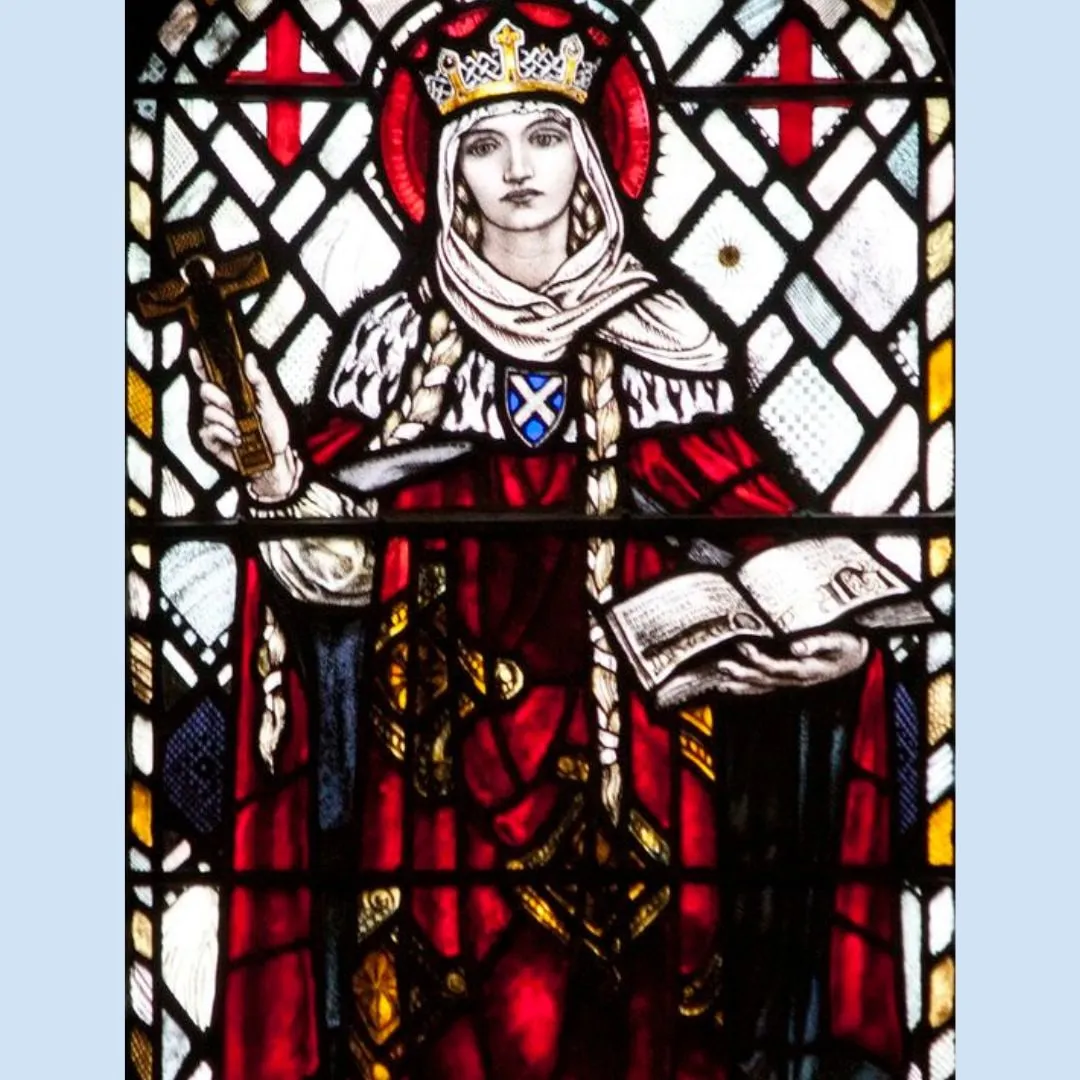
St. Margaret of Scotland, renowned for her piety and benevolence, was venerated not only for her virtuous life but also for the miracles attributed to her both during her earthly existence and after her passing. Her sanctity was recognized not through grand supernatural displays but through the grace that permeated her life, her devotion to God, and the countless ways in which she transformed those around her. Yet, the faithful recorded many instances where divine intervention seemed to accompany her presence, both in life and in death.
During her lifetime, Margaret’s compassion for the sick was well known. Many suffering from fevers, blindness, and other ailments found relief after she prayed over them, and some were said to have been miraculously healed. Her charity, too, seemed to transcend natural limitations. In times of scarcity, when she distributed food to the poor, the provisions never seemed to run out, as though multiplied through divine providence. Margaret’s deep love for the Scriptures was accompanied by extraordinary insight, allowing her to interpret and expound upon sacred texts with wisdom beyond human understanding. Those who listened to her marveled at the clarity and depth of her words, seeing in them a gift from God.
One of the most famous miracles recorded during her lifetime involved her beloved Gospel Book. Margaret owned a beautifully illuminated manuscript, an object of great value and devotion. One day, the book accidentally fell into a river and was lost to the currents. When it was finally recovered, however, it was found completely unharmed—the pages were dry, the intricate decorations unblemished, as though untouched by the water. This event was regarded as a sign of divine protection over her devotion to the Scriptures, and the book itself was preserved for centuries, eventually finding its way to the Bodleian Library at Oxford.
After her death, the miracles attributed to Margaret only increased. Pilgrims flocked to her tomb in Dunfermline, and many reported miraculous recoveries. The blind were said to have regained their sight, the lame walked again, and those burdened by suffering found solace in prayer at her shrine. Sailors and travelers invoked her name in times of peril, believing her intercession had delivered them from shipwrecks and storms. Her reputation as a protector of the vulnerable and the afflicted extended beyond Scotland, and those who sought her aid often spoke of profound spiritual renewal after visiting her resting place.
Margaret’s relics, too, were believed to possess healing powers. Her ‘birthing serk,’ the chemise she had worn during childbirth, became an object of veneration among the queens of Scotland. Margaret herself had borne eight healthy children who survived into adulthood, a rarity at the time, and Scottish queens sought the garment in their own times of labor, believing it would ensure safe delivery. Annabella Drummond, wife of Robert III, gave birth to James I at Dunfermline Abbey, near Margaret’s shrine, while Elizabeth de Burgh, wife of Robert the Bruce, may have chosen Dunfermline for the birth of David II to be close to the relic. In 1451, Mary of Guelders, the wife of James II, arranged for the chemise to be brought to her during labor, and Margaret Tudor, wife of James IV, did the same before giving birth to the future James V in 1512. Even Mary, Queen of Scots, sought Margaret’s protection, requesting her head to be brought to Edinburgh Castle, hoping the saint’s virtues would aid her in childbirth.
One of the most remarkable miracles recorded after her canonization occurred during the translation of her remains. On July 13, 1250, Margaret’s body was exhumed in the presence of King Alexander III, his mother, and numerous nobles, abbots, and bishops. As the ground was disturbed, a wondrous fragrance filled the air, as though the sanctuary had been sprinkled with the scent of fresh flowers and rare perfumes. When her remains were placed upon a consecrated bier and carried toward the high altar, an astonishing event took place. As the procession neared the tomb of her husband, Malcolm III, the bearers found themselves unable to move any further. The coffin had become unbearably heavy, and no number of men could lift it. A voice was then heard, declaring that it was not the saint’s will to be separated from her husband. Only when Malcolm’s body was moved alongside hers did the bier become light once more, allowing the procession to continue. Thus, in death as in life, Margaret remained united with the man she had loved and counseled.
Not long after her burial in the Church of the Holy Trinity, stories spread of an ethereal silver light shimmering over her grave. Those who witnessed it were overcome with reverence, and many fell to their knees, feeling compelled to seek repentance and a holier way of life. The poor, whom she had so dearly loved, found their way to her tomb, believing that their queen had not abandoned them, even in death. In their prayers and quiet devotions, they told of unseen comforts and answered petitions, speaking of a presence that seemed to linger, a final testament to the enduring grace of St. Margaret of Scotland.
Image: Stained glass window with St. Margaret in St. Giles Cathedral, Edinburgh.