Historic Dunfermline
Magnificent North Queensferry: History at Our Doorstep
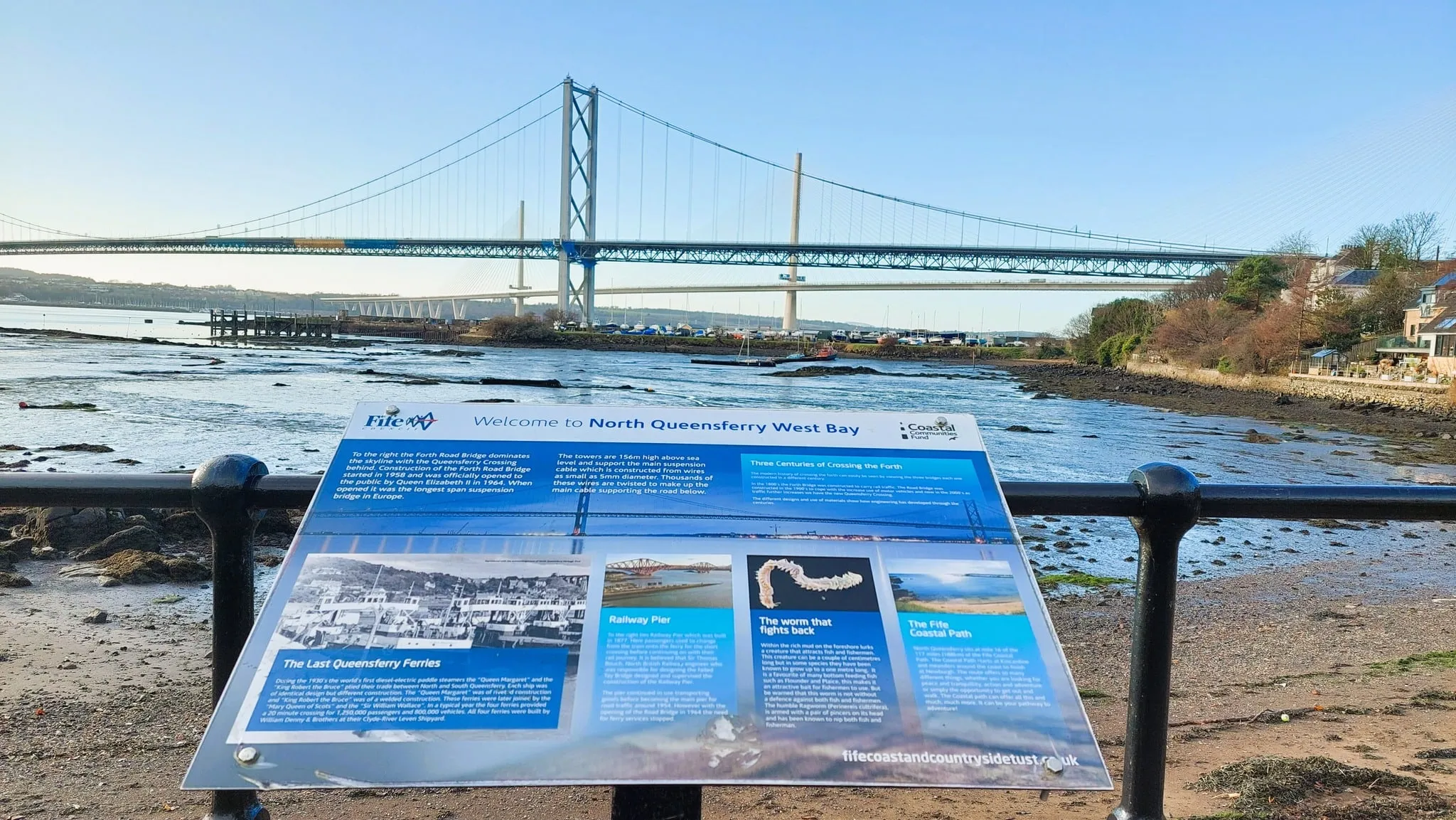
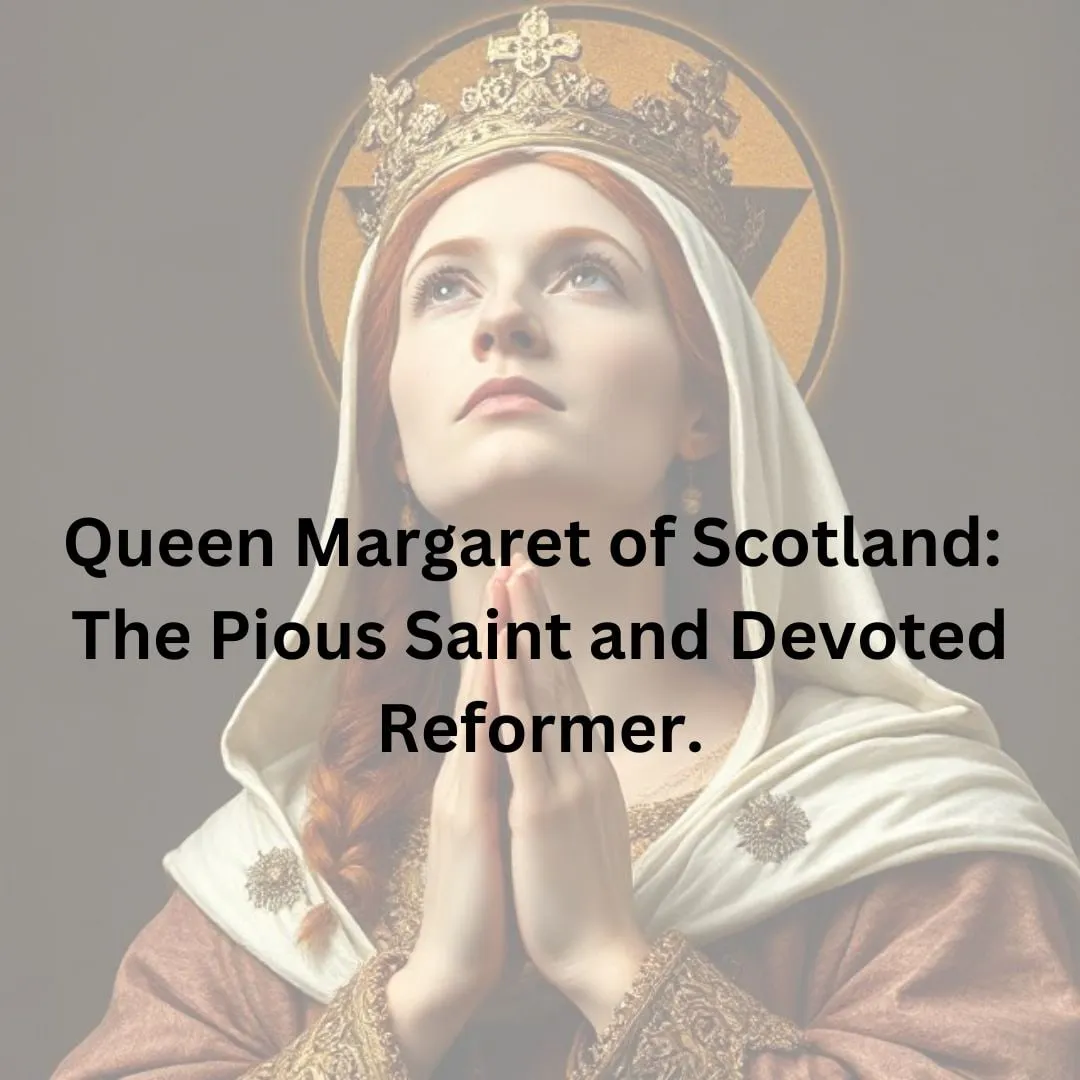
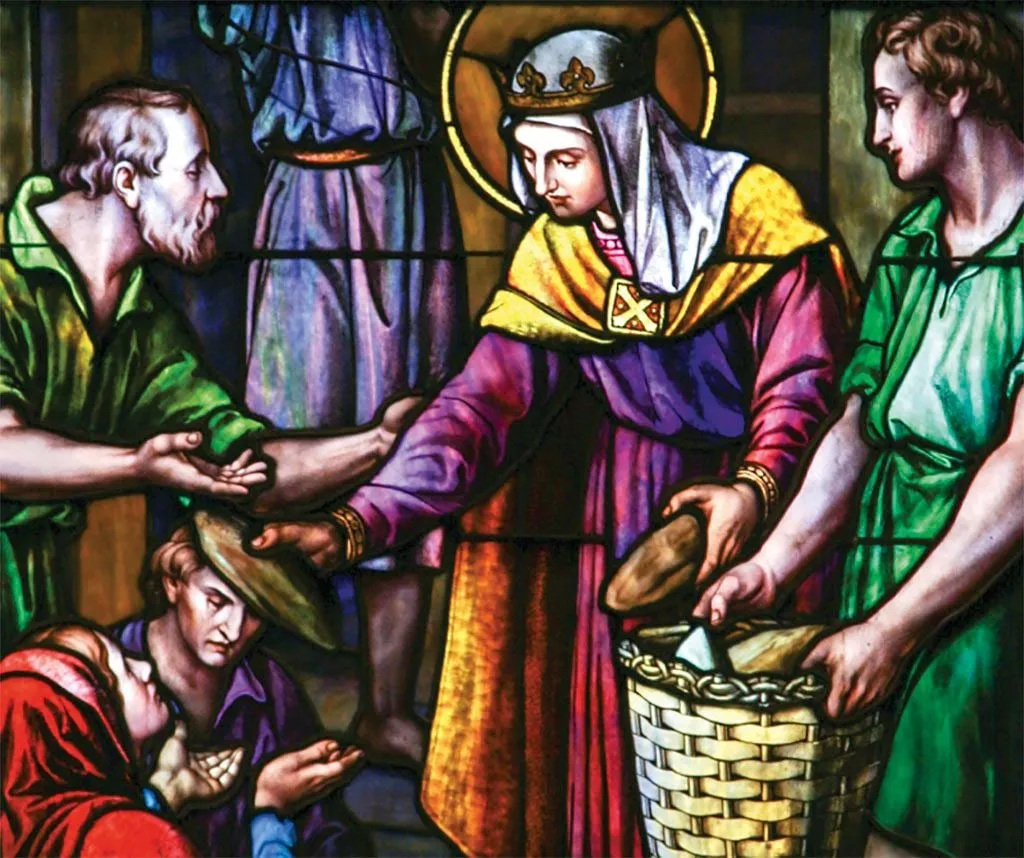
The original Gaelic name of the settlement, Ardchinnechenam, was replaced by the name North Queensferry in honour of Saint Margaret of Scotland, the wife of King Malcolm III. She is said to have established regular ferry crossings for the benefit of pilgrims travelling to St.Andrews.
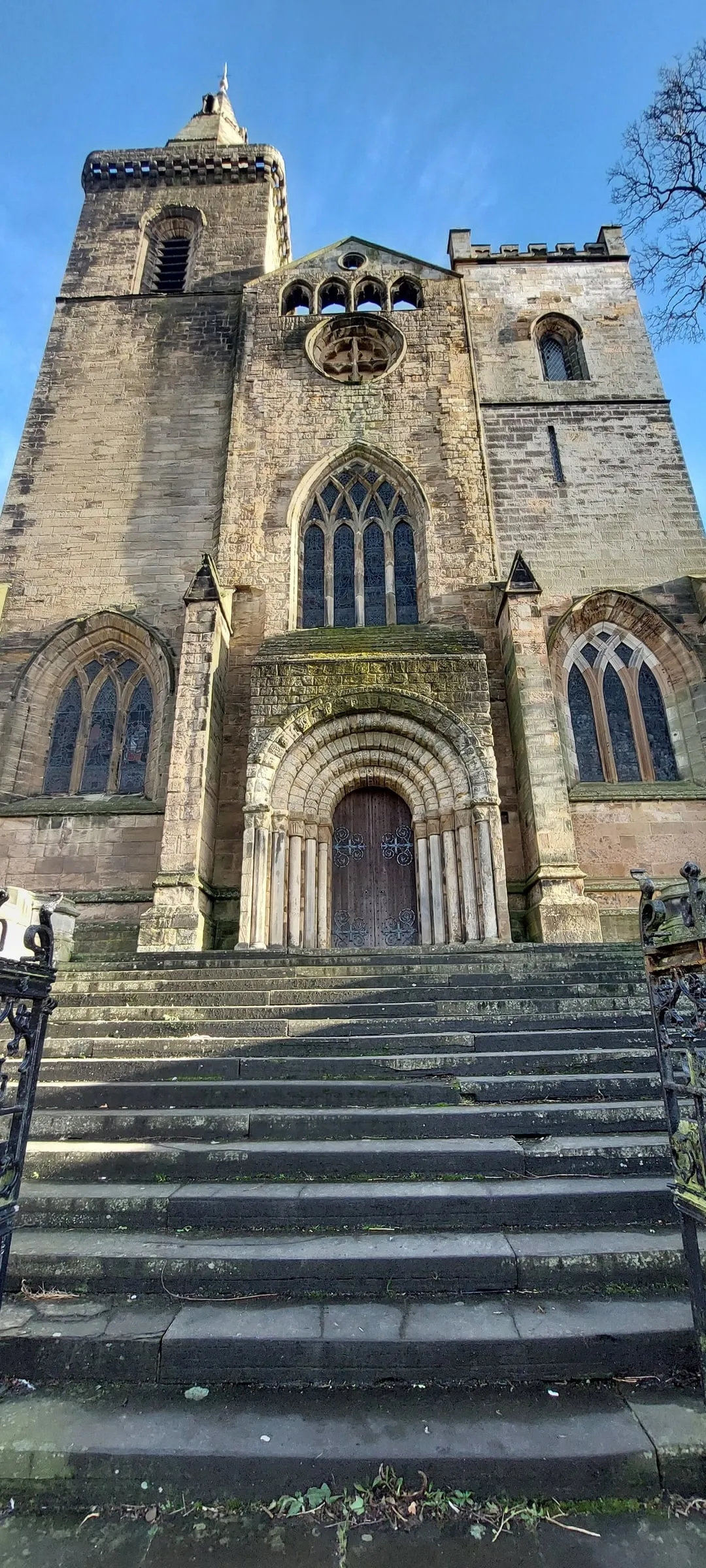
Tradition holds that Margaret first landed in Scotland at a bay west of the Queensferry peninsula, later known as St Margaret’s Hope. The Holy Trinity Church (future Dunfermline Abbey) founded by Margaret and Malcolm soon became a major pilgrimage destination. The resulting demand for safe transport across the Forth led to the creation of the Queen’s Ferry, paid for by Margaret and operated by monks from Dunfermline.
Travel across the Forth was notoriously difficult, yet Dunfermline was an important Christian centre visited frequently by the saintly queen. To enable her journeys between Edinburgh and Fife, the ferry route was established in the eleventh century, connecting what became North and South Queensferry.
Turgot, Margaret’s biographer, writing shortly after she died in 1093, recorded that she provided ships for the crossing and endowed hostels on either shore to care for pilgrims.
Little is known of the early community of North Queensferry; the inhabitants were mainly involved in manning the ferry crossing and providing accommodation and sustenance to travellers throughout the Middle Ages. Royalty must have been a common sight in the village, positioned as it was on the important route from the Borders and Edinburgh north to Dunfermline, Perth, and beyond.
During the reign of David I (1124–53), the prior and canons of Dunfermline Abbey were granted free passage for themselves, their men, and their goods—rights confirmed by Malcolm IV (1153–65).
Local tradition states that Alexander III crossed at North Queensferry on the night of his death in 1286 when he fell from his horse near Kinghorn.
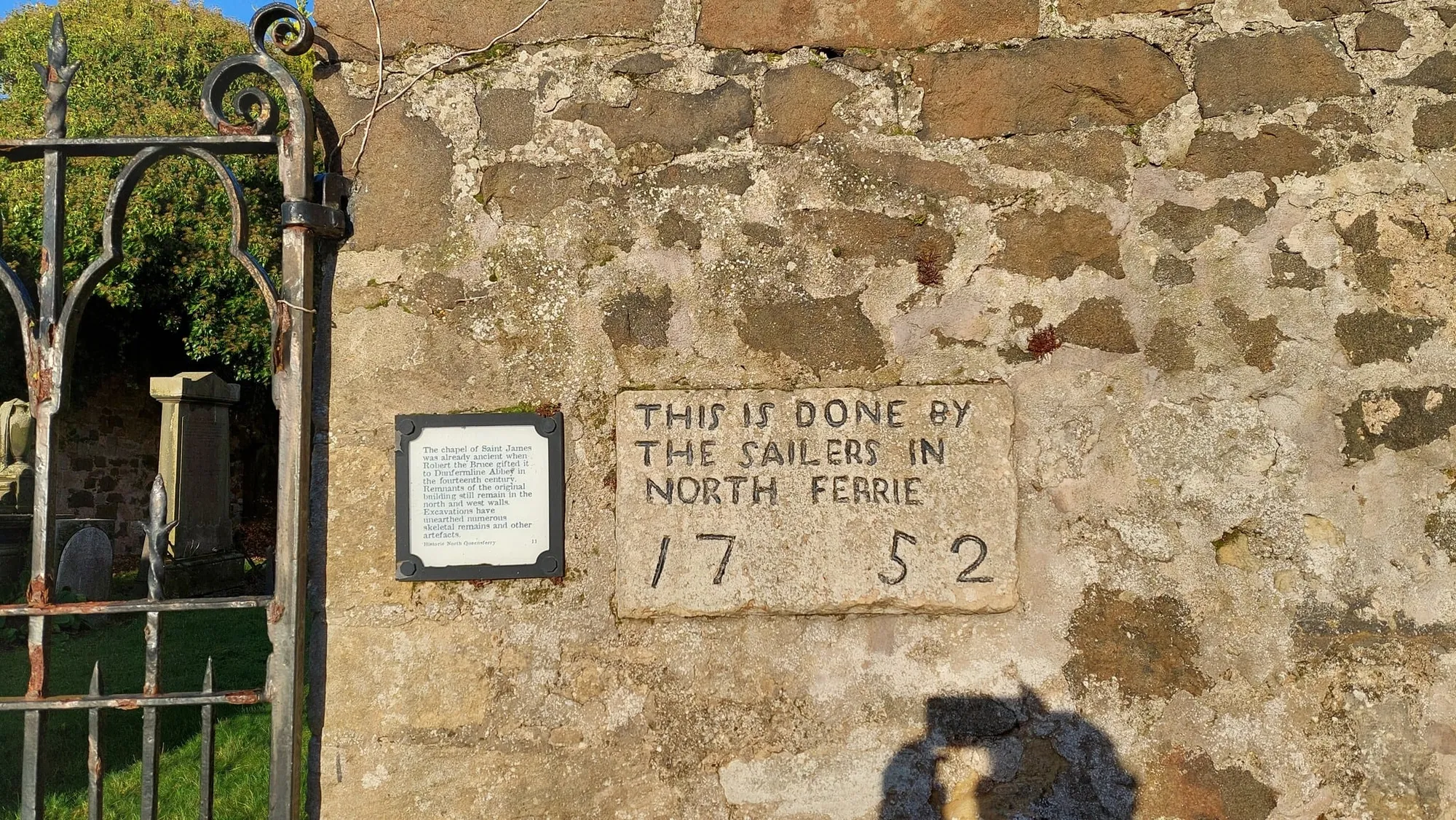
The chapel dedicated to St James, patron saint of travellers, is the oldest building in North Queensferry. Robert the Bruce granted it to Dunfermline Abbey between 1320 and 1322.
Robert I’s grant of the chapel to Dunfermline Abbey required that two chaplains be appointed and that the building be repaired.
The chapel had a manse and garden to the north, two acres of land (thought to the west of the village), and pasture for a horse. Medieval royalty frequently crossed via the Queensferry Passage, and records show that James IV visited the chapel and made offerings in 1504 and 1507.
On Christmas night 1547, Sir John Luttrell, garrisoning Inchcolm for the English, landed at North Queensferry and “burned the town,” likely damaging the chapel. After the Reformation, the chapel’s revenues were assigned in 1572 to Henry Boswell, son of a Dunfermline burgess, to support his studies. By 1584, he had disposed of the chapel’s land. Little is heard of the chapel thereafter, and it may have ceased functioning altogether before being ruined in 1651.
In February 1651, King Charles II (1649–85) visited both North Queensferry and Inchgarvie to inspect the garrisons established to prevent Cromwell’s troops, based in Linlithgow, from crossing the Forth. For its role in resisting Cromwellian forces, North Queensferry was eventually sacked, and St James’s Chapel was reputedly reduced to ruin.
The ferry was busy for centuries, and its rights—granted by the crown—were held by Dunfermline Abbey, providing vital income. The sailors who worked the ferry were allowed to build a graveyard on the site of the medieval chapel; crude writing still visible near the entrance records their presence. The graveyard remains in use today.
The eighteenth century brought industrial development with the establishment of two quarries near the village, as well as a magnesia works, a blacksmith’s workshop, a brickworks and possibly salt works. As late as 1793, however, the population numbered only around 312.
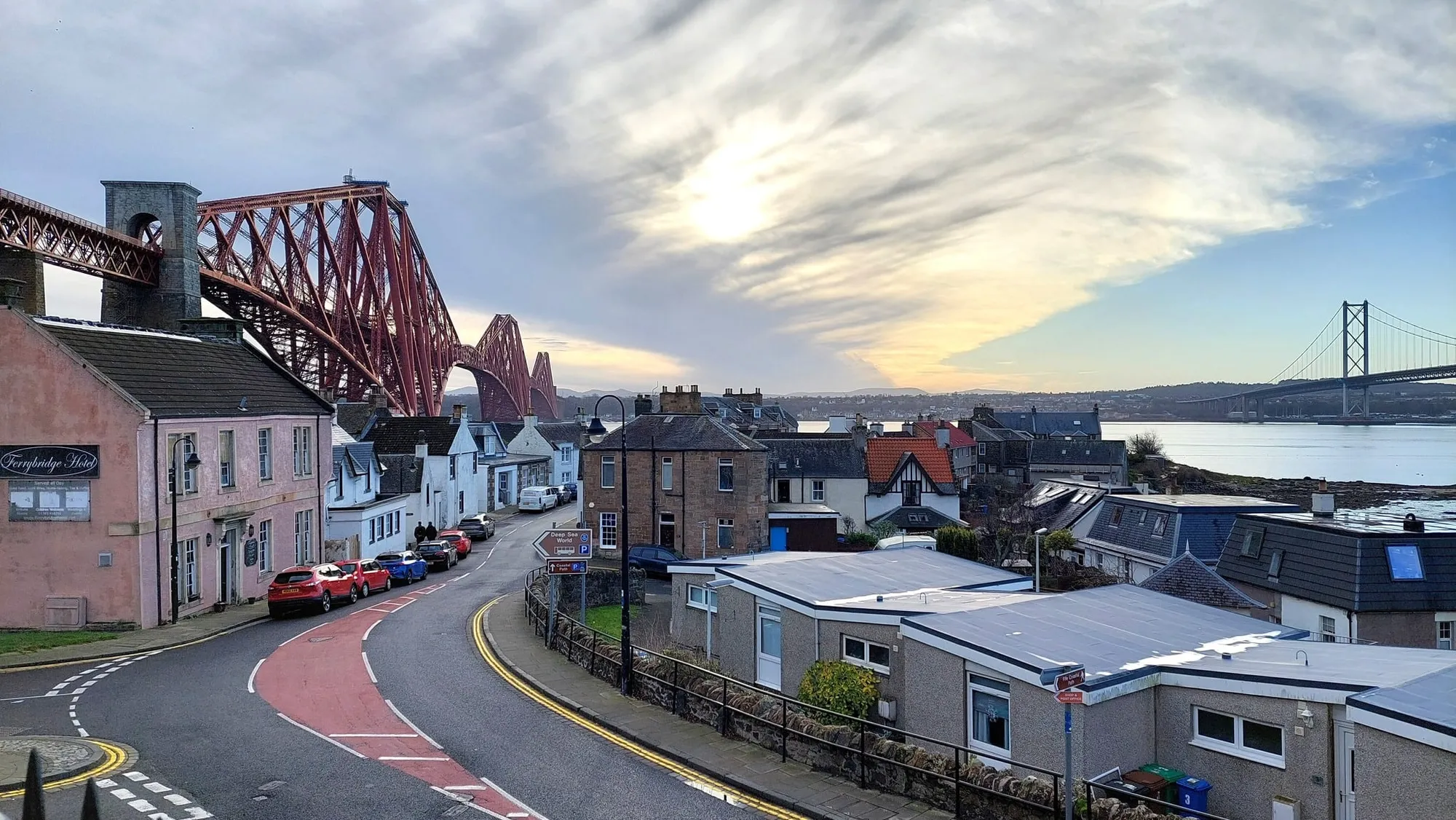
In 1821, the Queen Margaret, the first steam ferry boat on the Forth, was launched. By 1828, up to 1,000 cattle a day could be transported, while coaches and private carriages passed daily through the village. Fifty post horses were continually stabled at the Ferry. In 1867, the North British Railway Company took over the Queensferry Passage, laying down a rail connection on the North Queensferry side, which opened in 1878. In 1890, the Forth Rail Bridge was opened. By the end of the century the village was a popular resort for sea-bathing, rowing regattas, and, from 1890, the nine-hole course of Dunfermline Golf Club.
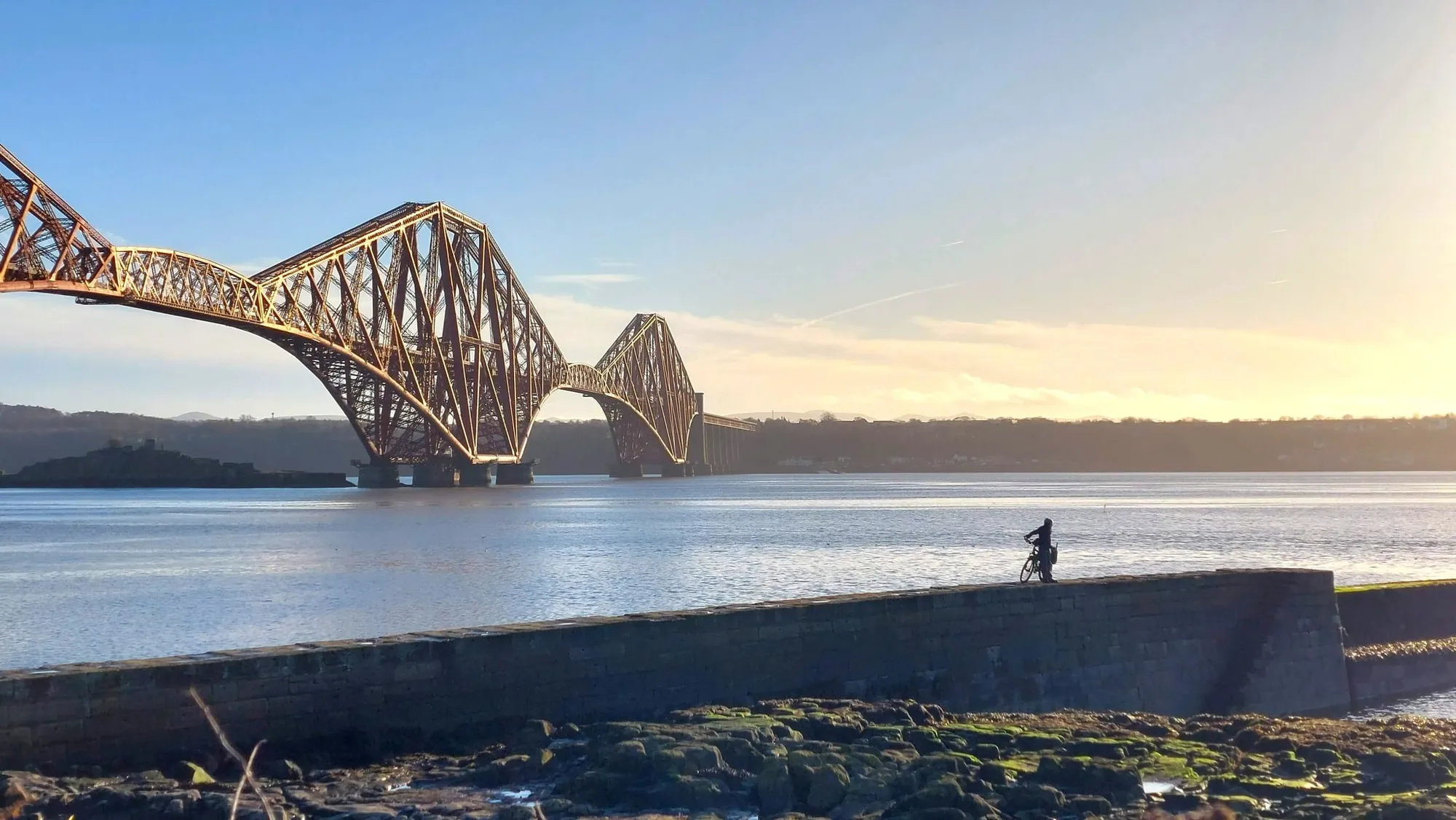
The Forth Rail Bridge was the first major British structure to be built of steel rather than iron, made possible only after the development of the Siemens-Martin process in 1875, which produced steel of reliable quality. The steel came from two Scottish works and one in Wales.
Although cantilever bridges had existed for centuries, none approached the scale of the Forth Bridge. Built in the shadow of the Tay Bridge disaster, its designers paid meticulous attention to wind loading and temperature effects. For several years it was the longest cantilever span in the world, and today it remains the second-longest after the Quebec Bridge in Canada.
Construction began in 1882 with the establishment of steel-fabrication workshops, and work on the foundations began in 1883. At the peak of construction, around 4,600 men were employed. While early reports claimed 57 deaths, more recent research suggests 72 is more accurate. A surviving logbook contains 26,000 entries for accidents and sickness.
Despite the dangers, efforts were made to safeguard workers: safety boats rescued eight men from drowning; protective clothing was issued; shelters and heated dining rooms were provided; and wages were above average. Construction ranged from almost 100 feet below the waterline to more than 300 feet above it.
The bridge was completed in December 1889 and load-tested the following month with two fully loaded coal trains weighing twice the bridge’s design load. On 4 March 1890, the Forth Rail Bridge was officially opened by the Prince of Wales, later King Edward VII.
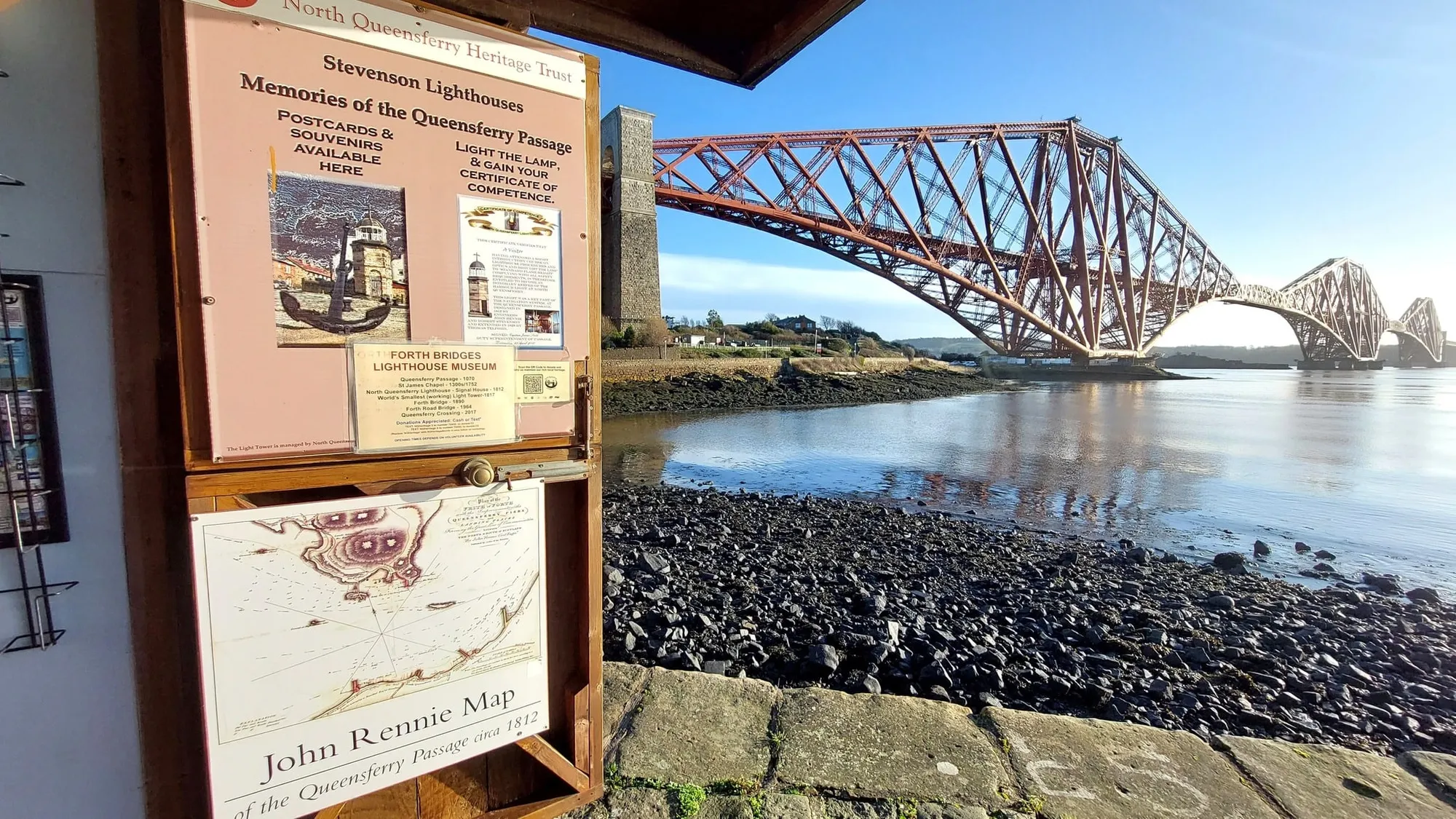
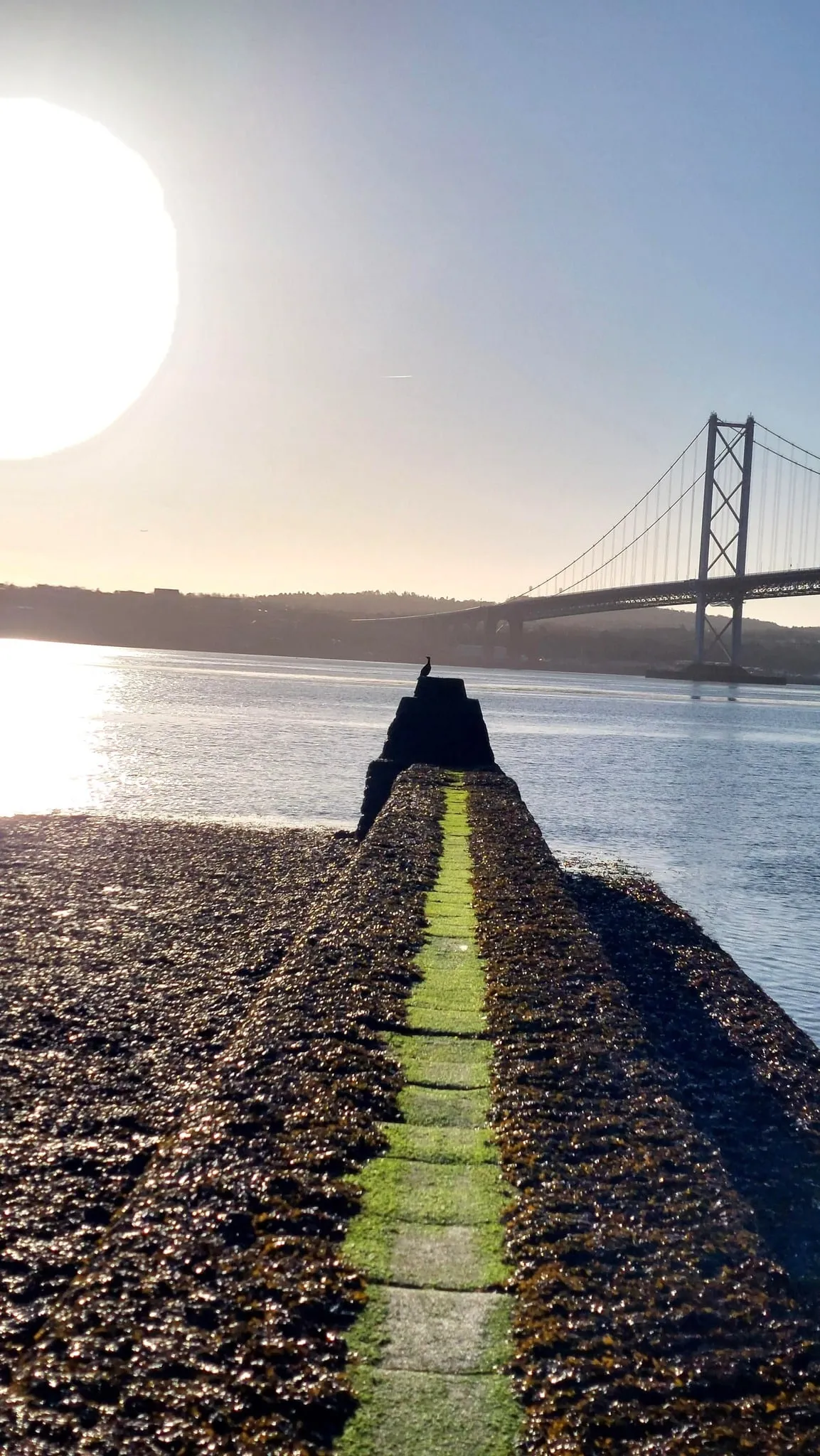
The Town Pier—formerly known as North Queensferry Pier and later Signal Pier—has a rich history. In 1809, it required upgrading, and the proprietors were compelled to sell it to the government for £10,000. Engineer John Rennie undertook major improvements, including rebuilding the pier, which became the main ferry landing.
In 1818, J. M. W. Turner visited North Queensferry and likely arrived via Rennie’s pier. His sketch, depicting the pier, the Albert Hotel (then Mitchell’s Inn), the octagonal lighthouse, a boat unloading, and Inchgarvie, survives in the Tate collection.
When the steamship Queen Margaret launched in 1821, a longer pier was needed, and Thomas Telford completed the extension in 1834.
In 1842, Queen Victoria and Prince Albert landed at the Town Pier on their way to Balmoral. Local boats were decorated in welcome, and the nearby hotel was renamed in their honour.
The Town Pier remained in ferry use until 1920, after which ferries operated from the Railway Pier until the opening of the Forth Road Bridge in 1964.
The anchor on the pier, dating from the time of the rail bridge’s construction, was recovered from the Firth of Forth and restored by Network Rail before being donated to the North Queensferry Heritage Trust. It stands today as a symbol of hope and safe arrival.
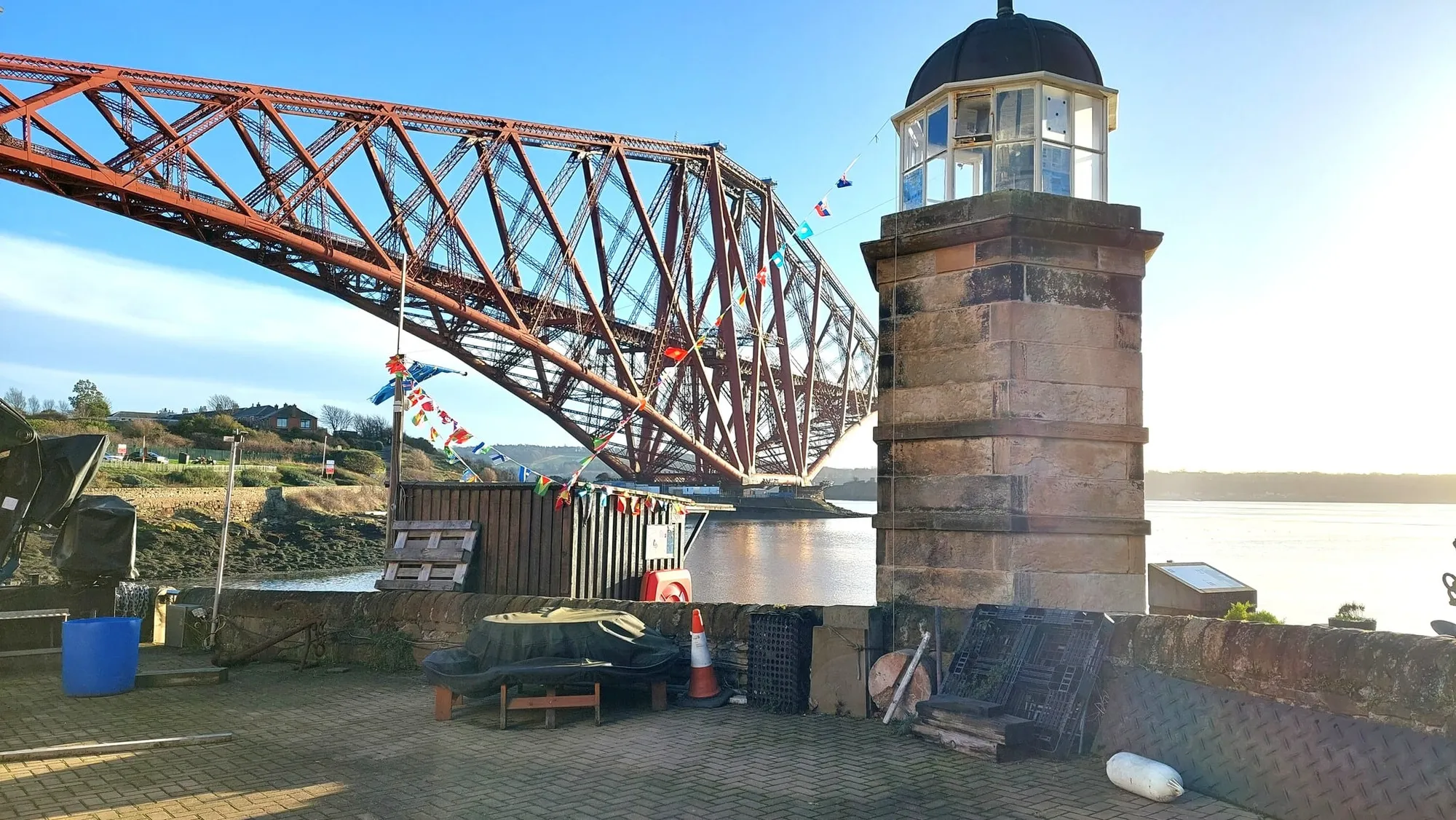
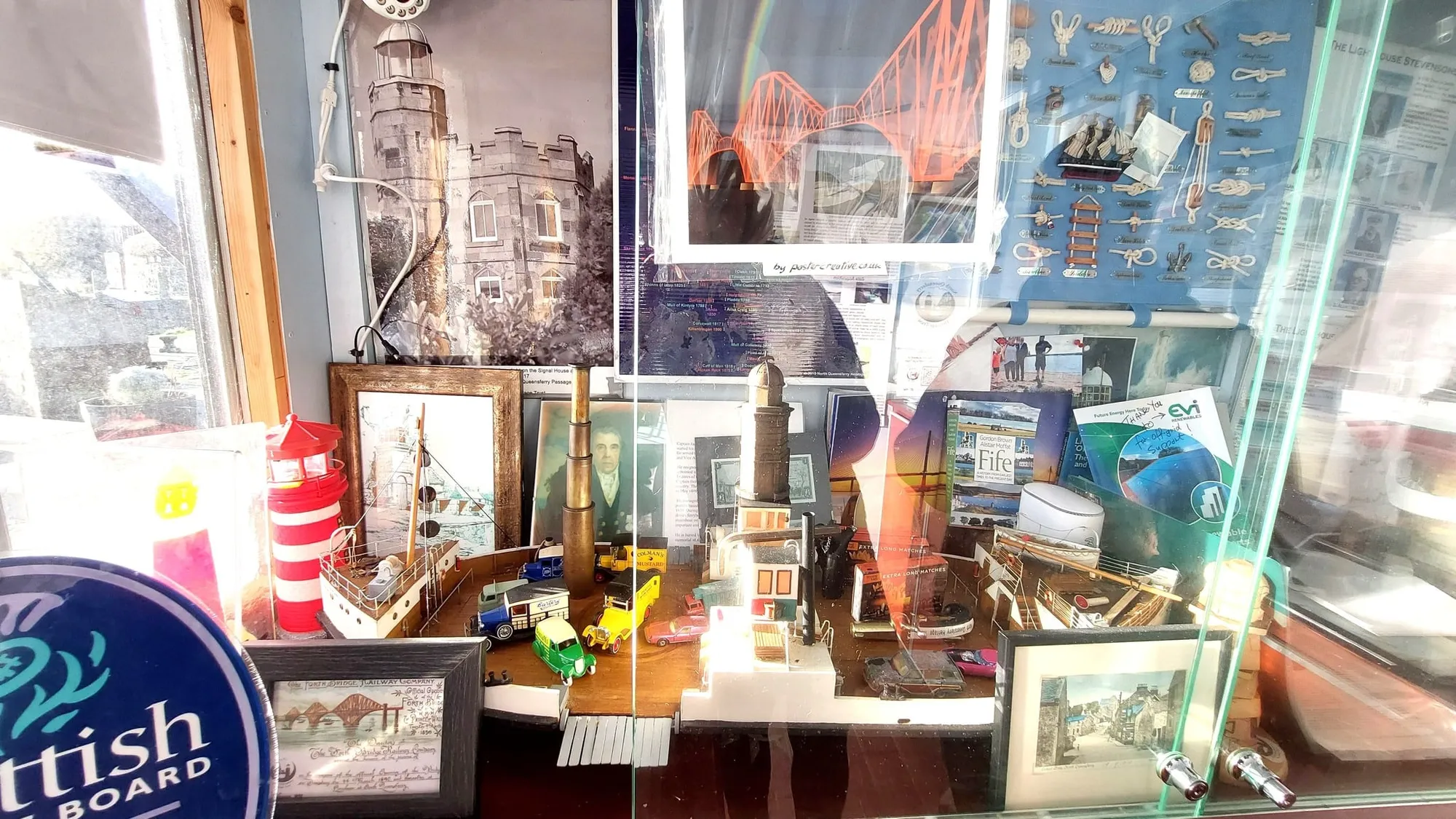
At the head of John Rennie’s Town Pier stands the world’s smallest working light tower, now Scotland’s smallest museum. Built in 1817 by Robert Stevenson (grandfather of author Robert Louis Stevenson), the miniature lighthouse guided ferry traffic safely across the Forth until the service closed in the 1960s. It was carefully restored by North Quensferry Heritage Trust and reopened in 2010 by The Princess Royal.
Based on “Historic North Queensferry and peninsula; burgh survey” by Pat Dennison.
Photographs