Historic Dunfermline
The Queen Margaret Window in Dunfermline Abbey
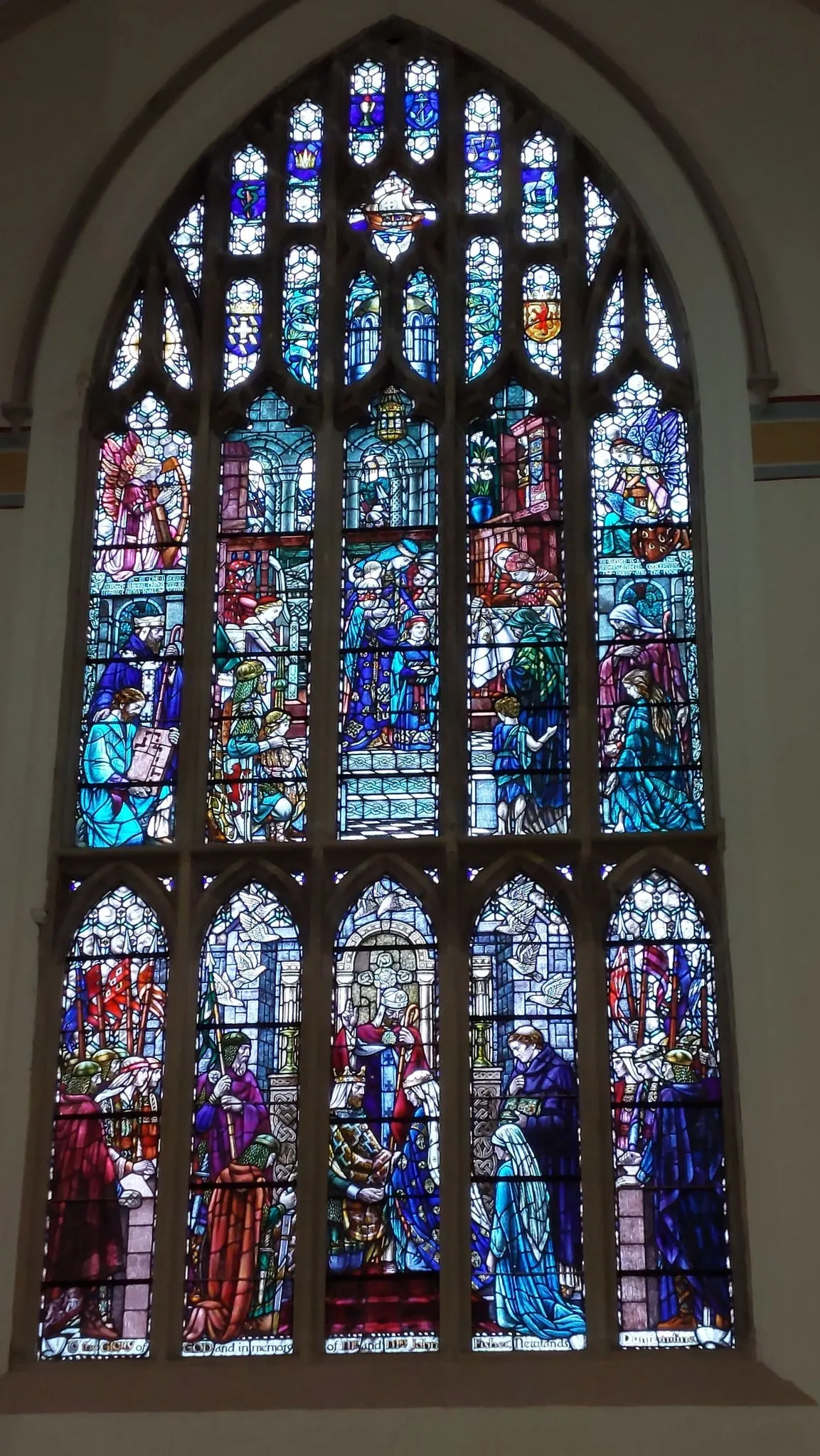
Did you know, there is a beautiful stained glass window in Dunfermline Abbey depicting Queen Margaret (later Saint Margaret of Scotland) and King Malcolm Canmore?
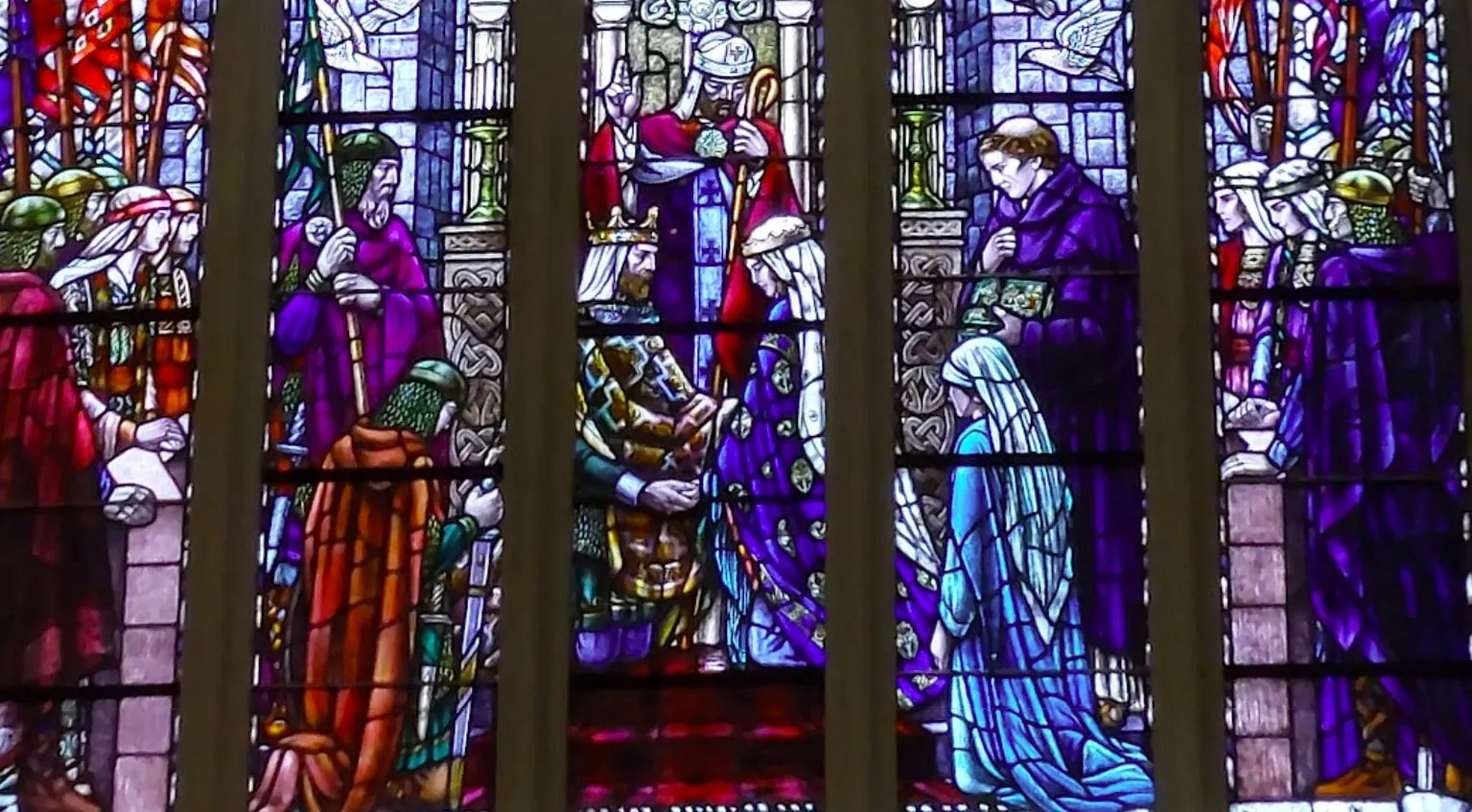
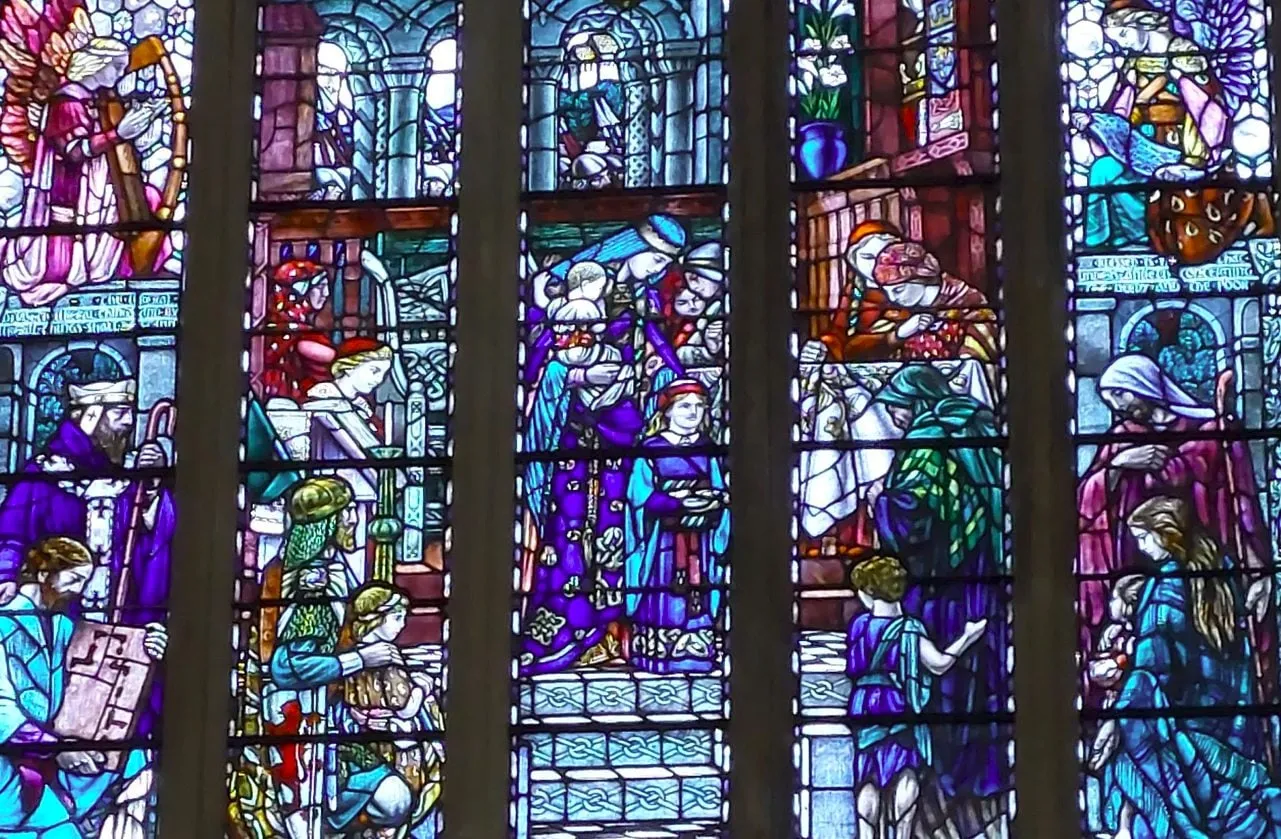
Known as the Queen Margaret Window, it is located in the south transept of the Abbey Church. Designed by Douglas Strachan and executed by Alexander Strachan, it was dedicated in 1932 in memory of John Fisher of Newlands and his wife Isabella Lawrie Bruce. John Fisher, a Dunfermline linen manufacturer and elder of the Abbey, is said to have shown Queen Mary, wife of George V, around the church. When she remarked that she was surprised there was no lectern, Mr Fisher later left money in his will to provide one for the Abbey.
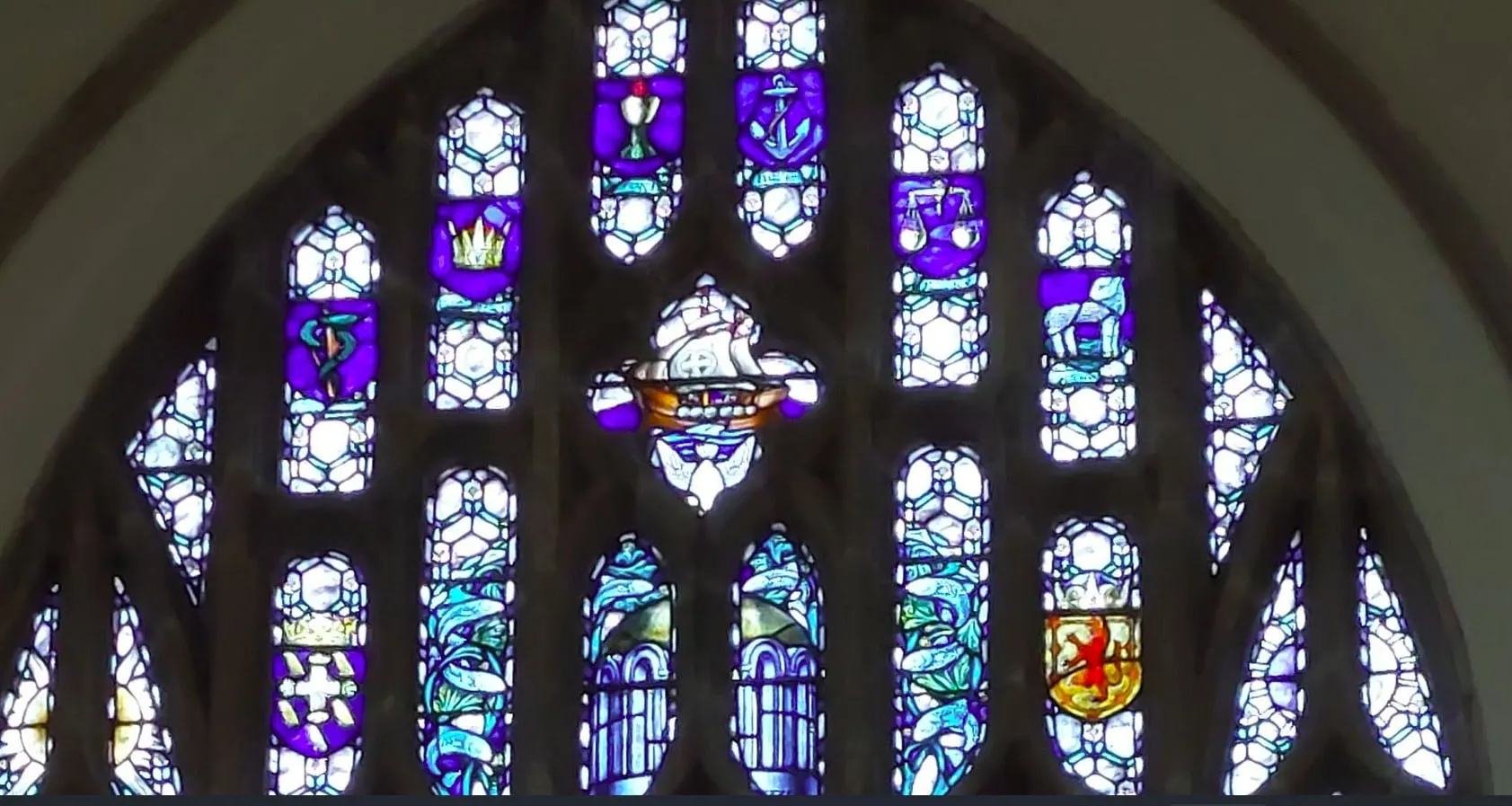
The window consists of two tiers of five lancet lights (windows) each and 19 tracery lights above.
The lower tier of five lancet lights depicts the marriage of King Malcolm Canmore, King of Scots, and Margaret, attended by their ladies and knights. White doves appear throughout, symbolising Margaret’s character and echoing the biblical phrase, “Be ye therefore wise as serpents and harmless as doves.” Their marriage was conducted by the Bishop of St Andrews in Dunfermline.
The five lancet lights in the upper tier show Queen Margaret instructing her children to give alms to the poor and needy on the far right, while Malcolm, entering with one of his sons, sits down to watch. On the far left, a bishop presents a master mason holding plans for a church for the Queen’s approval. Two angels in the upper corners represent music. In the background, ladies embroider an altar cloth and one weaves at a loom, reflecting Margaret’s encouragement of beautiful dress, colourful garments and fine embroidery at court. In the tracery windows are the heraldic shields of Queen Margaret and the Lion Rampant of Scotland for Malcolm.
The centre tracery panel shows a ship with a dove beneath it, symbolising the Church resting upon the Holy Spirit. Six virtues are represented in the upper tracery windows: Prudence shown as a serpent on a cleft stick, Perseverance as a crown, Faith as a chalice, Hope as an anchor, Justice as a balance and Gentleness as a lamb.
A few years ago, this very window became the centre of a mystery that puzzled Abbey authorities. In November 2020, 49 stained glass fragments were anonymously returned to the Abbey Church in a box marked “for the attention of Bob Brewse.” Parish minister Rev. Mary Ann Rennie found the shards wrapped in a copy of the Fife and Kinross Extra newspaper, dated February 12th, 2005, together with a typed note signed “CEEPS.”
The note explained that the sender had found the glass more than 20 years earlier in a small pile beneath scaffolding erected near the west-facing footpath of the Abbey. The person admitted feeling guilty for taking it and said they were unsure whether it was newly installed or removed glass.
The congregation could not determine which of the Abbey’s ten intact stained glass windows the fragments belonged to. In 2023, Rev. Rennie sought help from Professor Michael Penman of the University of Stirling, who examined Kirk Session records dating back to the early 1980s to identify when damage or repairs had taken place. He enlisted Dr Craig Kennedy of Heriot-Watt University, who used electron microscopy and X-ray fluorescence to analyse the fragments. The presence of lead, potassium, arsenic and sulphur showed the glass had been made between the 1870s and 1930s. Stained glass conservator Vivienne Kelly, a graduate of Glasgow School of Art, identified imagery on four large pieces, including an angel’s wing and hair, the knotwork hem of a noble’s robe and a repeated thistle motif. After visiting the Abbey Church, she determined that the fragments came from the Queen Margaret Window in the south transept, noting subtle differences in colour and texture where replacement glass had been inserted.
Her best guess is that the window was struck and damaged by a scaffolding pole during refurbishment work in the late 1990s.
Although the mystery of the glass’s origin has been solved, the identity of “CEEPS” remains unknown. The name “Bob Brewse” is believed to be a reference to Robert the Bruce, whose body is buried in the Abbey.
Photographs