Historic Dunfermline
The Andrew Carnegie Birthplace Museum Opens, 28 June 1928
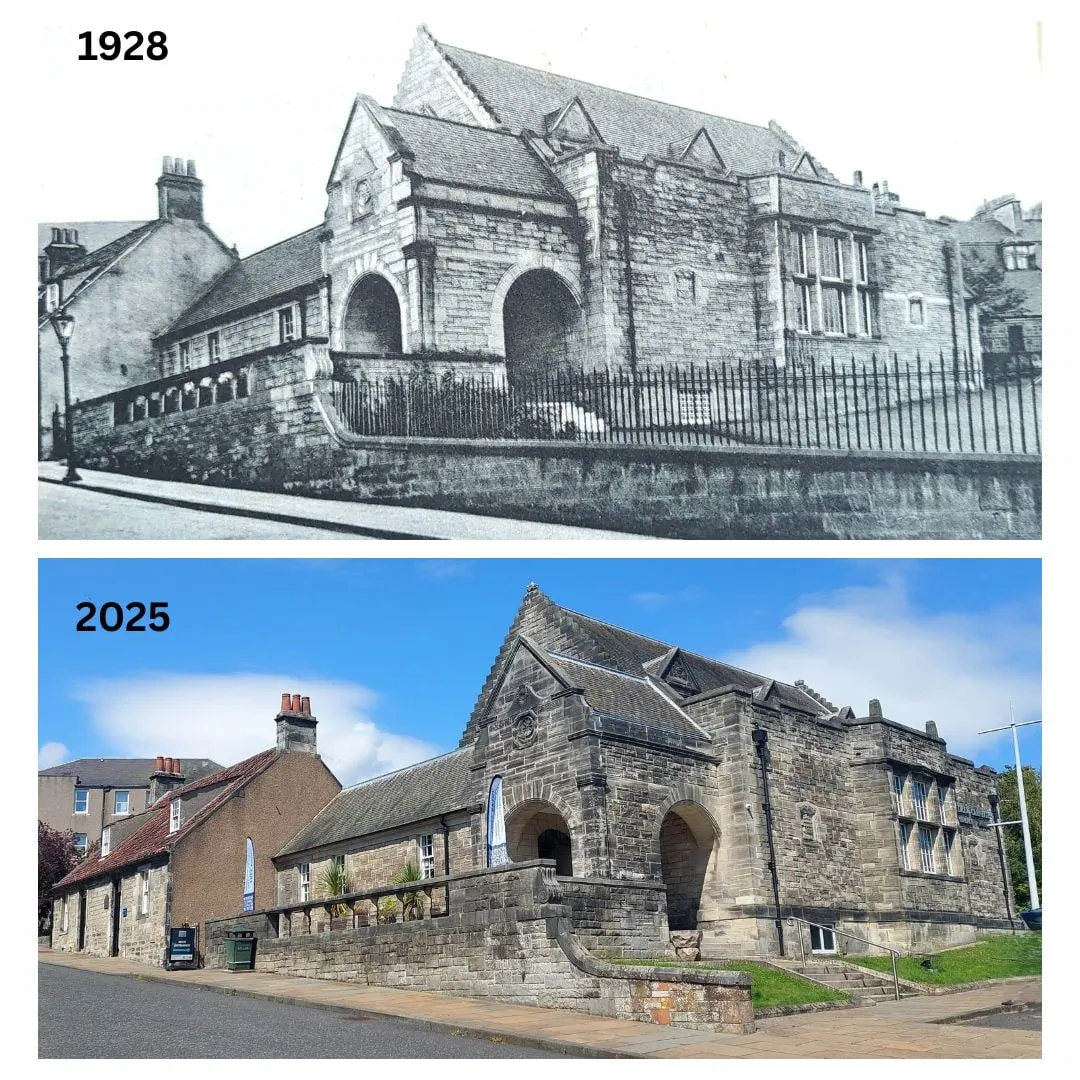
On this day, the 28th of June, 1928, the Andrew Carnegie Birthplace Museum opened its doors to the public for the first time.
Many notable figures attended the opening ceremony, most prominently members of Carnegie’s family—his wife, Louise Whitfield Carnegie; his daughter, Margaret Roswell Miller; her husband; and their children. Also present were Lord Elgin and his wife, John Ross—Carnegie’s trusted lawyer and the first Chair of the Dunfermline Carnegie Trust—and several others.
The Memorial Hall, adjoined to his birth cottage, and designed by architect James Shearer, was established to illustrate Andrew Carnegie’s extraordinary journey—from humble beginnings to the philanthropic heights he ultimately reached.
An account from the Edinburgh Evening News, published the day before the official opening ceremony, stated:
“The life of Mr. Andrew Carnegie, the Dunfermline weaver’s son, who rose to be a captain of industry, the friend of mankind, and a patron of learning, is frequently set as an example to youth. With the erection by his widow of a memorial hall in his native town, striving youth has now something tangible to inspire its efforts, for here are collected the records of a life well spent, the symbols of success attained.
Some years ago Mrs. Carnegie purchased the various properties occupying the ground immediately surrounding her husband’s birthplace. The sites were cleared, and then craftsmen set to build a memorial hall which in many ways is unique. The new building immediately adjoins the humble red-tiled cottage, the two having been connected as though to symbolise the early struggles and the final achievement of the boy who first saw the light of day through a tiny garret window, which, significantly enough, looks out to the west. The memorial building consists of a central hall with three alcoves on each side.
The main entrance porch bears a carved panel depicting a weaver’s thread-winding wheel and the proverb Mr. Carnegie frequently quoted: ‘The gods send thread for a web begun.’ In four panels sunk in the outer walls of the alcoves, the wide diversity of interests represented in the Carnegie benefactions find artistic expression, while the main entrance bears a memorial inscription by the widow.”
In 1947, the year after Mrs. Carnegie’s death, the family bequeathed additional artefacts to the museum—items Louise had considered too precious to part with when it first opened. These included gifts to Andrew Carnegie’s mother, typescripts of his books, and a selection of signed portraits and family photographs. From the early 1960s until the sale of the family’s Scottish home, Skibo Castle, in 1983, their daughter Margaret Carnegie Miller donated a considerable number of additional materials across similar categories.
The museum continues to receive donations from Carnegie family members, descendants of acquaintances, and institutions. During the 1980s, it began collecting material related to Carnegie’s business career, including archival documents such as cartoons, newspaper articles, and photographs. However, the majority of the original records of the Carnegie Steel Company remain housed at the University of Pittsburgh Library.
Today, the Andrew Carnegie Birthplace Museum’s collection comprises around 5,000 items.
Andrew Carnegie always held a deep love for Dunfermline—its people and the modest cottage he called his birthplace.
Among all his gifts to the city—the library, the park, the swimming baths, and the four long-standing Carnegie Trusts based in Dunfermline—the birthplace museum is perhaps the most precious of them all.
The story told within its walls is not simply that of a poor boy who made his fortune in steel and gave it away. It is a story of determination, ambition, and inspiration; of rises and falls, longing and fulfillment, joy and disappointment. Strip away the details, and it could be the story of any one of us.
The museum stands as a lasting part of Carnegie’s legacy in Dunfermline—a reminder to the people of the city of the generosity, vision, and deeply held belief of this remarkable man: that he was no different from anyone else, and that anyone, given the right opportunities and determination, could not necessarily achieve what he did, but could find the courage to pursue their own dreams and goals.
Louise Carnegie chose the perfect place for her husband’s lasting legacy—a quiet yet powerful reminder to the people of Dunfermline, to men and women, boys and girls, of what truly matters in life: what drives us to progress, to strive, to achieve—and ultimately, to share the fruits of our success.
(This article is based on sources from the British Newspaper Archive and the content of the website of the Andrew Carnegie Birthplace Museum).