Historic Dunfermline
Forged in Beauty: the Louise Carnegie Memorial Gates
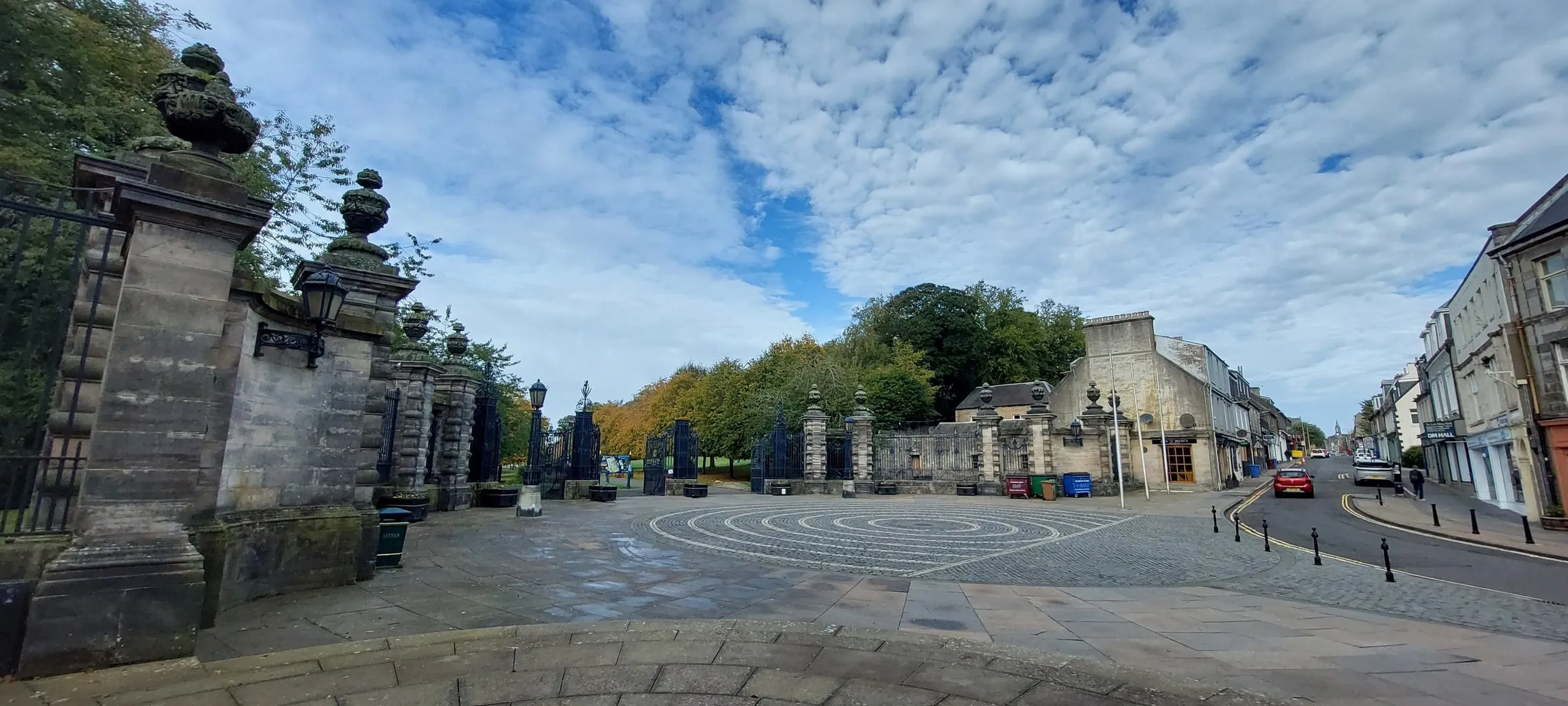
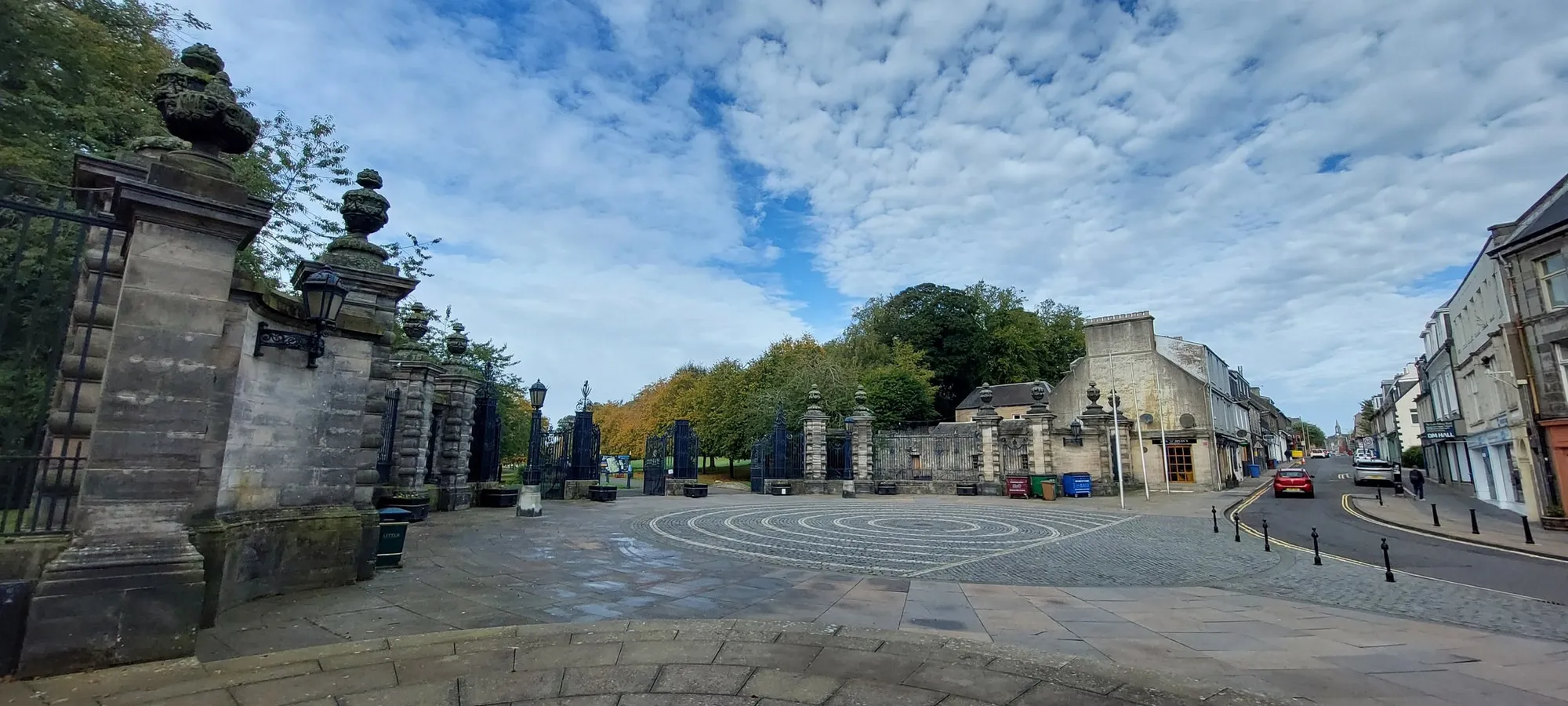
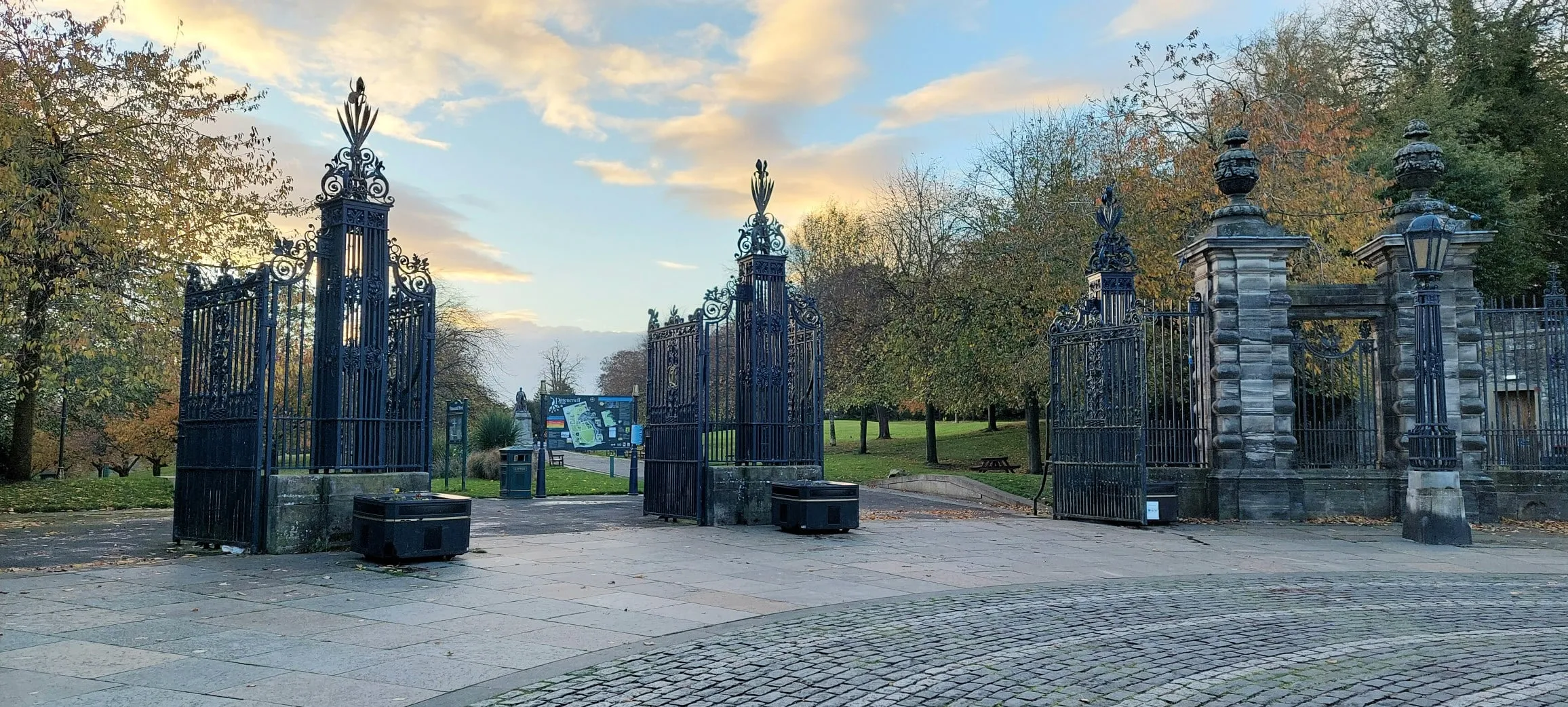
The Louise Carnegie Memorial Gates form the grand entrance to Pittencrieff Park at the junction of Bridge Street and Chalmers Street in Dunfermline. They were designed by the architectural firm Jamieson and Arnott between 1927 and 1929, with the exquisite wrought-ironwork crafted by Thomas Hadden of Edinburgh. The gates were commissioned by the Carnegie Dunfermline Trust in honour of Mrs Louise Carnegie, wife of the philanthropist Andrew Carnegie.
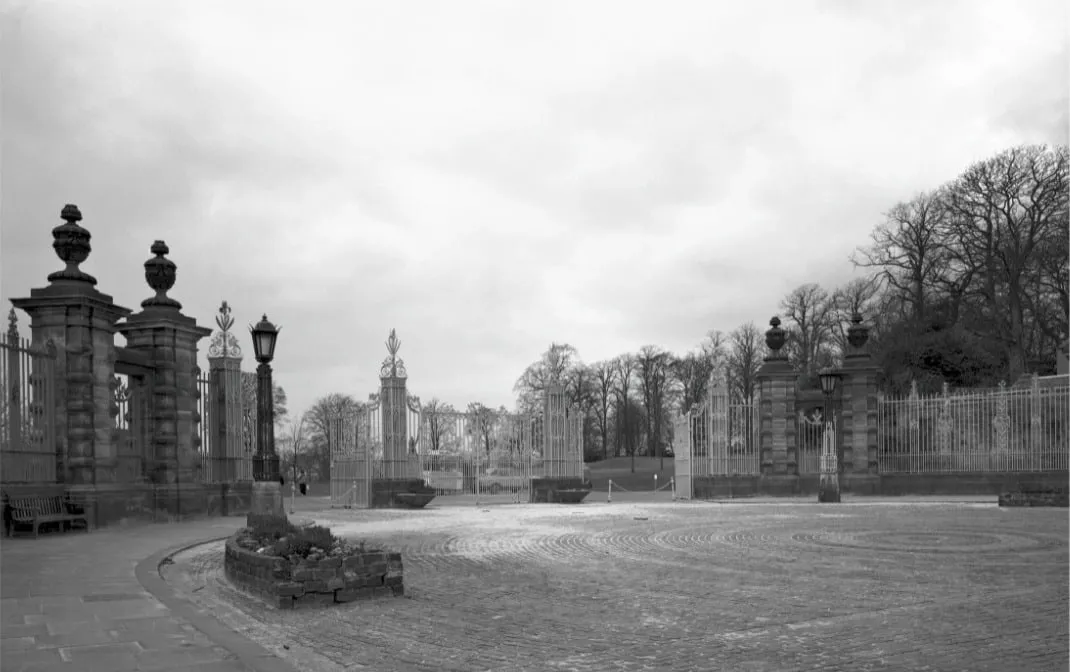
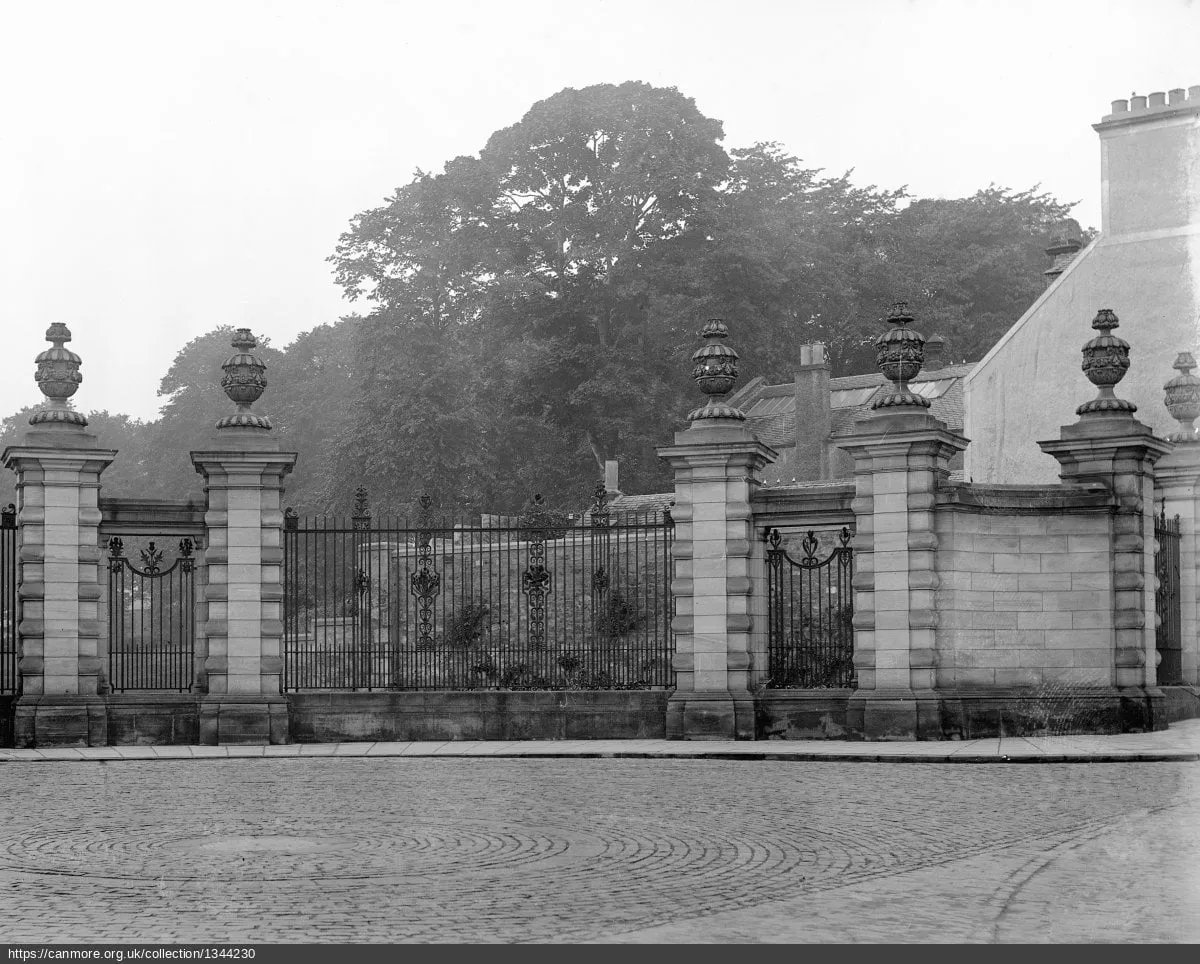
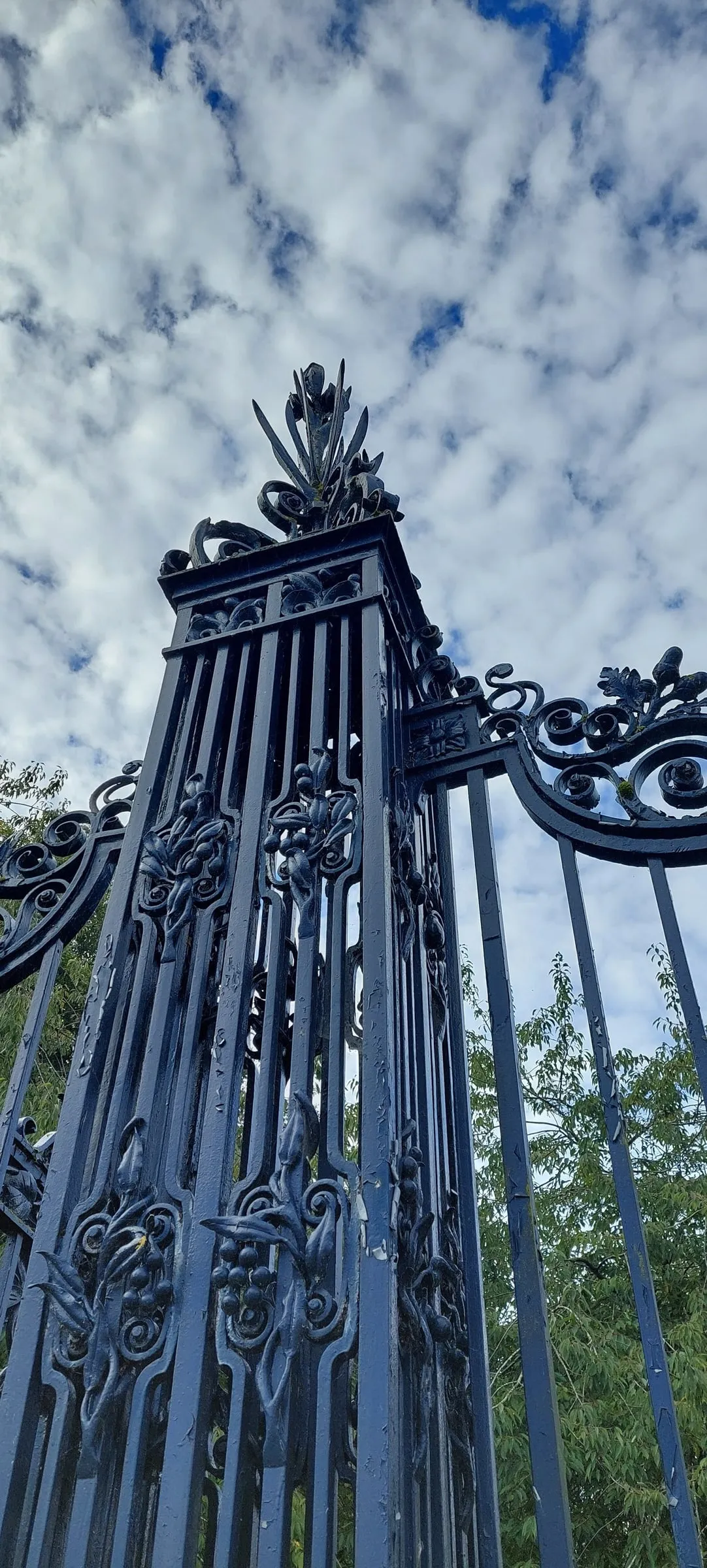
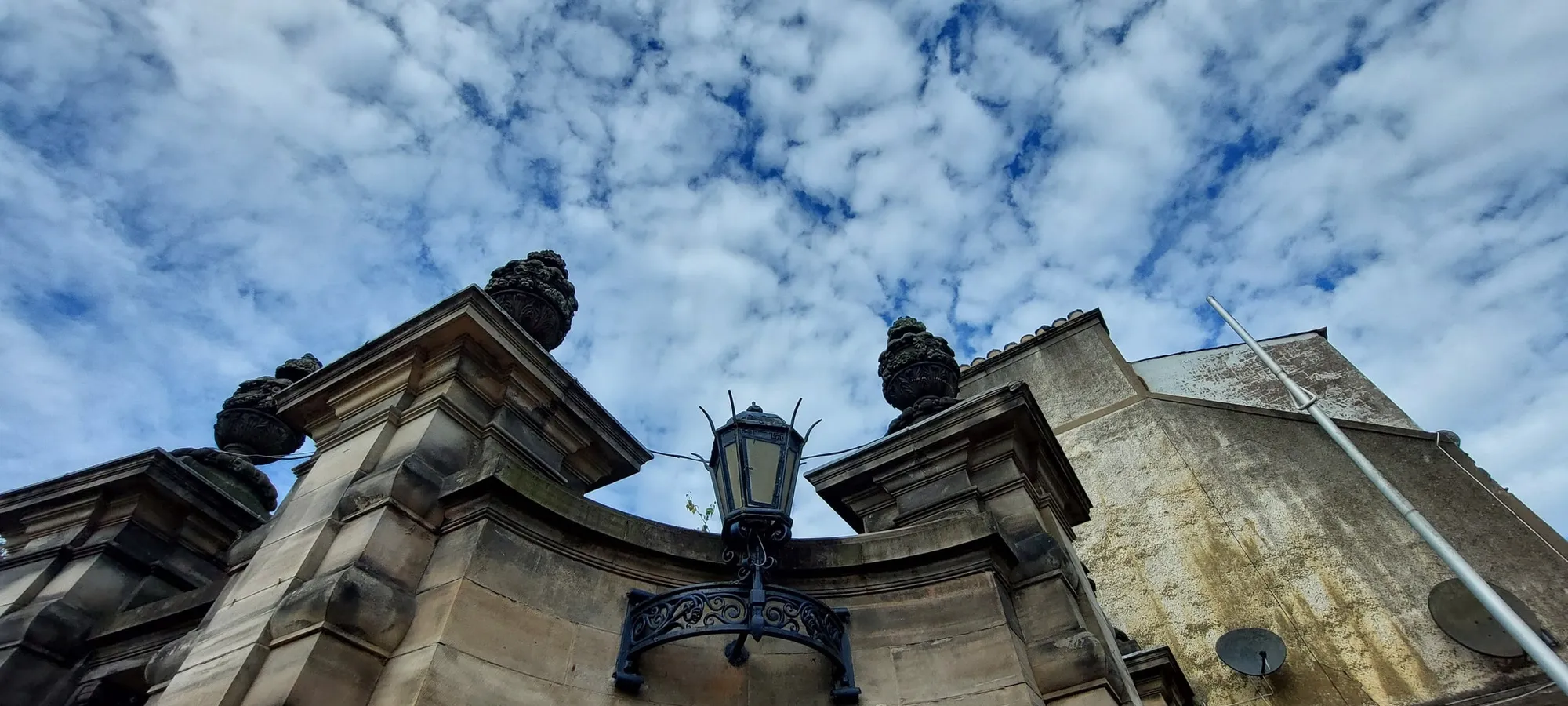
The design is Neo-Baroque, inspired by the elegance and craftsmanship of the early 1700s. The gateway consists of three pairs of double iron gates, framed by sandstone pillars and curved walls that sweep out in a graceful semicircle. The stonework, made of finely dressed sandstone, is decorated with classical details and topped with urns, giving the structure a sense of grandeur and permanence.
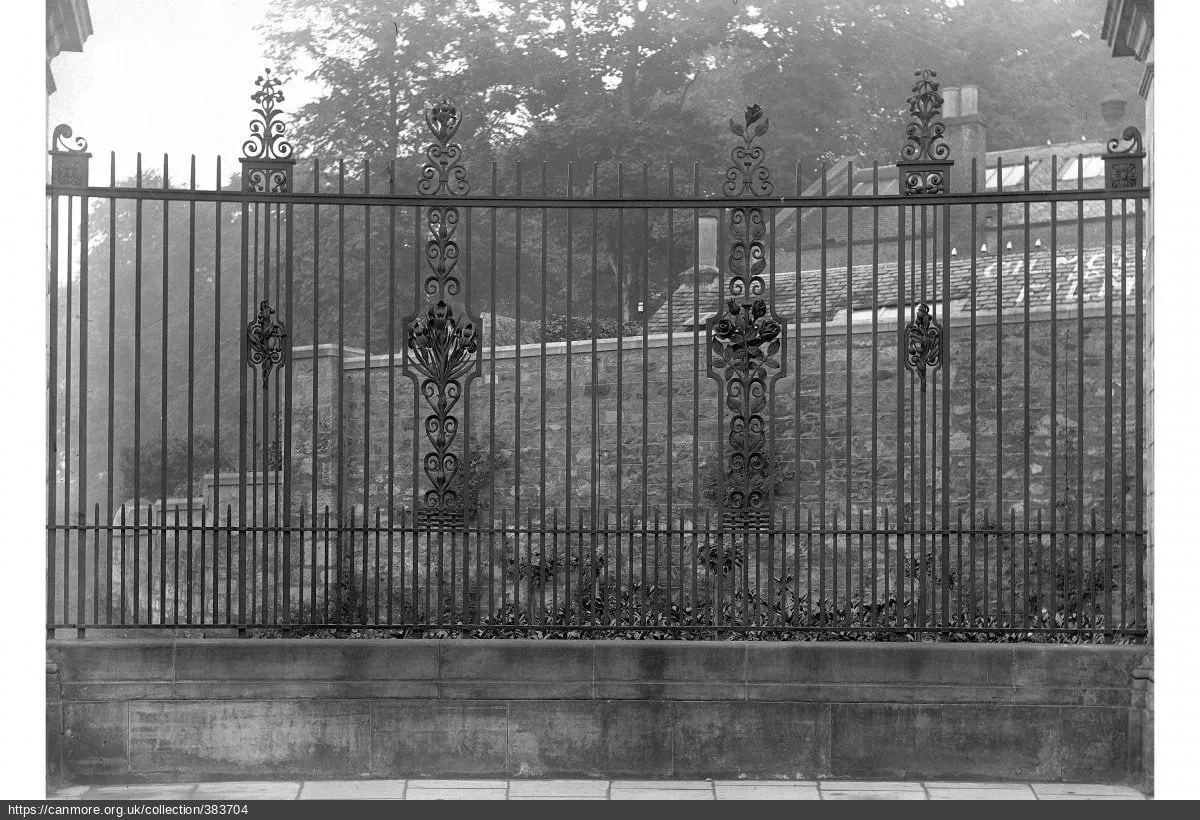
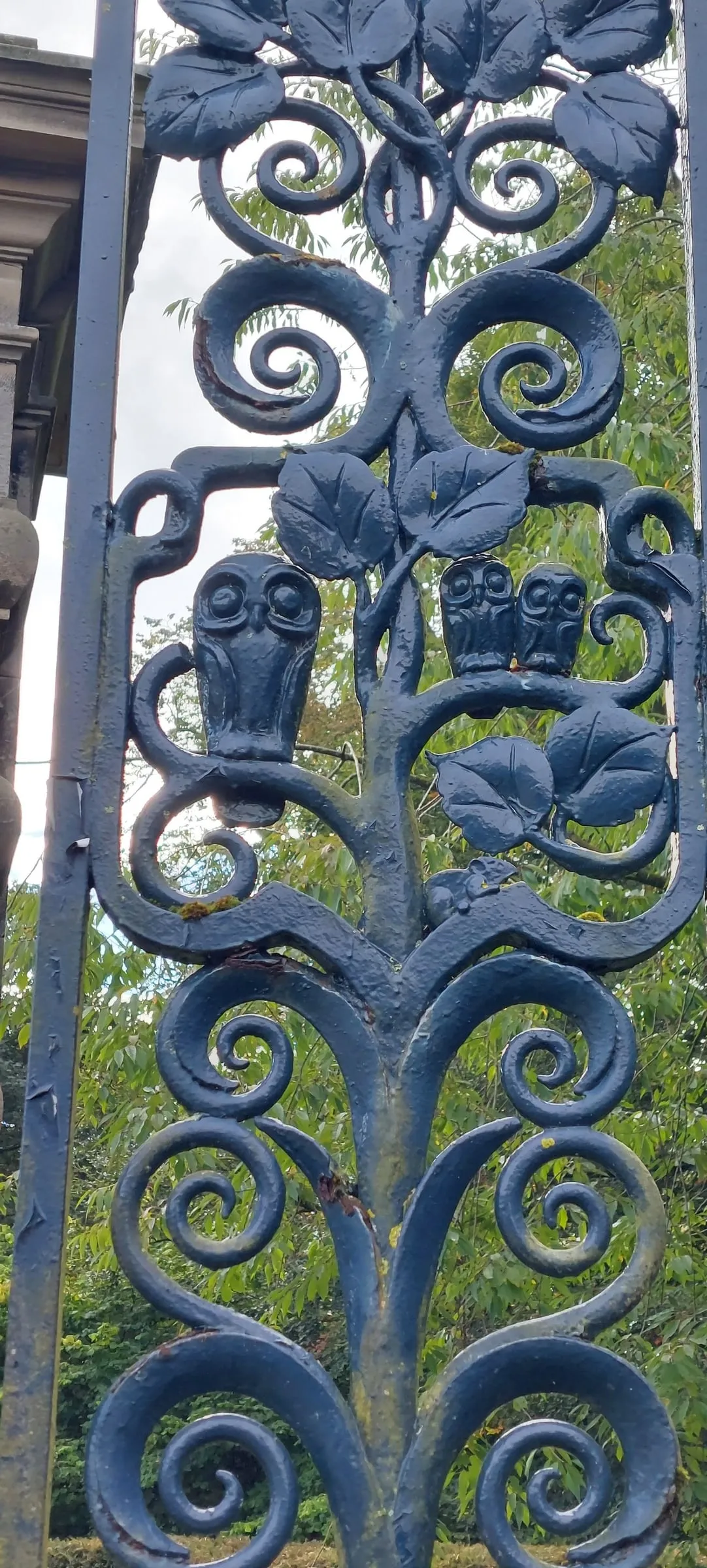
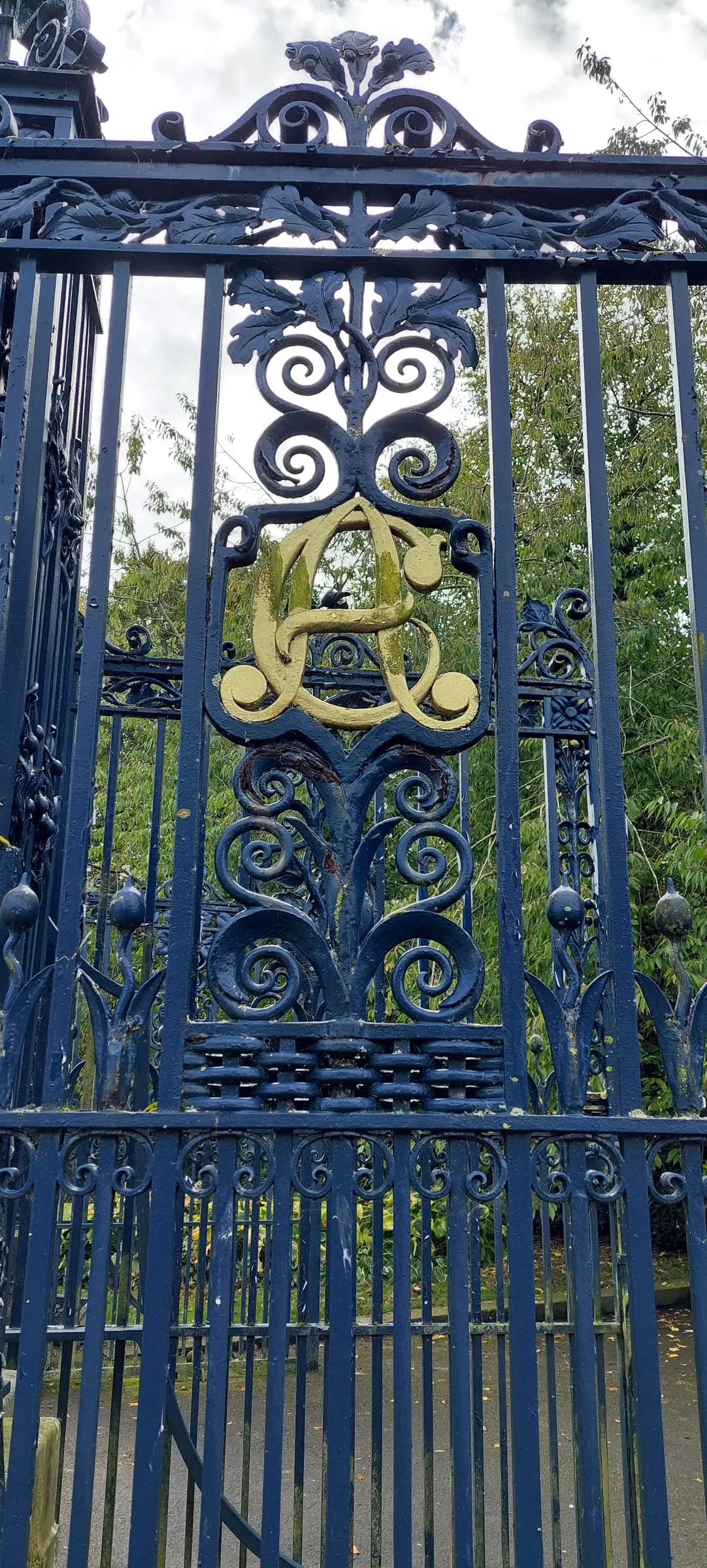
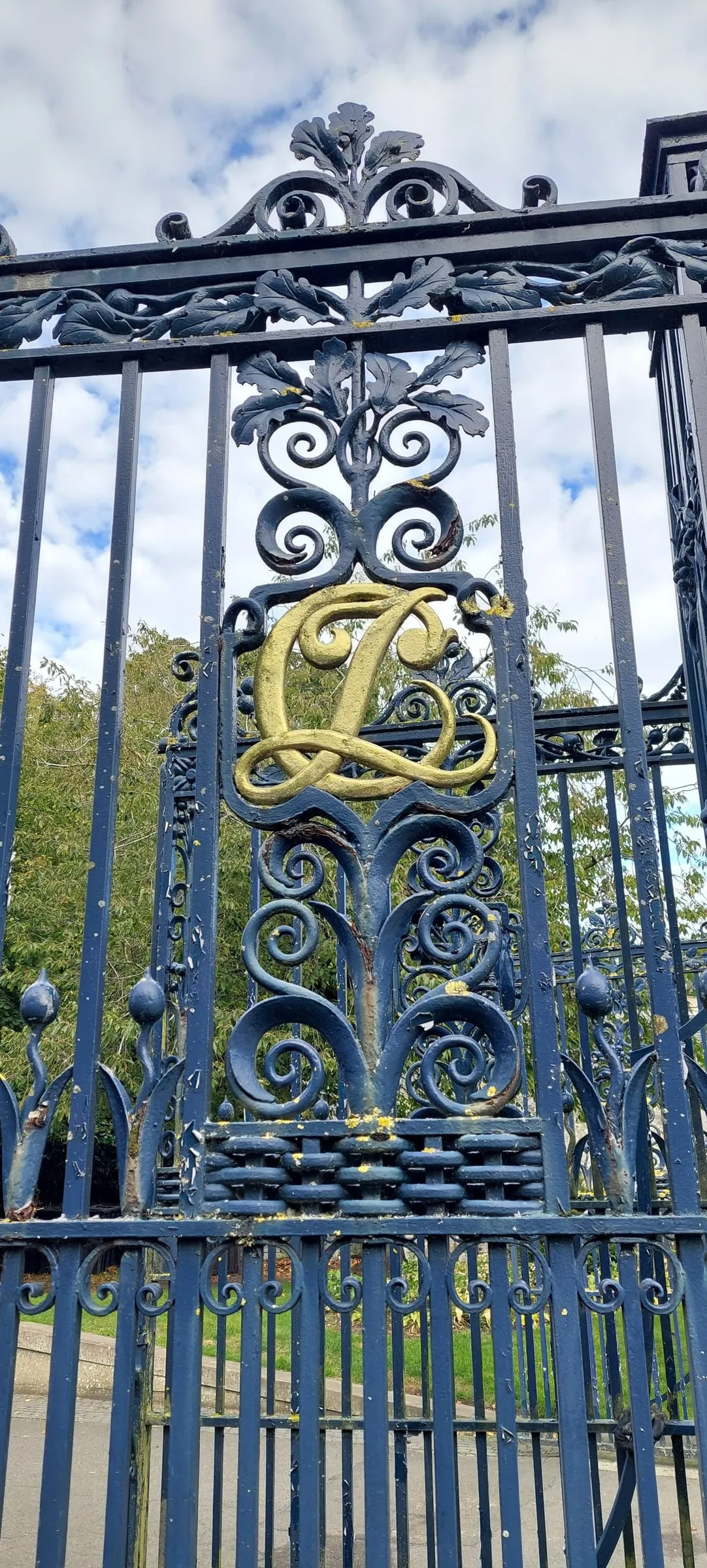
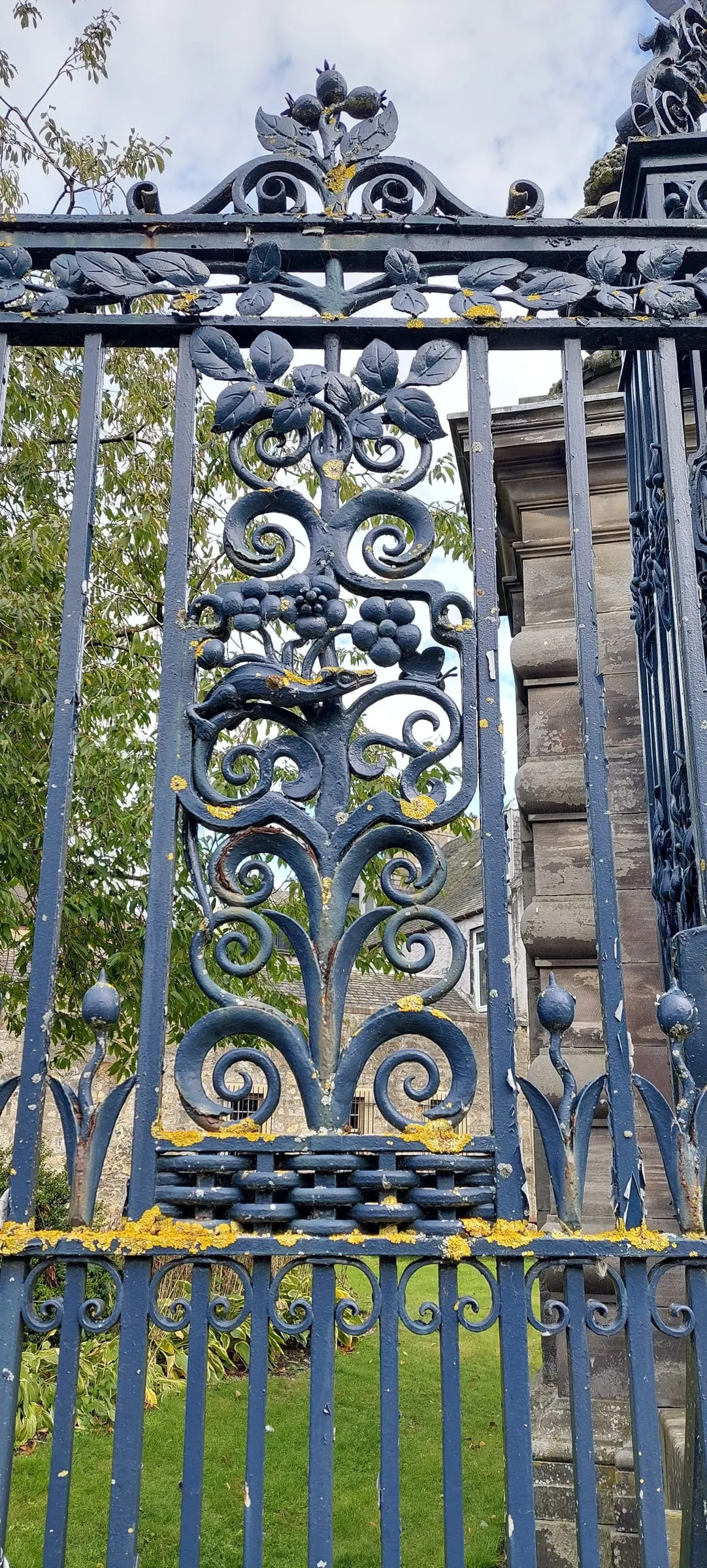
Their creator, Thomas Hadden, was one of Scotland’s leading craftsmen of his time. He collaborated frequently with the renowned architect Sir Robert Lorimer, and his best-known work includes the magnificent metal screens in Lorimer’s Thistle Chapel at St Giles’ Cathedral, Edinburgh. Hadden’s ironwork is a masterpiece of artistry. The gates are richly decorated with flowers, fruit, foliage, and scrolls, celebrating the natural beauty of the park beyond. At the centre, the intertwined initials “A.C.” and “L.C.” commemorate Andrew and Louise Carnegie, while thistle motifs proudly mark the Scottish setting. Two elegant lamp standards, one on each side of the main gates, stand on stone pedestals, their wrought-iron posts crowned with octagonal lanterns.
The Louise Carnegie Gates represent one of the finest examples of early 20th-century decorative ironwork in Scotland. Though often referred to as a memorial, they were in fact completed while Mrs Carnegie was still alive.
The gates also reflect Dunfermline’s deep connection with the Carnegie family. Andrew Carnegie had purchased Pittencrieff House and its estate in 1902, gifting it to the people of his hometown as a public park the following year.
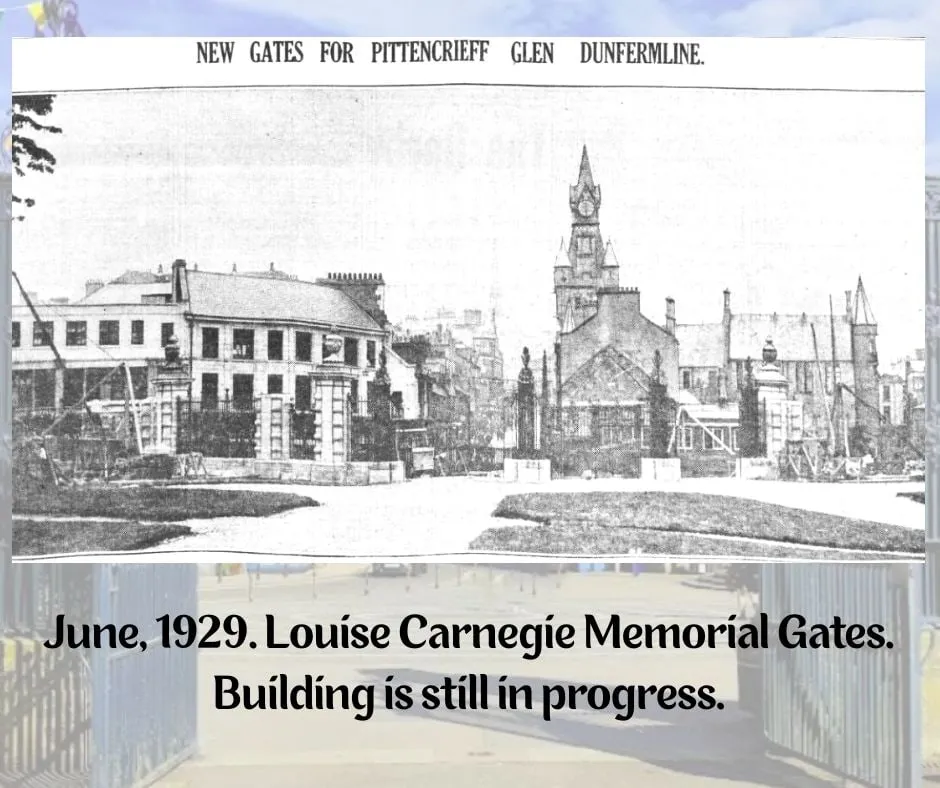
📜The idea for a new main entrance to Pittencrieff Park first emerged in 1912, when the Carnegie Dunfermline Trust decided that the park should have a grander gateway closer to the town centre, rather than using the original estate entrance on Pittencrieff Street. To make space, the Trust began buying up properties at the junction of Bridge Street and Chalmers Street, paying £5,000 for several houses owned by Mrs Henderson. A temporary wooden gate was put up while plans for the permanent entrance were developed.
Over the next decade, the Trust continued acquiring neighbouring properties, including one on Bridge Street in 1918 and another on Chalmers Street in 1924, gradually clearing the ground for what would become the park’s main approach. Several designs were considered, including an ambitious plan in 1919 for new gates alongside a music hall and winter gardens, though that project was never realised.
By 1925, the Trust appointed Auldjo Jamieson of the architectural firm Sidney Mitchell and Wilson (later Jamieson and Arnott) to oversee the new entrance design. His first estimate of £25,000 was considered too high, so the plan was refined to reduce costs. As it was already mentioned, the ironwork was performed by Thomas Hadden, the stonework, using Cullaloe stone, was carried out by Robert Coll, a Dunfermline builder who also demolished the old buildings on the site.
During construction, workers discovered a 40-foot-deep mine shaft — a reminder of the days when monks once dug for coal on the estate — which was safely filled in.
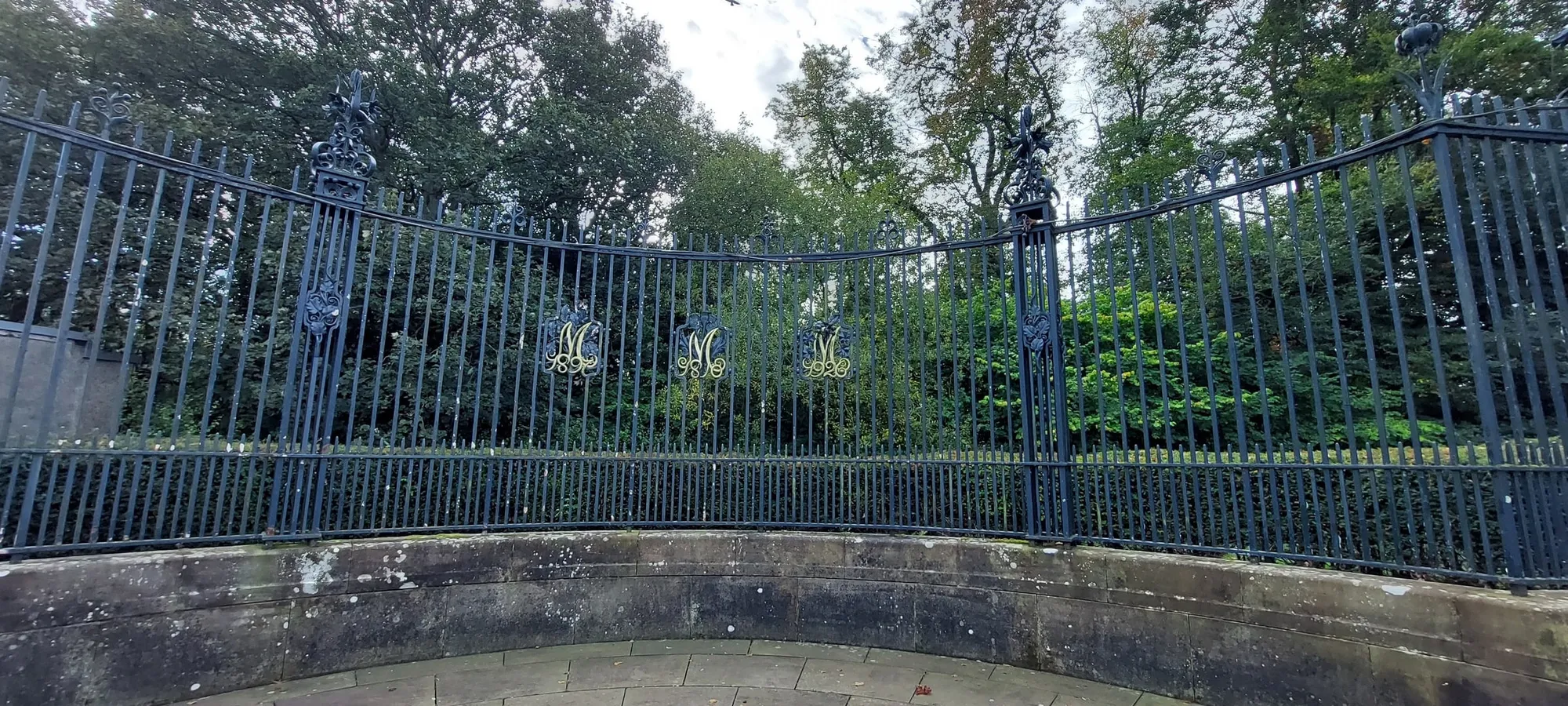
The total cost of the new entrance was around £30,000, including the purchase of surrounding properties. The ironwork design incorporated flowers, fruit, and animals — symbols of the natural life found in the park — and a small semicircular area was built for viewing and resting. The initials and birthdates of Margaret Morrison (Andrew Carnegie’s mother), Margaret Carnegie (his daughter), and Margaret Miller (his granddaughter) were worked into the decorative metal panels.
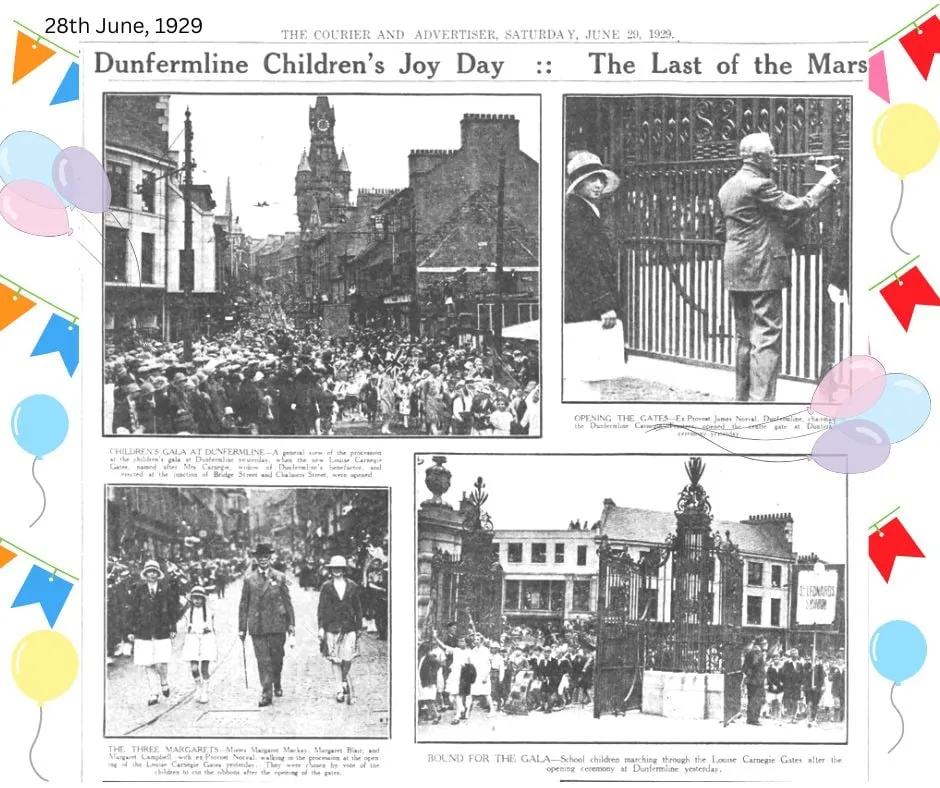
🎉The grand opening took place on Friday, 28 June 1929, during Dunfermline’s Children’s Gala Day — a celebration originally established by Mrs Louise Carnegie herself. The ceremony was simple but deeply symbolic. Three schoolgirls — Margaret MacKay from Dunfermline High School, Margaret Blair from Queen Anne School, and Margaret Campbell from the Commercial School — were chosen to perform the ribbon-cutting. They were accompanied by ex-Provost James Norval, chairman of the Carnegie Dunfermline Trust, along with trustees John Hynd and Robert Husband.
Although Mrs Carnegie and her daughter, Mrs Margaret Carnegie Miller, were unable to attend, a telegram was sent to their summer home at Skibo Castle, reading:
“Thousands of happy children assembled in Pittencrieff Park send warmest greetings. The Louise Carnegie Gates were successfully opened by the three Margarets.”
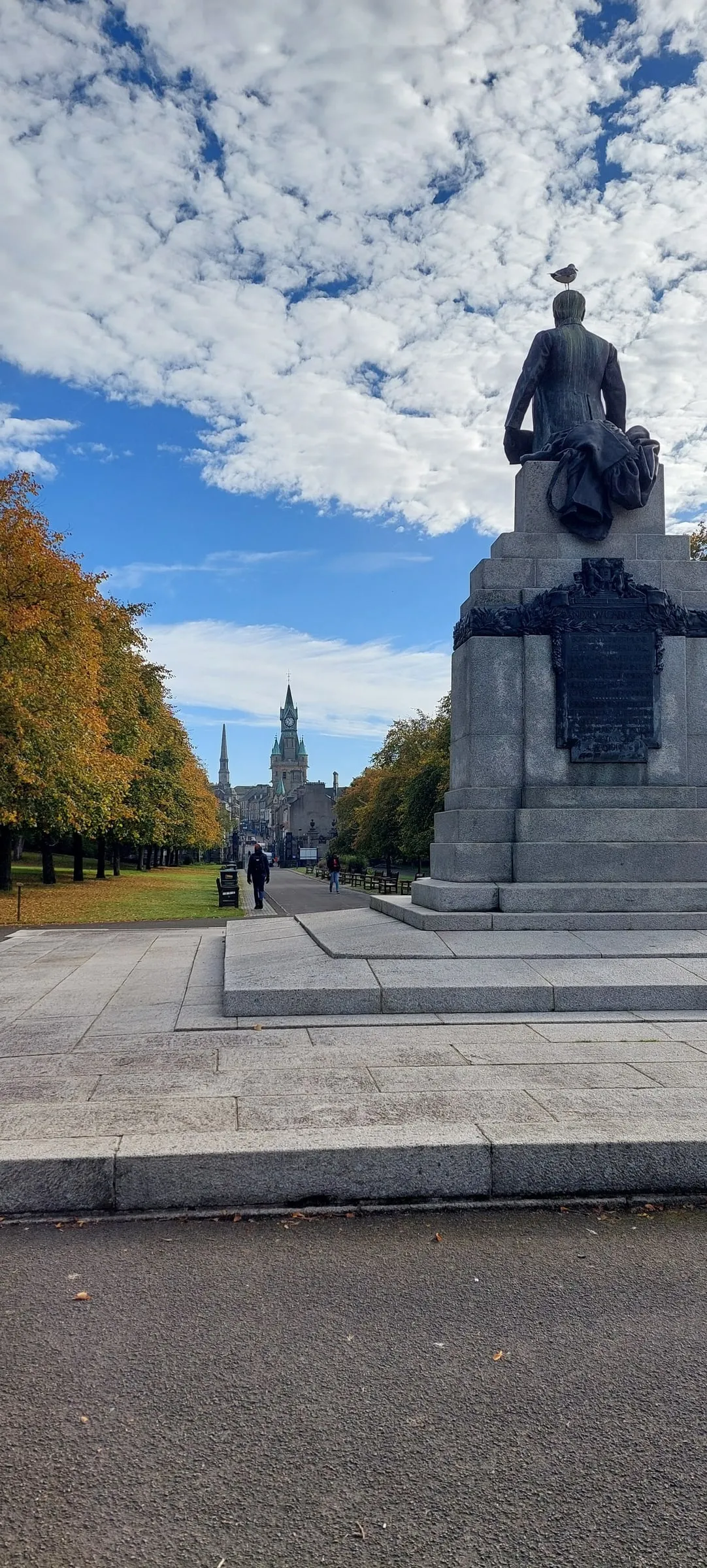
Each girl received a gold watch in thanks for her part in the ceremony. Margaret MacKay also laid a wreath at the Carnegie statue nearby.
A commemorative gold key, shaped like a thistle and engraved with the arms of Dunfermline and the motto of the Carnegie Dunfermline Trust, was made by Hamilton & Inches of Edinburgh and presented to Mrs Carnegie as a keepsake.
🌿In later years, small updates were made: the gate’s lighting was converted from gas to electricity in 1950, and flower beds were added in front by the Town Council in 1965. Discreet barriers were installed in 1969 to stop vehicles from entering the park.
Fifty years after the opening, on 23 June 1979, the Trust organised a commemorative ceremony. Two of the original “three Margarets” — Margaret Blair (now Mrs Gifford) and Margaret Campbell (now Mrs Fowles) — returned to cut new ribbons on the gates, while Mrs A.V. Crawford represented Margaret MacKay, who could not be traced. Each woman was presented with a bouquet and a framed print of Dunfermline, while three modern pupils — one from each of their former schools — received pewter pendants in tribute.
🪻⚒ Through decades of change, the Louise Carnegie Gates have remained one of Dunfermline’s most cherished landmarks — a lasting reminder of the Carnegie family’s generosity, the city’s civic pride, and the enduring artistry of their creators. For generations, everyone in Dunfermline — locals and visitors alike — has passed through the Louise Carnegie Gates on their way into or out of the beautiful Pittencrieff Park. The gates, with their flowing ironwork and graceful design, are more than just an entrance: they are a symbol of the park’s closeness to nature, its peaceful beauty, and the generosity of the Carnegie family, to whom the city remains deeply grateful.
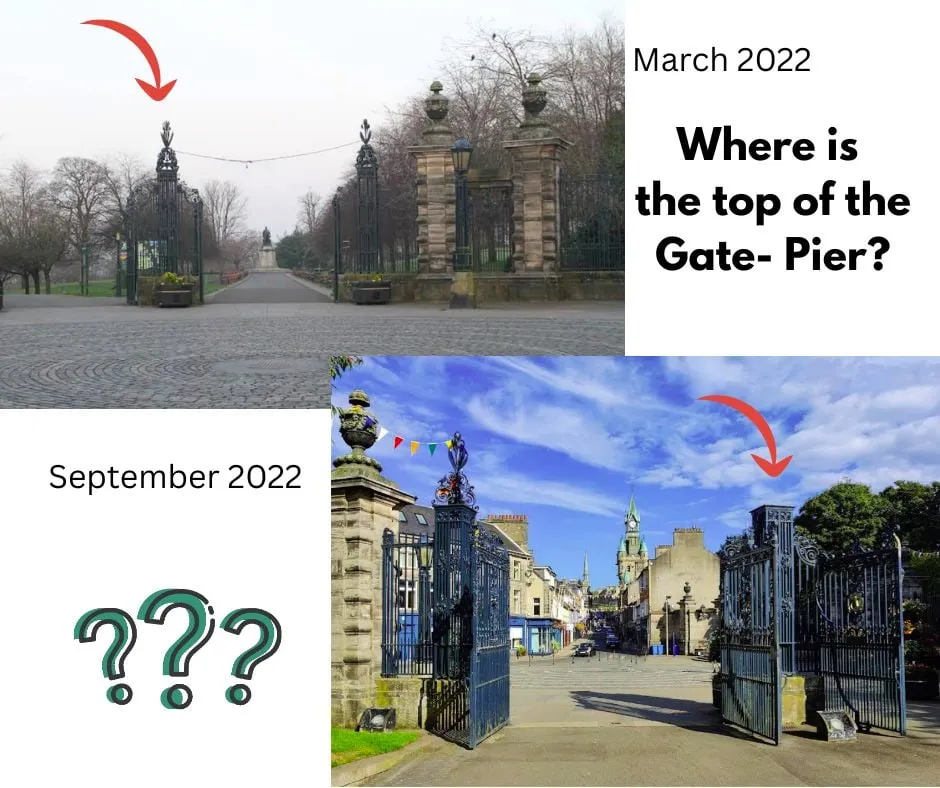
But even the finest craftsmanship cannot escape the effects of time. The gates’ once magnificent wrought iron has suffered from weathering and corrosion, and in many places the delicate details have weakened or broken. One of the most noticeable losses is the floral ornament that once decorated one of the central gate piers — a piece that has been missing since around 2022. It is not clear whether this decoration was removed for restoration or has been lost entirely. If anyone knows what happened to it or when it might return, please let us know.
In 2029, it will be one hundred years since the gates were first opened to the public — a moment of immense pride for the people of Dunfermline in 1929, and still one of the town’s most treasured landmarks today. As that centenary approaches, it would be wonderful to see the gates restored to their original splendour, their intricate flowers, thistles, and scrolls shining once again as they did when they were first unveiled.
Restoring the Louise Carnegie Gates would not only honour the skill of their creators — architect Auldjo Jamieson and blacksmith Thomas Hadden — but also celebrate a century of the park as a place of joy, community, and natural beauty. The gates deserve to stand proud once more, ready to welcome future generations to “the Glen”, just as they have done for nearly a hundred years.
(Sources: CDT Minutes, BNA Articles, Dunfermline “Our Heritage” by Bert McEwan).
Photographs