Historic Dunfermline
Unsolved Mystery: Wallace’s Cave, Dunfermline, 1906
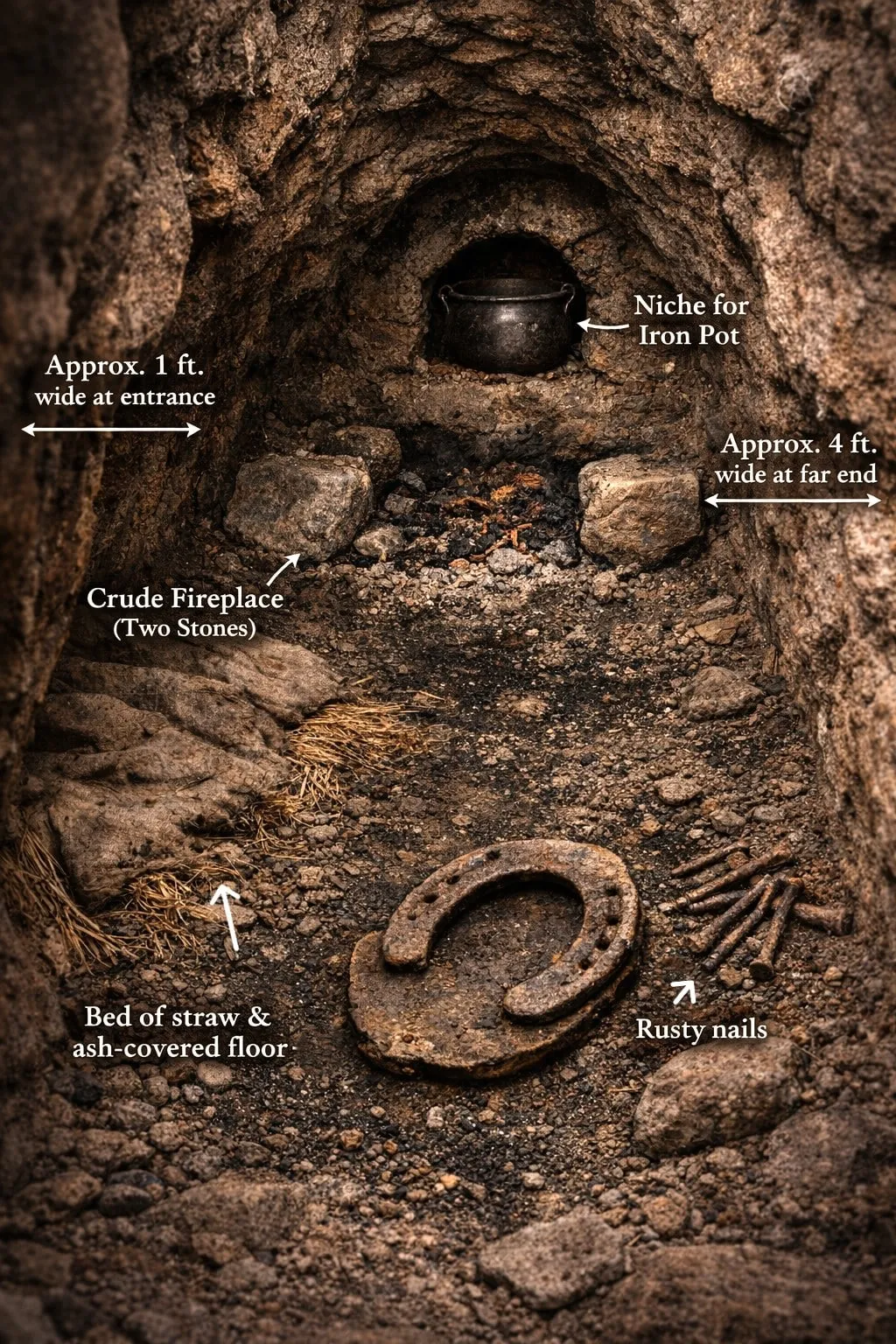
An unprecedented discovery was made in 1906 during works in the Tower Hill area. A natural cave was found on its northern side, containing evidence of human activity. Almost immediately, the discovery was named Wallace’s Cave, based on the assumption that William Wallace may have hidden there while the English court and army were wintering in Dunfermline in 1301 during the Scottish Wars of Independence.
In 1906–1907, workmen were employed in constructing rock supports for the Malcolm Canmore Tower Hill. To protect the ruins of Malcolm Canmore’s Tower, which was being gradually undermined by crumbling shale, rock was built into the hillside to a height of about 90 feet, and suitable alpine plants were placed where possible. Boulders were also positioned along the riverbed, and a wide path was formed along the north side of the masonry.
During these operations, the workers came across a cave that must have been buried for centuries and showed unmistakable signs of human use. The cave - essentially a fissure in the rock - was little more than a foot wide at the entrance and about four feet wide towards the far end. At its wider end was a crude fireplace made of two pieces of freestone, which, like other stones inside, showed signs of exposure to heat. A leather horseshoe sole and several rust-encrusted nails were also discovered. The floor of the cave was covered with coal ashes, and there appeared to be a rough sleeping area, along with a hollow in the wall shaped to hold a pot above the stone fireplace.
This cave was believed to have been a hiding place of Sir William Wallace, and it was agreed that it should be preserved as an important historic landmark.
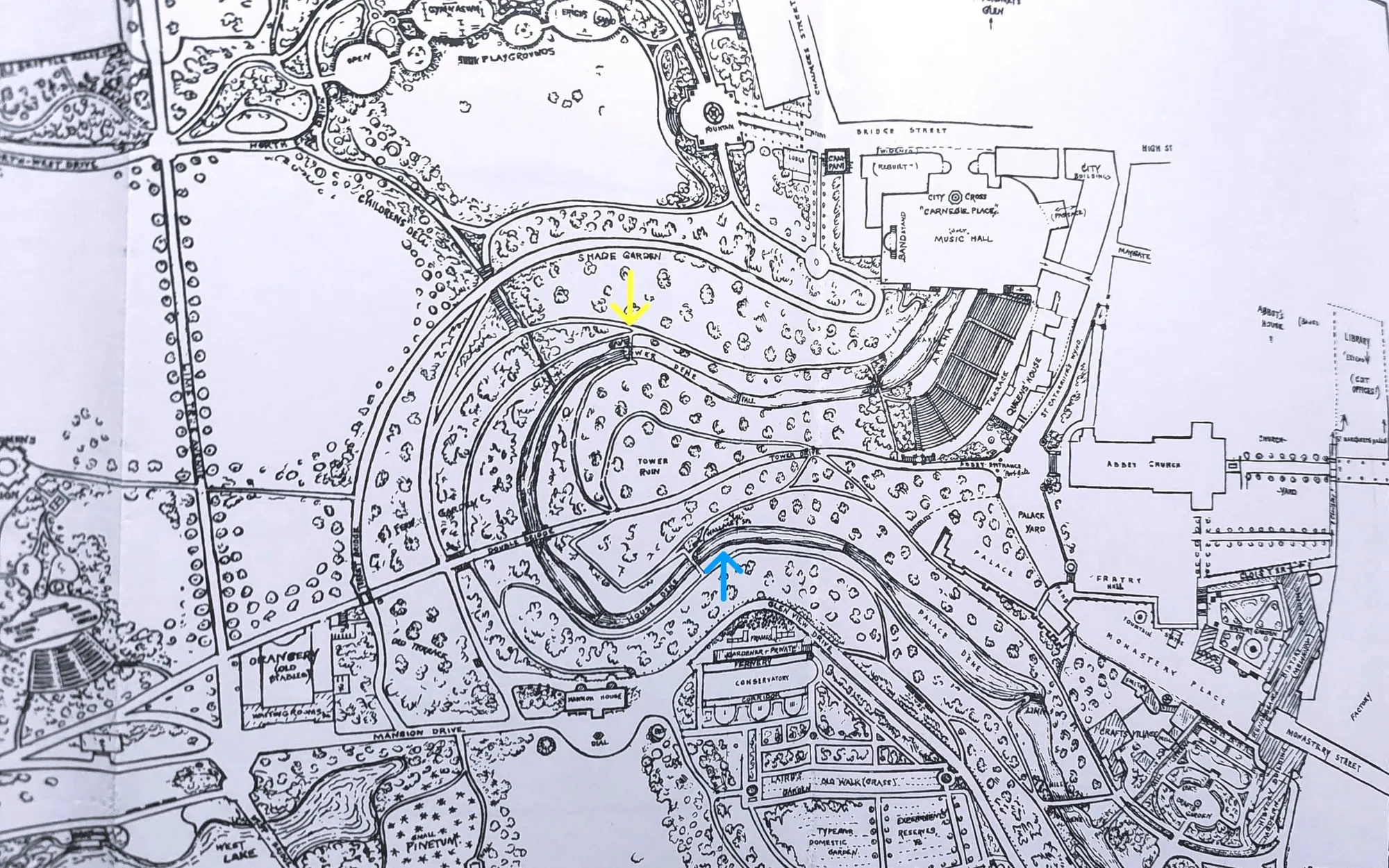
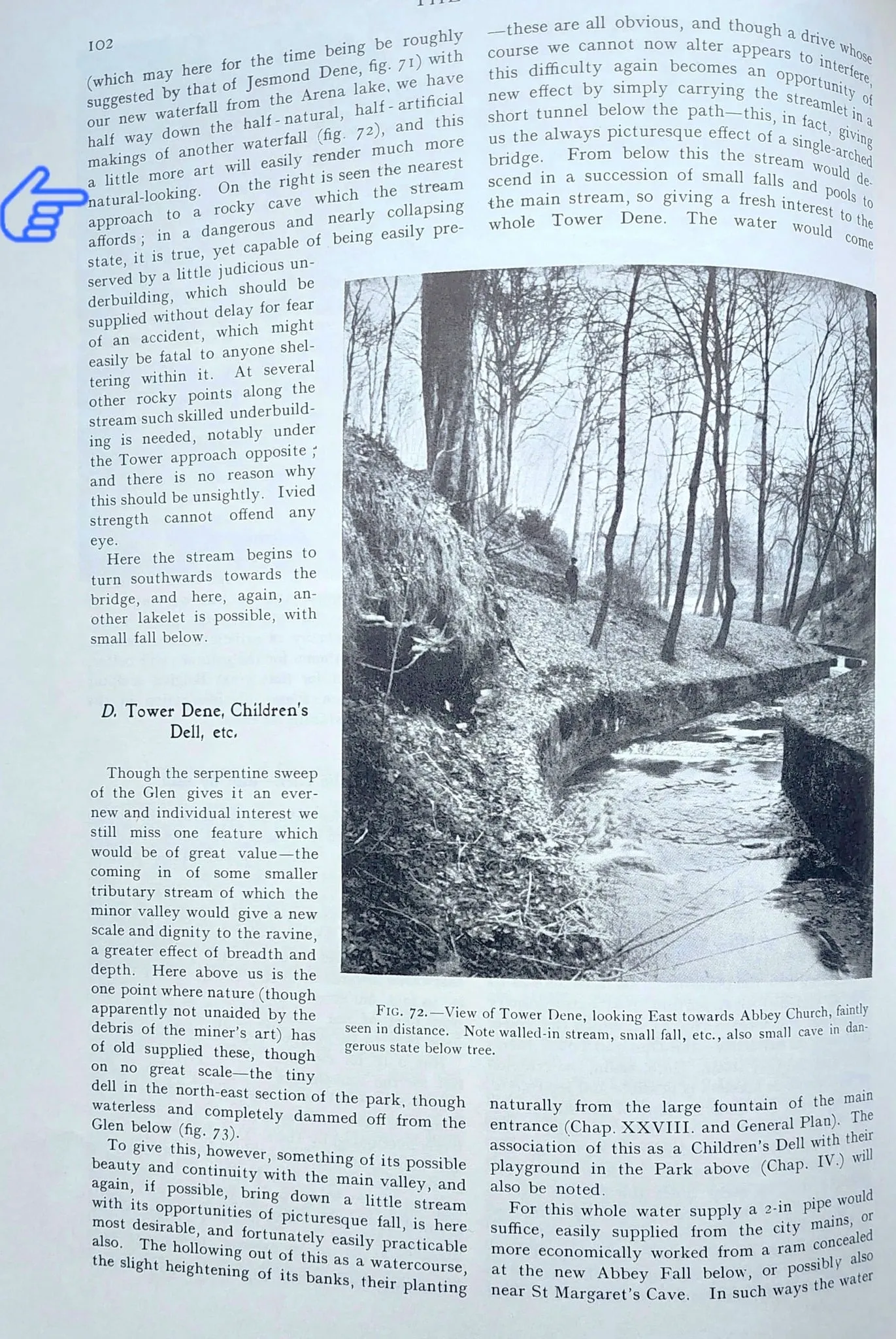
A few years earlier, Patrick Geddes, a specialist in urban planning, who was invited by the Carnegie Dunfermline Trust to design improvements to Pittencrieff Glen, reported in 1904 that, while studying the banks of the Tower Burn on the north side of Tower Hill, a cave had been discovered in a dangerous condition. He warned that it posed a risk to anyone entering it, although he believed the walls could be reinforced for preservation.
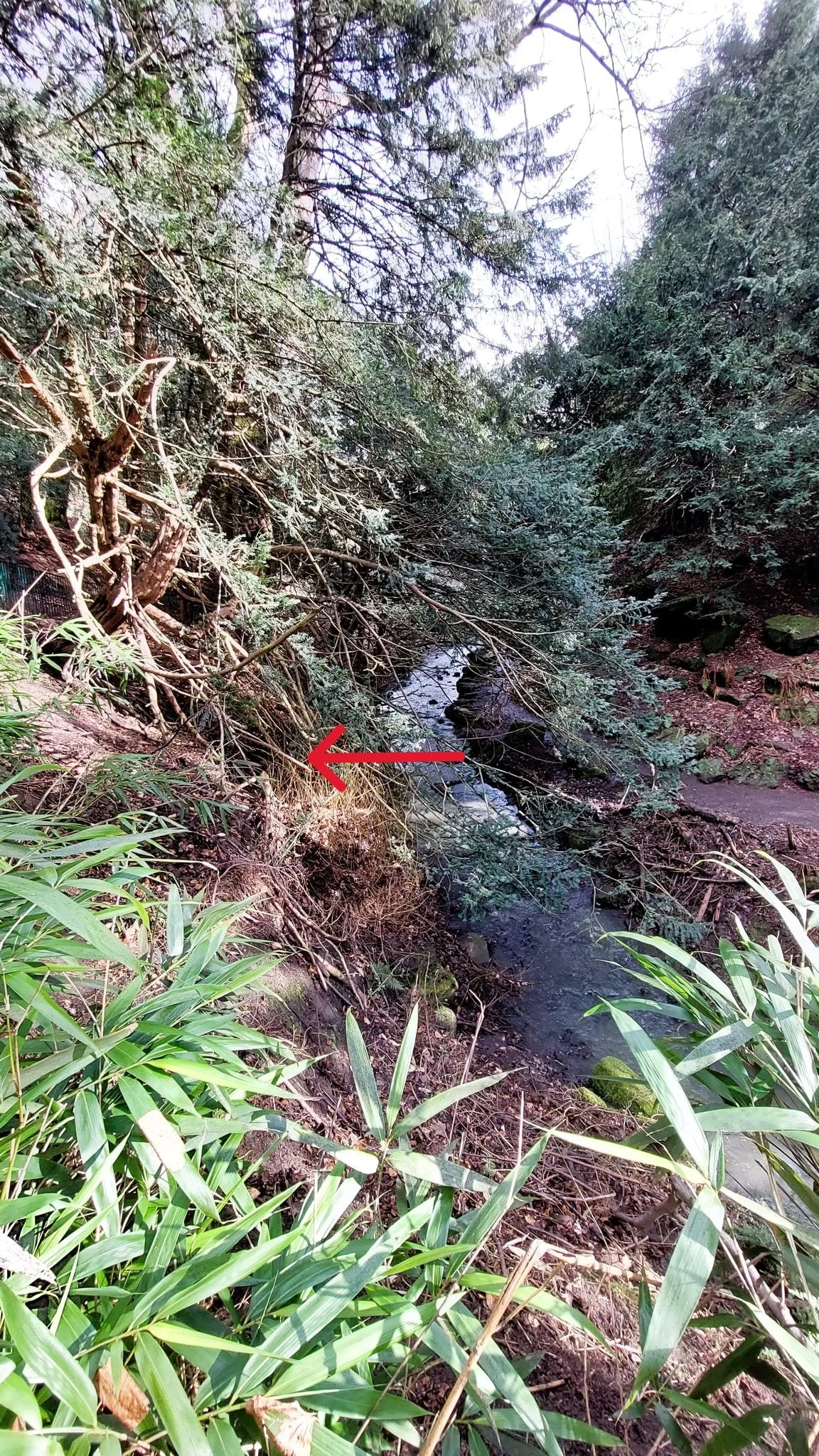
Local accounts suggest that Geddes’s cave was later buried during improvements to the Tower Burn embankment, though it may still be visible if one looks closely while exploring the area from the Witch’s Hat towards the Abbey along the burn.
Unfortunately, it is not known what happened to the Wallace’s Cave after 1906. It received wide coverage in the press; however, there is no mention of it after 1907.
This raises an important question: were these two references describing the same cave, or were they two separate natural formations?
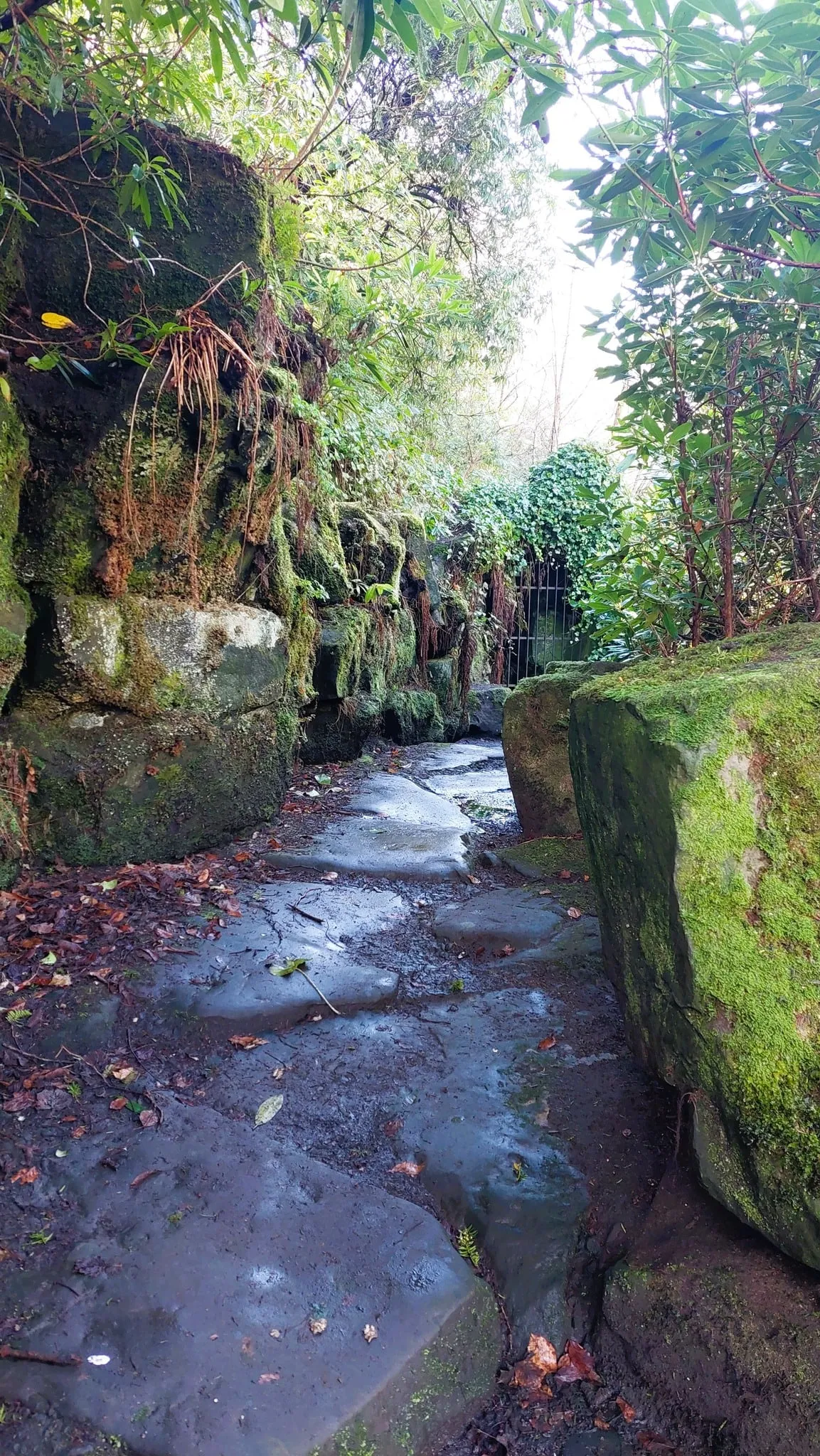
There are now two caves that can be found on the northern side of Tower Hill, once you walk down the steps towards the Pebble Bridge. However, they are clearly man-made and appear to have been created after the reinforcement works. Could one of them have originally been the Wallace’s Cave?
Over time, history has blended into oral tradition, and many people now mistakenly refer to Wallace’s Cave as Wallace’s Well or Spa. This is incorrect, as Wallace’s Well appears on maps dating from much earlier than the 1906 discovery.
Thus, this remains one of the unsolved mysteries of our beautiful Glen and its Tower Hill area. What was the Wallace’s Cave? Who used it as their hideout? And what happened to it?🧐
🎨Images:
The restored image of the inside of the Wallace’s Cave based on the description; Patrick Geddes’ plan of the Pittenctieff Glen improvements (yellow arrow - the cave he discovered, blue arrow - Wallace’s Well/Spa); Image of the Geddes’ Cave in 1904; Image of the Geddes’ Cave in 2026; One of the man-made caves on the northern side of Tower Hill.
Photographs