Historic Dunfermline
Canterbury, Durham and Dunfermline: What Do They Have in Common?
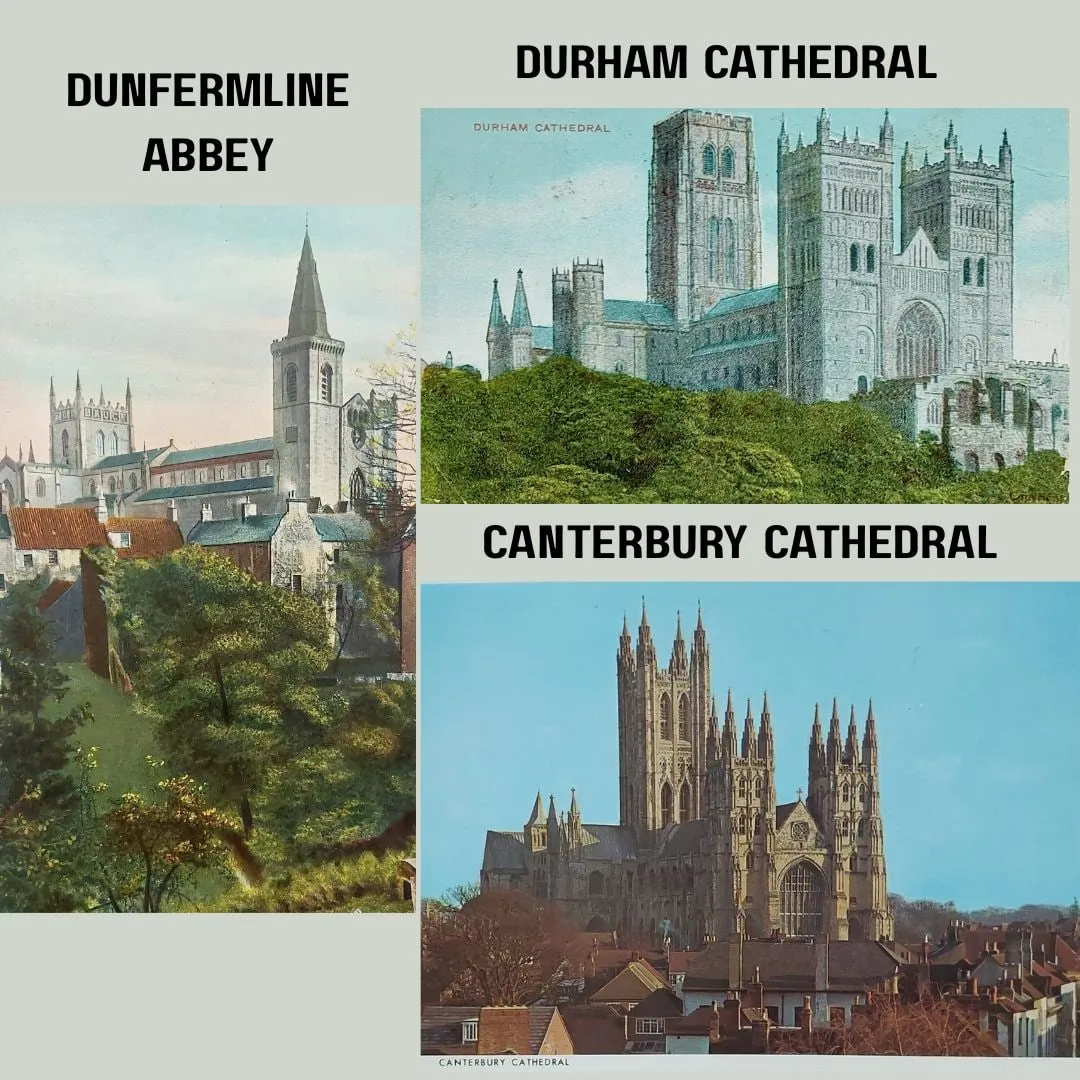
What’s in Common Between Canterbury Cathedral, Durham Cathedral, and Dunfermline Abbey?
When we look at these three remarkable buildings today, we see not only their striking architectural similarities but also deep connections in their history and purpose.
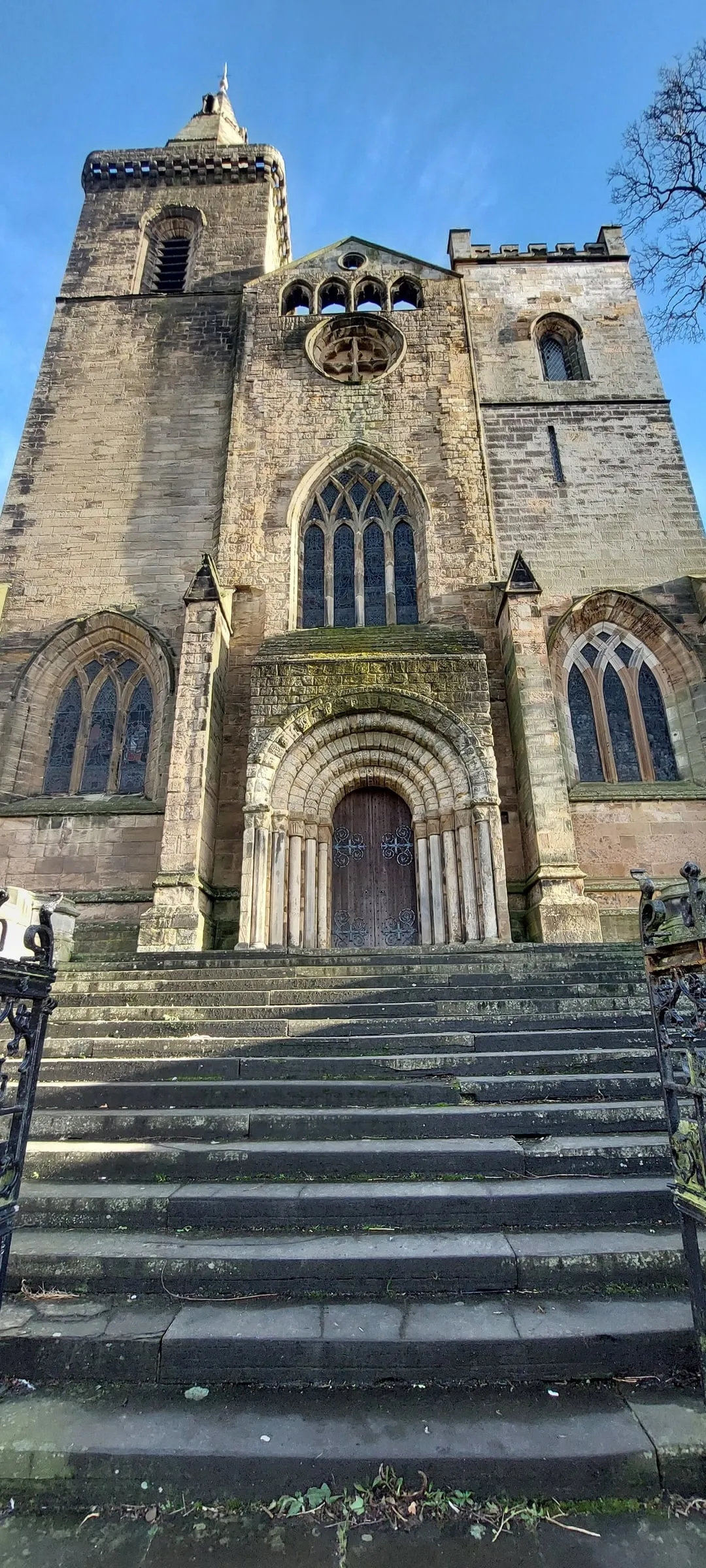
All three — Canterbury Cathedral, Durham Cathedral, and Dunfermline Abbey — showcase the Romanesque (or Norman) architectural style, with its rounded arches, thick stone walls, and decorative arches and columns. This style spread from Normandy across England after the Norman Conquest of 1066 and eventually reached Scotland, especially under the influence of King David I of Scotland.
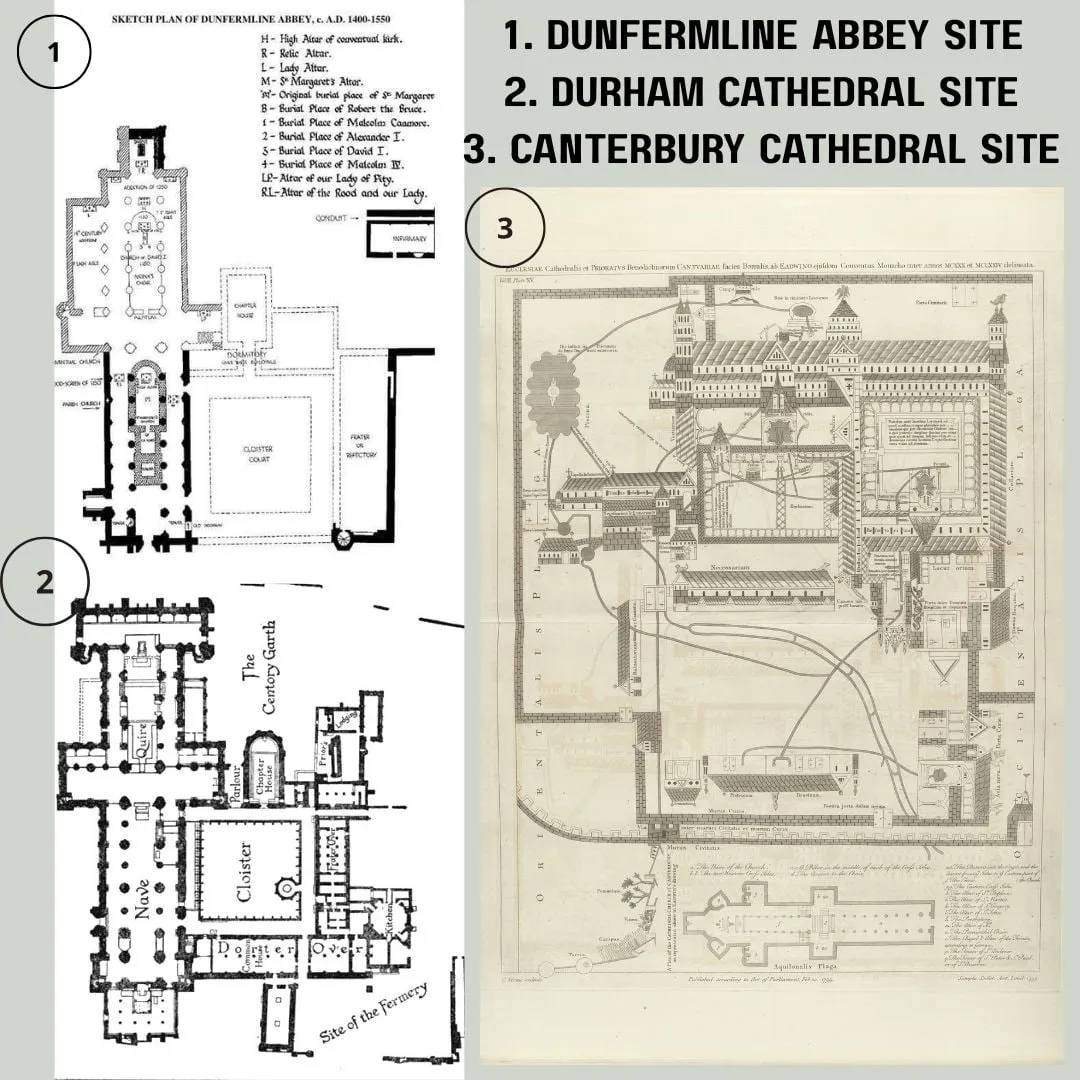
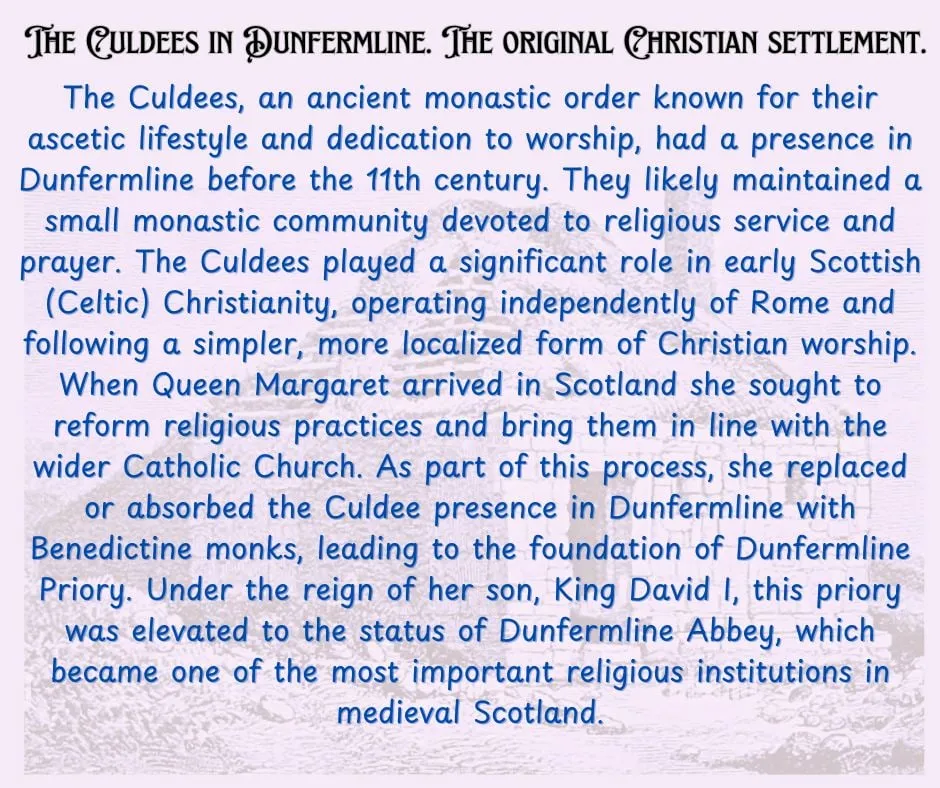
Each of these great buildings was originally part of a Benedictine monastic community: Canterbury with its Benedictine monastery, Durham as a Benedictine priory, and Dunfermline Abbey, which Queen Margaret of Scotland founded and populated with Benedictine monks. Because they were all Benedictine houses, their cloisters, chapter houses, dining halls, and churches followed similar design patterns. It’s fascinating to imagine what Dunfermline Abbey’s original layout might have looked like by comparing it to the more complete remains at Canterbury and Durham.
All three places were also deeply tied to royal and political power. Canterbury was the seat of the Archbishop of Canterbury, England’s top church figure. Durham Cathedral was not just a religious center but also a defensive stronghold for the powerful Prince-Bishops of Durham. Dunfermline Abbey, meanwhile, became a favorite burial place for Scottish royalty and an important center of royal support, especially under Queen Margaret and King David I.
The architectural links between Durham and Dunfermline are especially strong. Historians believe that some of the same stonemasons who worked on Durham Cathedral later traveled north to help build Dunfermline Abbey. One particularly telling detail is a decorative motif on one of Dunfermline’s great columns that closely resembles — but slightly differs from — a leaf-shaped carving at Durham.
Politically, King Malcolm III of Scotland had a complicated relationship with William the Conqueror. After several raids and conflicts, Malcolm submitted to William at Abernethy in 1072. The borderlands around Durham were often caught up in this ongoing struggle, and Durham’s bishops played a key role in defending northern England against Scottish attacks. Interestingly, records show that Malcolm was present at the foundation stone ceremony for Durham Cathedral, and both his and Queen Margaret’s names appear in Durham’s Liber Vitae, a book listing important visitors, supporters and benefactors.
We should also remember the personal connections: Turgot, a bishop from Durham, became Queen Margaret’s confessor and wrote her only known biography. Malcolm and Margaret’s sons were raised in the best European religious and cultural traditions, so it’s no surprise that when David I took the throne, he embraced Norman architectural styles and religious reforms for Scotland’s churches.
By drawing inspiration from great English churches like Canterbury and Durham, Dunfermline Abbey became much more than just a royal church. It stood at the heart of a larger plan to strengthen royal authority, modernise religious life in Scotland, and connect the country to the cultural and spiritual currents that were shaping medieval Europe. Today, it remains a powerful symbol of Scotland’s historic ties to the wider European world.
Photographs