Historic Dunfermline
The Dunfermline Vita et Miracula: Life and Miracles of St Margaret
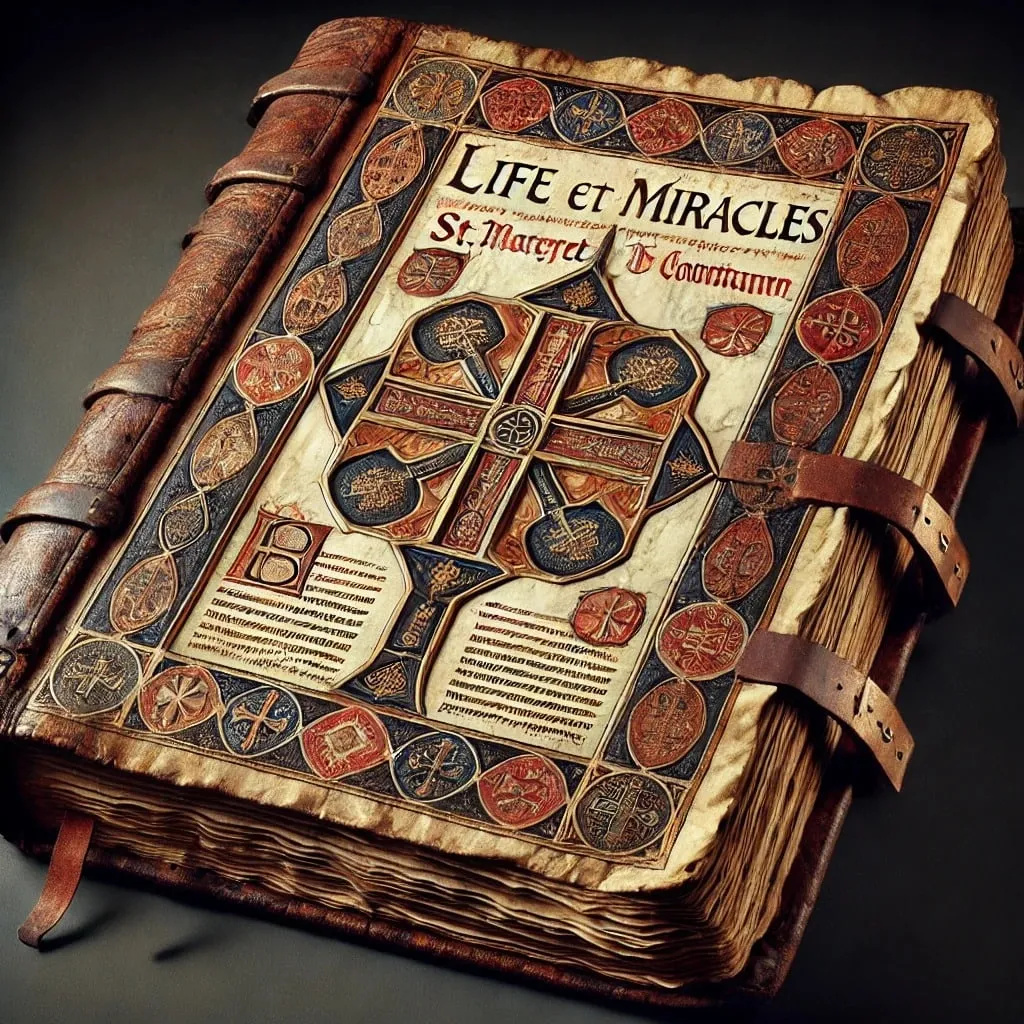
The Dunfermline Vita et Miracula (Life and Miracles of St. Margaret of Scotland).
The existence of a Scottish medieval manuscript in the Royal Library in Madrid (Madrid, Biblioteca Real, MS. II 2097) has long been acknowledged by historians of the period.
Transcribed at the Benedictine abbey of Dunfermline in Fife, the manuscript (The Dunfermline Vita) can be dated to the reign of James III of Scotland (1460–88).
The Dunfermline manuscript contains five items of particular interest to historians of medieval Scotland: an interpolated version of the Vita S. Margarete, the life of Queen Margaret of Scotland (1069–93), originally written by Turgot, her confessor, prior of Durham and bishop of St. Andrews (c.1050–1115); a collection of historical and legendary miscellany whose compiler could have been one of the monks from Dunfermline Abbey; a short chronicle known as the Dunfermline Chronicle; the Miracula of St. Margaret; and a version of Jocelin of Furness’s Vita S. Waldeuui, written in 1207.
The Miracula forms a companion piece to the Vita, recording the Queen’s posthumous miracles in a manner that complements the Vita’s account of her virtuous life. These miracles are unique in being the only miracle list to survive from a Scottish shrine. Some historians suggest that these miracles were compiled in order to support a campaign for Margaret’s canonisation – granted in 1250 by Pope Innocent IV – but they also serve important political functions, promoting Dunfermline as a site of pilgrimage and thereby supporting Scottish independence and the dignity and power of the Scottish royal line. These miracles were most likely composed at Dunfermline by the monks there.