 Historic Dunfermline
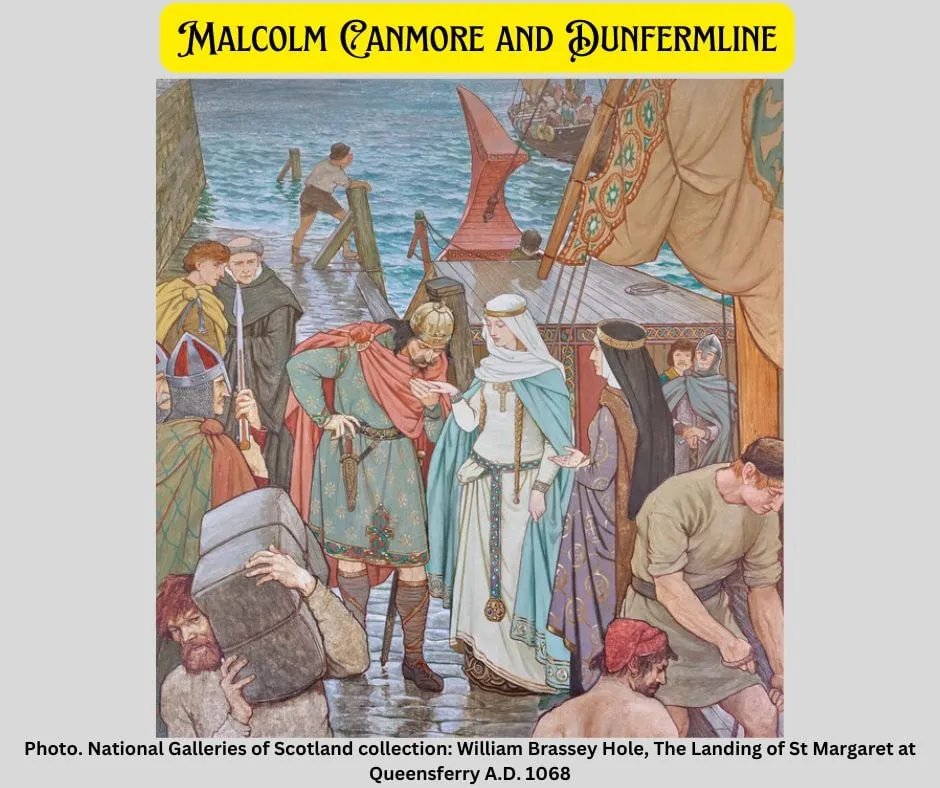
How Malcolm Canmore Came to Dunfermline
After the death of his first wife Ingibjorg in the 1060s, Malcolm III built a royal residence at Dunfermline, then a tiny hamlet, believed to be at Malcolm Canmore’s Tower.
84 stories with this tag.
After the death of his first wife Ingibjorg in the 1060s, Malcolm III built a royal residence at Dunfermline, then a tiny hamlet, believed to be at Malcolm Canmore’s Tower.
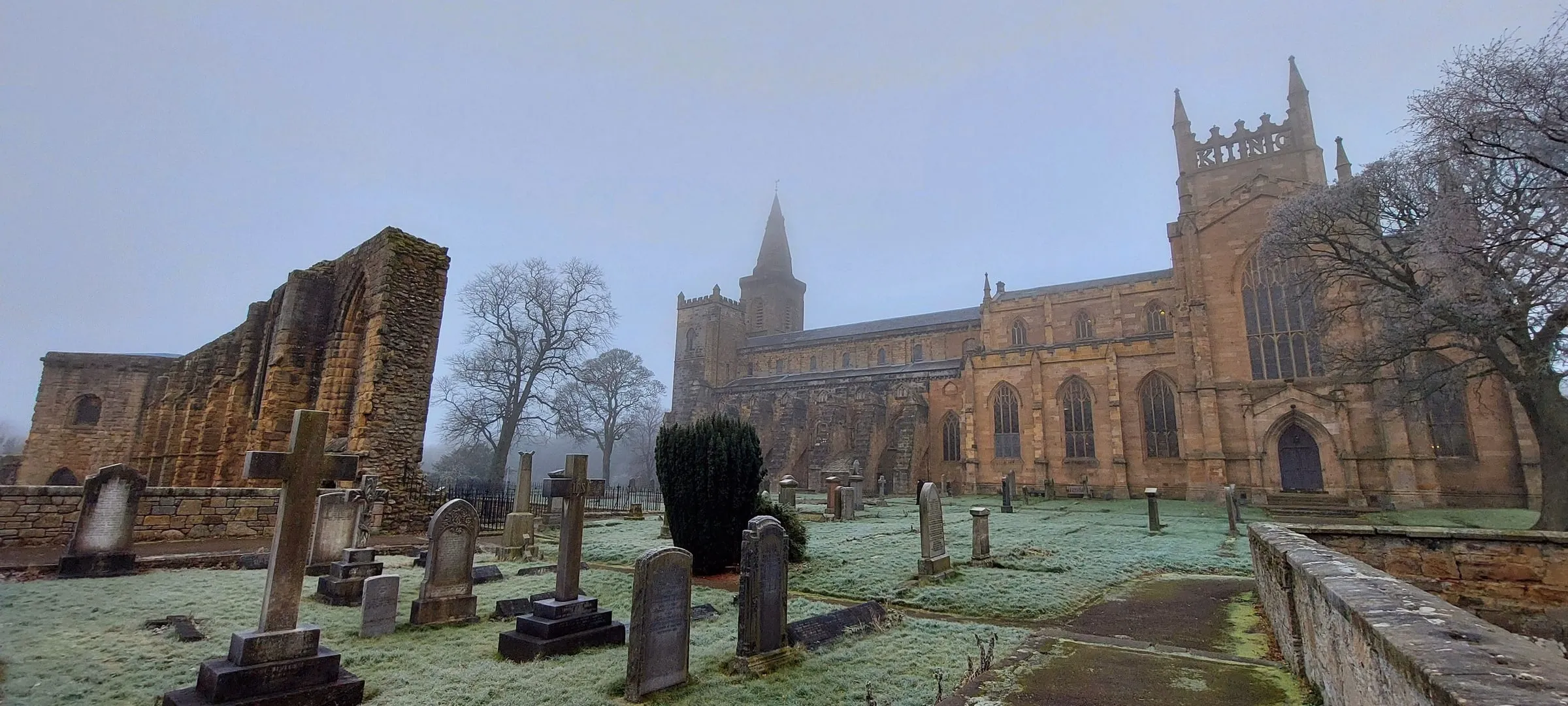
Dunfermline Abbey and the ruins of the royal palace on a frosty winter’s day.
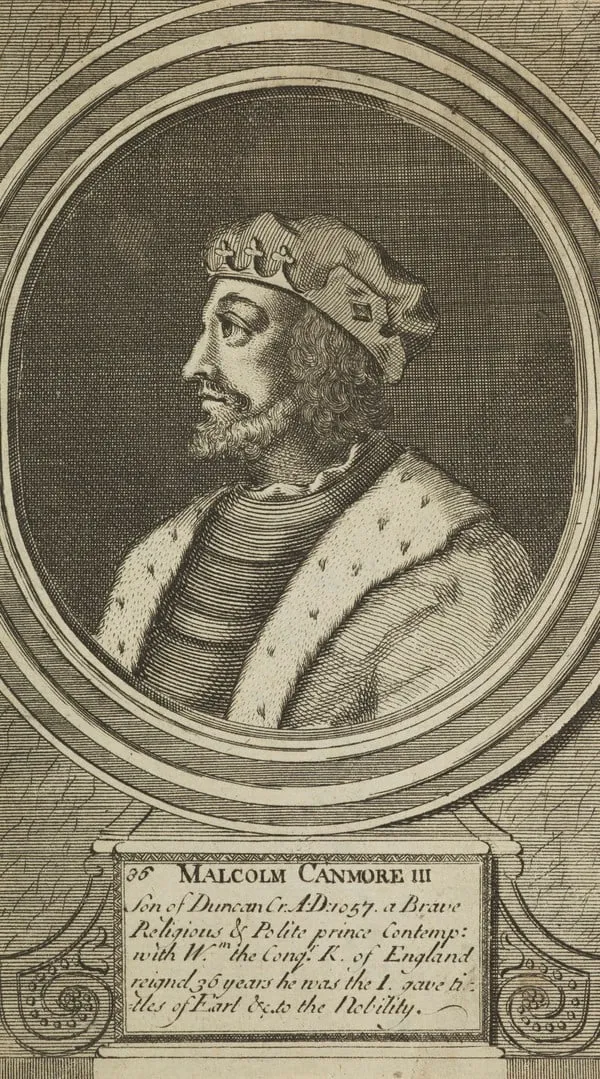
Malcolm III (c. 1031–1093), known as Canmore or “great chief”, was King of Alba for 36 years, one of the longest reigns in Scotland’s history.
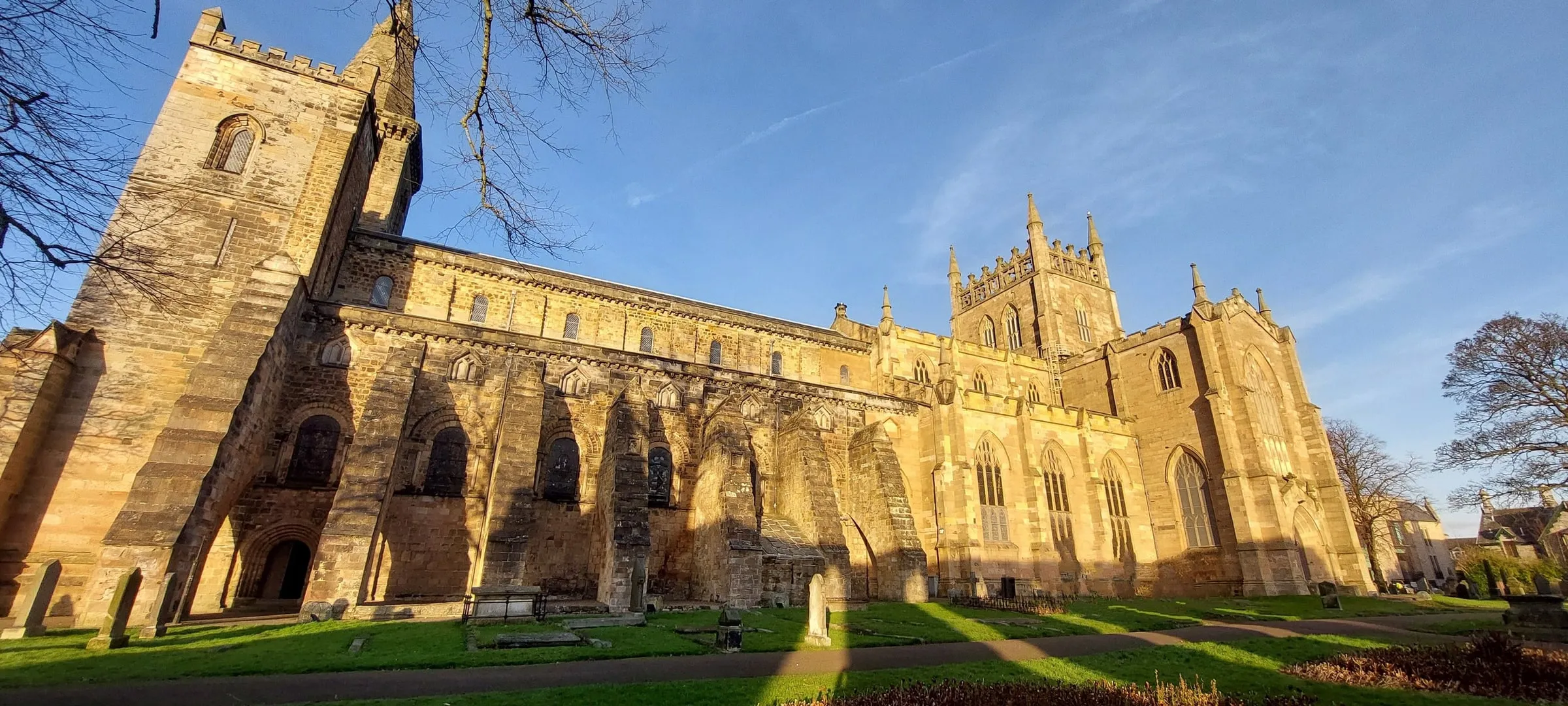
Dunfermline on a bright December morning: the abbey in low winter sun, the paths of Pittencrieff Glen and the avenue through Pittencrieff Park.
The name Dunfermline comes from ancient Gaelic and is often translated as “the fort on the hill by the crooked water”.
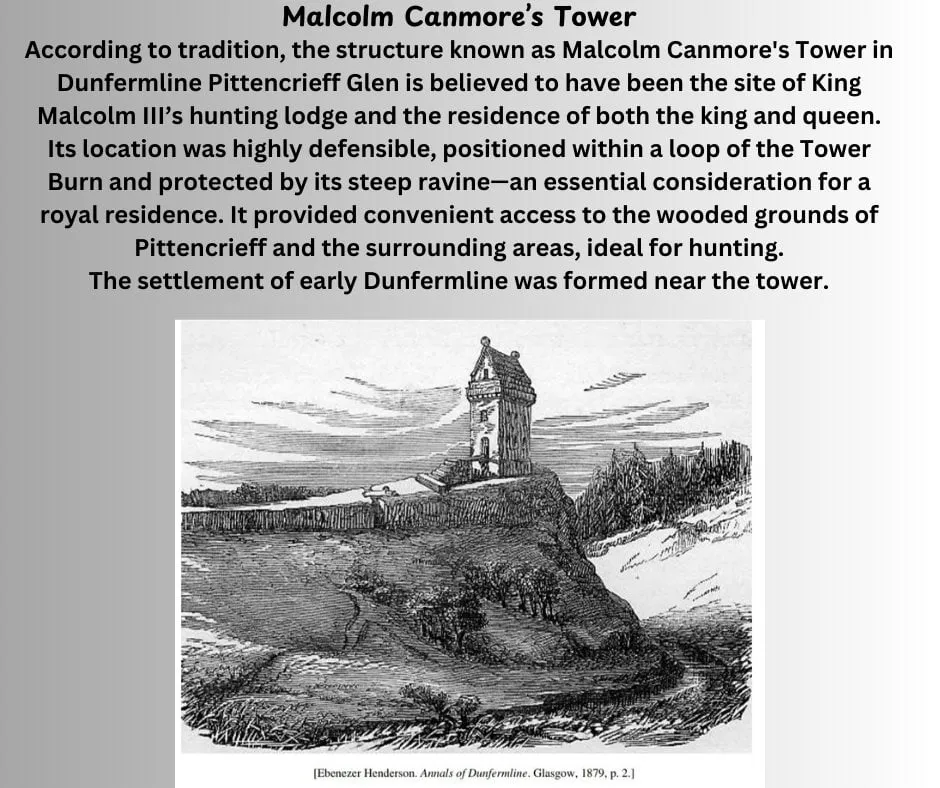
By tradition, Malcolm Canmore’s Tower in Pittencrieff Glen was King Malcolm III’s hunting lodge and royal home, on a site guarded by the steep ravine of the Tower Burn.
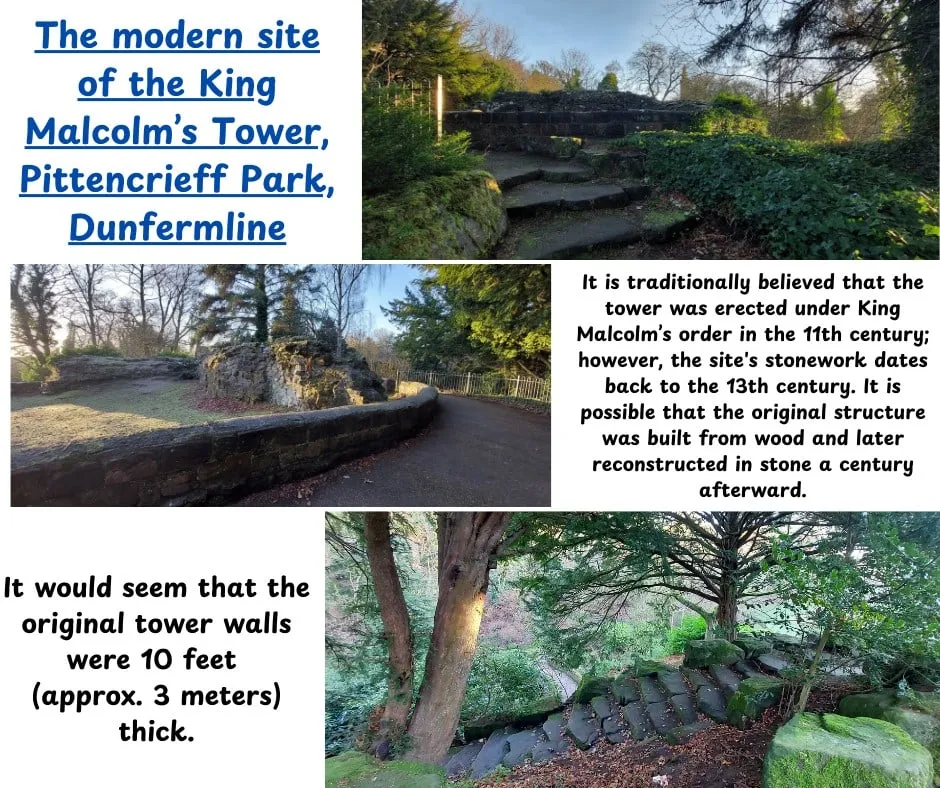
What is left of King Malcolm’s Tower in Pittencrieff Park: stonework thought to date from the 13th century, from walls once about 10 feet thick.
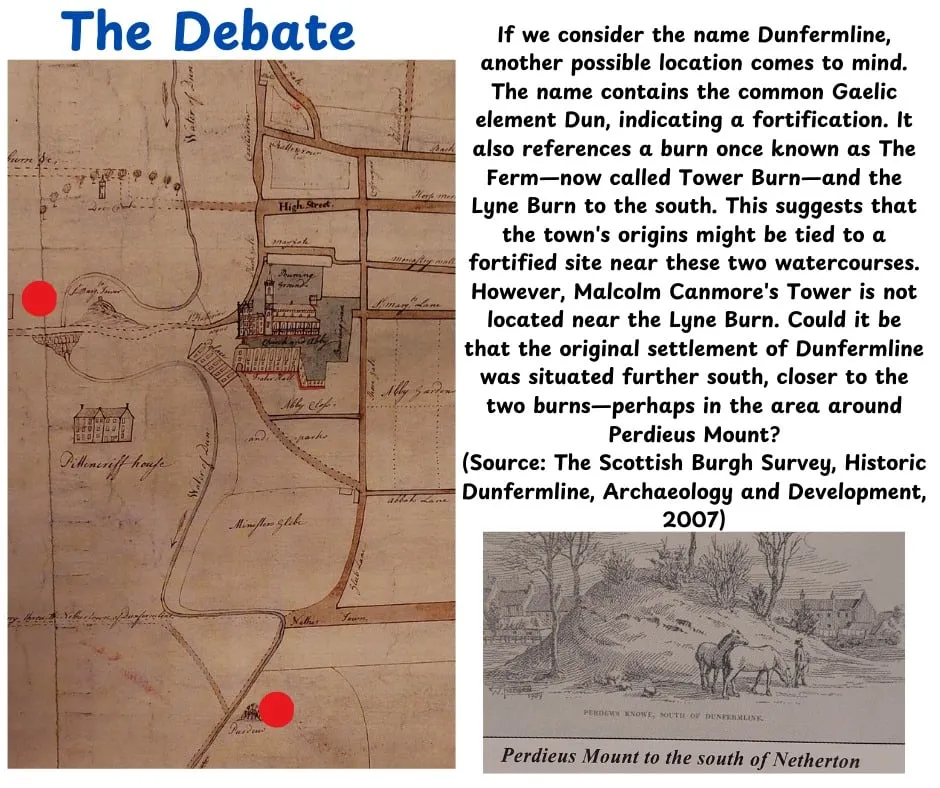
Did Dunfermline begin at Malcolm Canmore’s Tower, or further south near the Lyne Burn and Perdieus Mount? What the name and the old burns suggest.
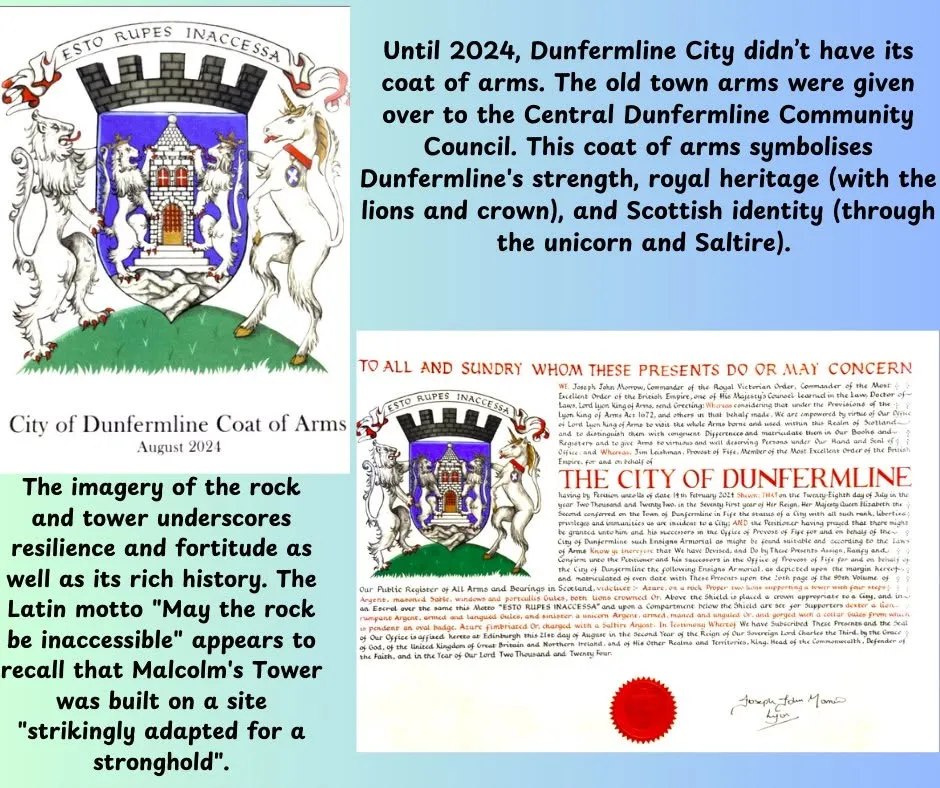
Dunfermline City was granted its own coat of arms in 2024. What the lions, crown, unicorn, Saltire and the rock and tower stand for.
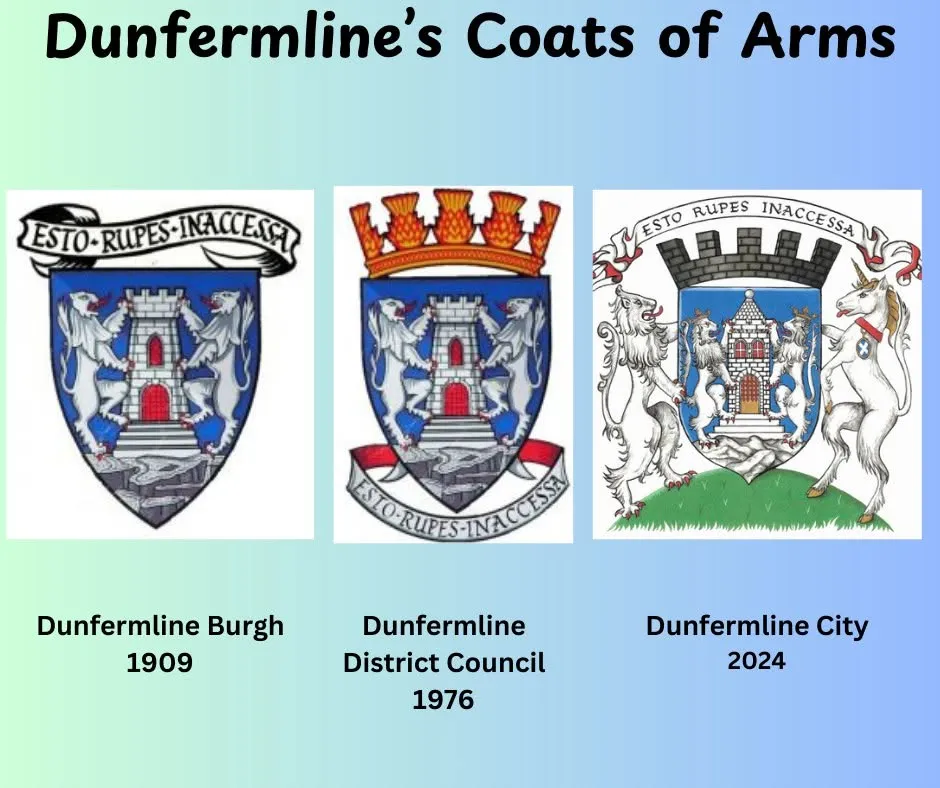
Dunfermline’s coats of arms: Dunfermline Burgh (1909), Dunfermline District Council (1976) and Dunfermline City (2024).
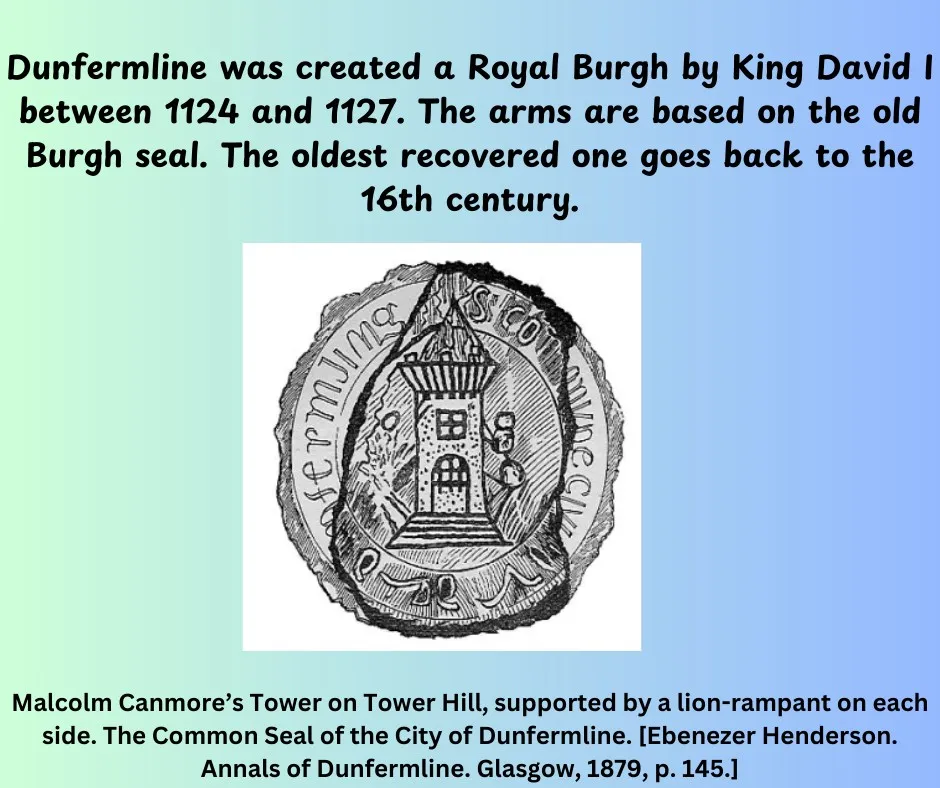
King David I made Dunfermline a Royal Burgh between 1124 and 1127. Its arms come from the old burgh seal, showing Malcolm Canmore’s Tower between two lions.
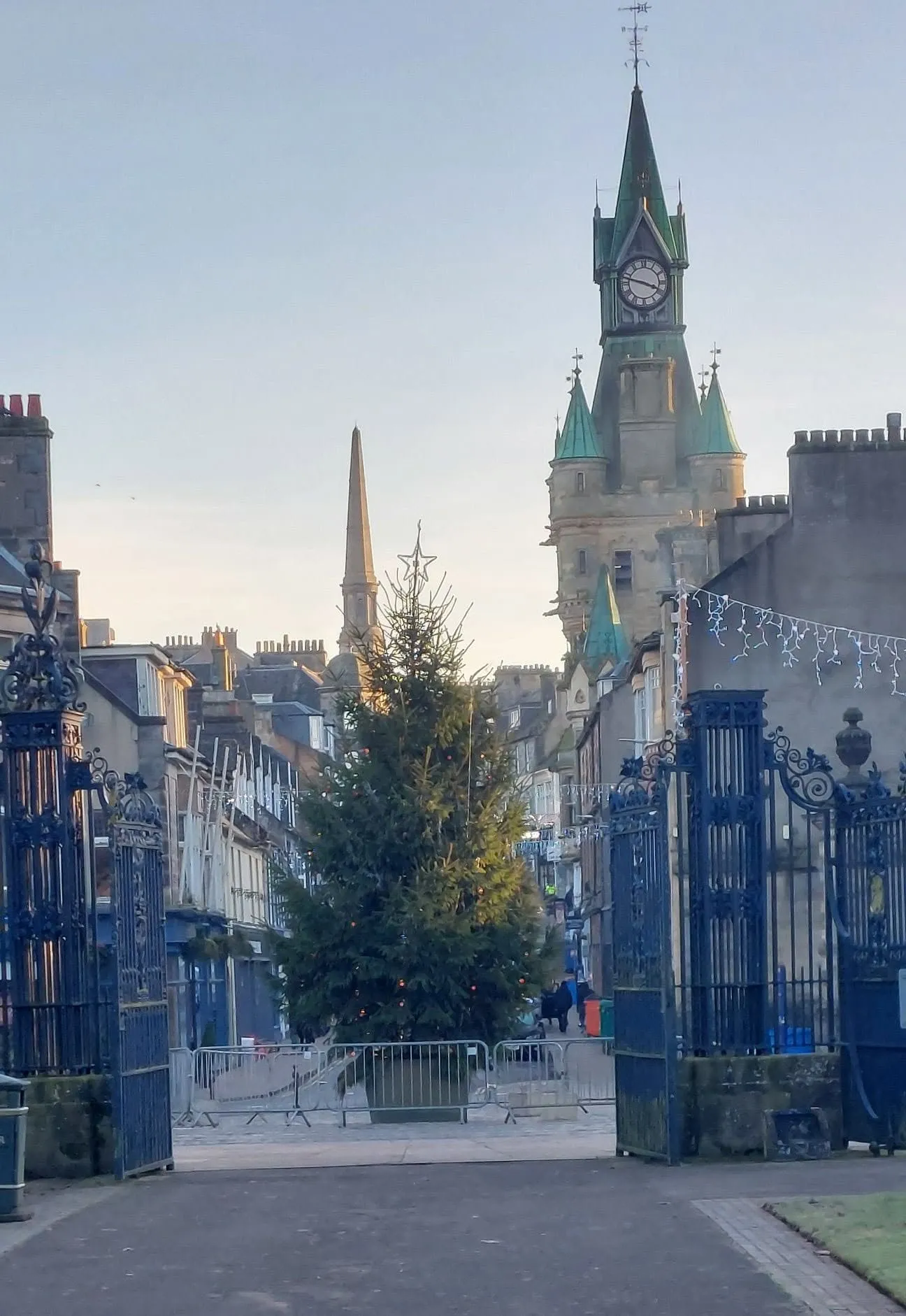
Dunfermline adopted the title of City in 1856 as the old royal capital, but was not officially recognised as a city until 2022.