Historic Dunfermline
The Vanishing Hospital: Dunfermline’s Changing Heart
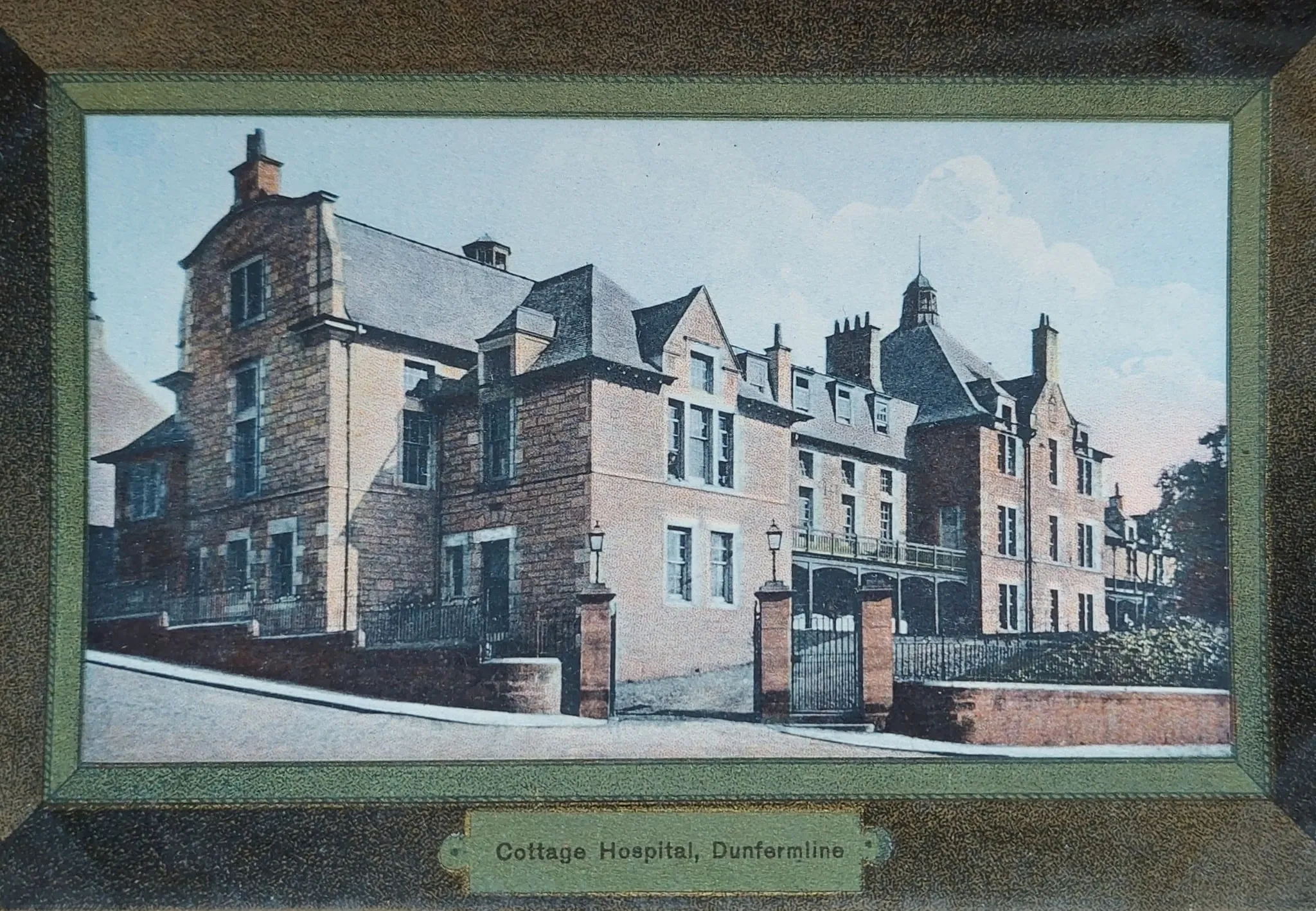
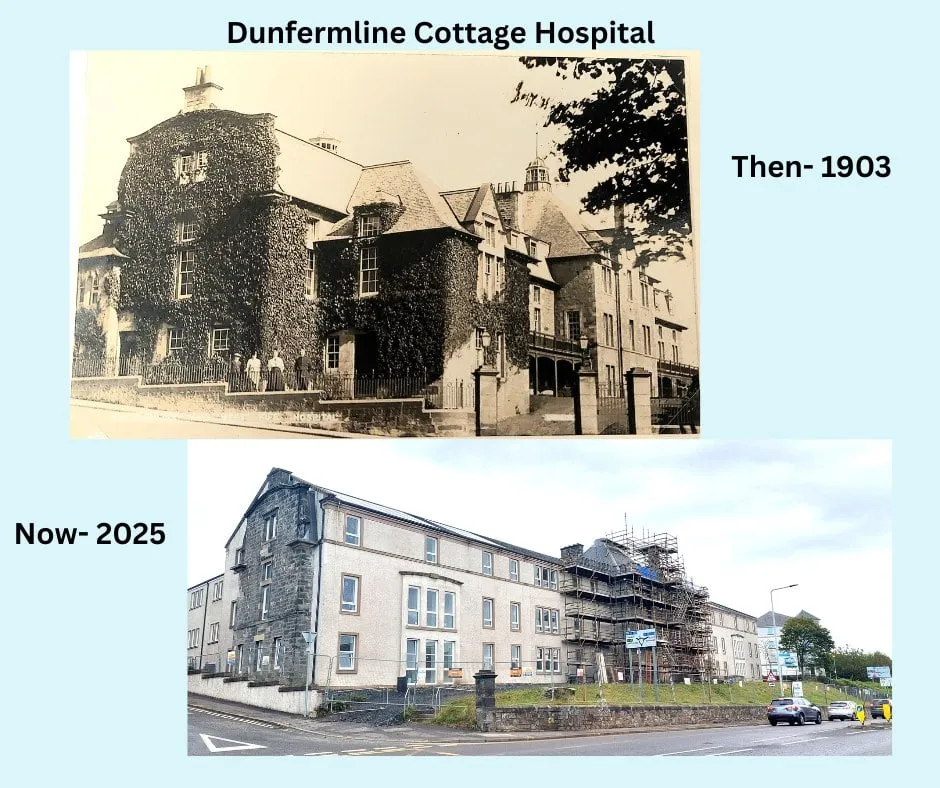
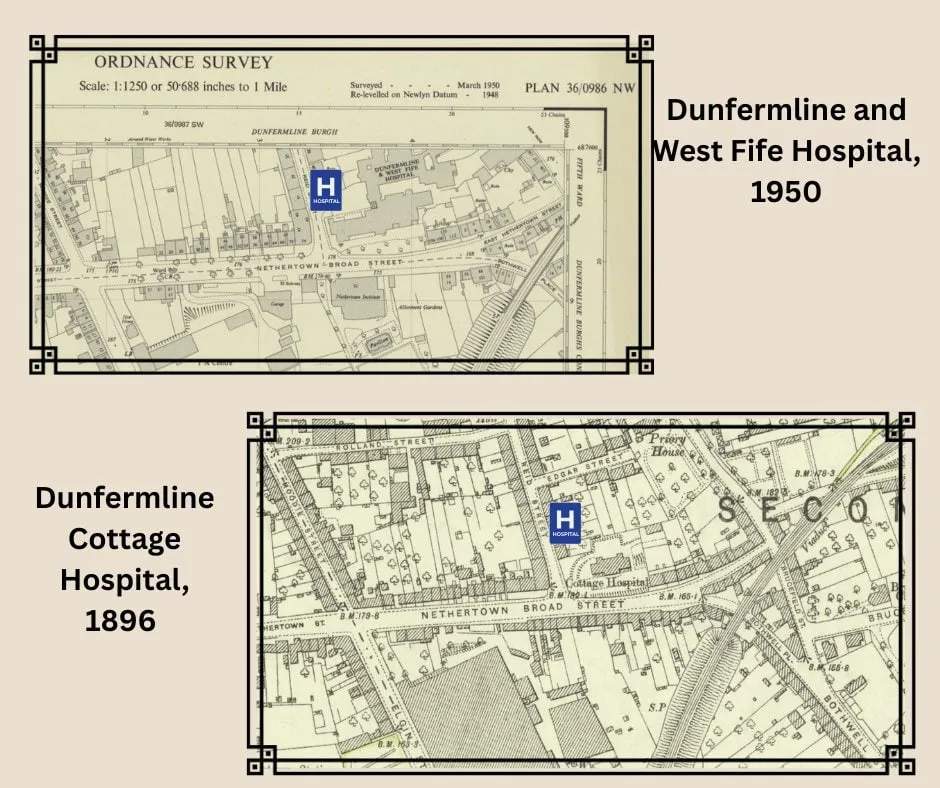
On the corner of Nethertown Street (Edgar Street and Reid Street), another piece of Dunfermline’s history is quietly slipping through our fingers. Where today stands New City House—soon to be transformed into affordable housing—once stood the Dunfermline Cottage Hospital, a place that for a century carried the lives, struggles, and memories of the people of Dunfermline and West Fife.
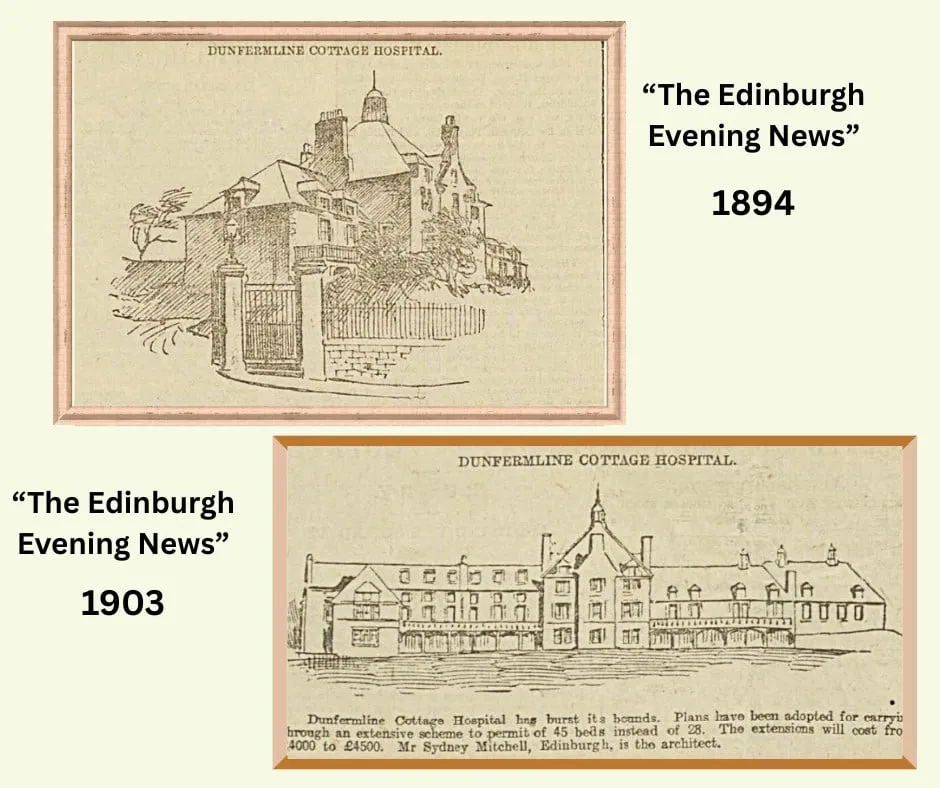
The story began in 1891, when the town council faced a decision: to build a grand combined hospital for the whole district, or a modest cottage hospital designed to meet the urgent needs of a community surrounded by collieries, factories, and mills. Accidents were frequent, and the decision was made to prioritise a small but vital hospital. Supported by public funds, subscriptions from churches and workers’ groups, and generous donations—including a legacy of £1,200 from John Alexander—the Hospital Committee acquired a site on Reid Street and appointed Edinburgh architect Sydney Mitchell to design the building.
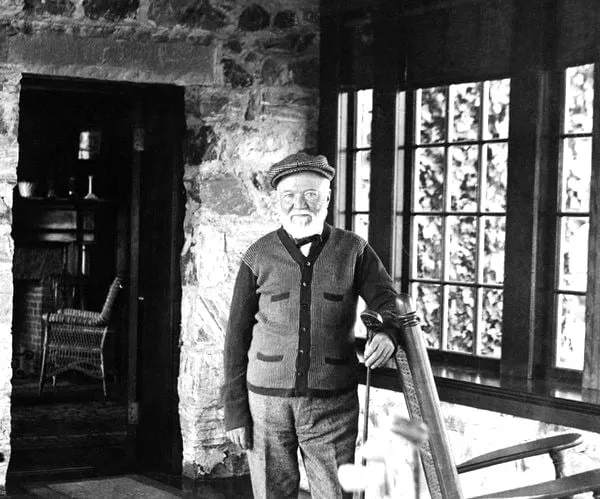
The Dunfermline Cottage Hospital opened in 1894, with just sixteen beds. The hospital was meant to treat patients suffering the consequences of accidents. However, it soon expanded and began admitting patients with infectious diseases only a couple of years later. It was modest in scale, but quickly proved inadequate for the growing demands of the town. Within a few years, more beds were added, and in 1898, the Moray Wing was formally opened by the Earl and Countess of Moray. Furnished through the Moray endowment, it also received an early X-ray machine donated by Mrs Andrew Carnegie. Mr Carnegie’s cousin, George Lauder, contributed $30,000 in steel bonds, ensuring the hospital’s future growth. The furnishings for the new observation block were provided by another Dunfermline citizen, Mrs Smith of Duloch.
Tragedy struck in January 1899, when fire destroyed the upper floor and distinctive dome of the main block. On a Saturday afternoon, flames broke out at the hospital, which then held 29 patients—17 in the main block and 12 in the recently opened Moray Wing. Nurses, doctors, and helpers quickly evacuated everyone, moving many to the nearby observatory block, local houses, or their own homes; fortunately, there was no serious harm. The Burgh Fire Brigade, aided by hoses from Bothwell Linen Works and St Leonard’s Works, managed to contain the blaze to the upper floor of the central block, but the roof and large dome collapsed, destroying staff rooms and nurses’ quarters, with most of their personal belongings lost. The Moray Wing escaped damage, and once the danger had passed, 15 patients were rehoused there. The cause was never confirmed, though it was believed that an overheated flue ignited roof timbers.
The hospital was soon rebuilt under the direction of the main architect, Sydney Mitchell. Over the years, it continued to expand: a further wing in 1904, a major extension in 1931 by local architects Muirhead and Rutherford, and a casualty block in the 1950s. In 1905, the Cottage Hospital was officially renamed the Dunfermline and West Fife Hospital, reflecting its important role and wider service to the district and community.
After the National Health Service Act of 1947, the Dunfermline and West Fife Hospital came under the control of the West Fife Hospitals Board of Management.
The hospital bore witness to lives saved, recoveries made, and the last farewells. Many people still hold the memories: some recall open doors on the balconies with beds pulled out for patients to take in fresh air; others remember innovative procedures such as corneal graft surgery that changed lives. For some, it was the place where they or their relatives were treated, and for many, it was where they spent their last moments with loved ones.
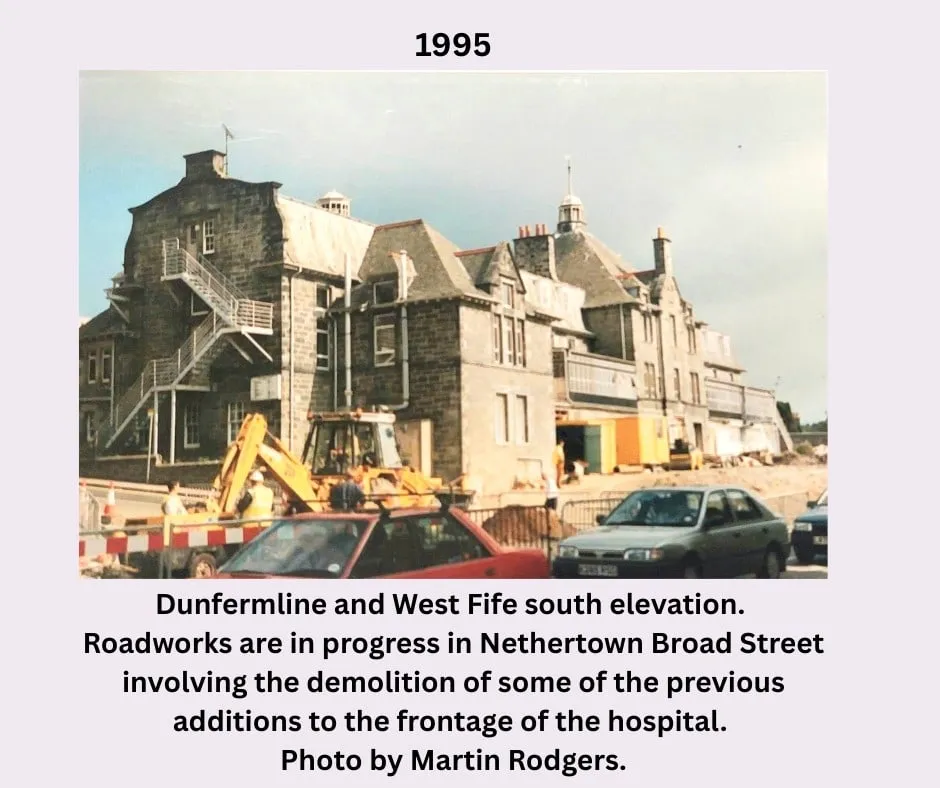
But by 1993, with the opening of Queen Margaret Hospital, the site closed its doors. It was in a poor state, requiring extensive repairs and maintenance. Much of the hospital was demolished, though the original 1894 facade—with its western wall, central elevation, and cupola—was retained when New City House rose on the site in 2004.
Officially opened as a council office, it carried only faint traces of its medical past. The Fife Council did not own the building—the owners were an American pension fund, as reported in the Dunfermline Press in 2023—and the Council had merely been leasing it. When the lease expired, the decision was made not to renew it.
Now, in 2025, even those remnants are vanishing. The Cottage Hospital building never acquired the status of a listed building, and the local authorities have little influence on what happens to it. Kingdom Housing Association has purchased New City House, and work is underway to transform the offices into 32 homes for mid-market rent. The builders say the historic cupola is beyond repair and must go. Soon, only fragments will remain to remind us of what once stood here: the western wall, the central elevation with its dome, and a single pillar out of three, marking where the first entrance for ambulances once stood.
For nearly a century, the Cottage Hospital and its successor shaped the lives of Dunfermline’s people. It began with community generosity—miners, millworkers, landowners, and benefactors alike—and it ended with memories imprinted into the hearts of thousands who passed through its doors.
However, history is slipping through our fingers, and without any reminder or memorial board, future generations—or even the residents of the new block—will never know what once stood there. Preserving memory is not only about saving bricks and stone, but about keeping alive the stories and lives that shaped Dunfermline. Change is an inevitable process in history, but it is memory and records that keep it alive.
(Selected photos courtesy of Dunfermline Carnegie Library.)
Photographs