Historic Dunfermline
Medieval Healthcare in Dunfermline
Today, we enjoy the comforts of modern medicine—easy access to doctors, hospitals, and effective treatments. But for the people of medieval Dunfermline, life was very different. Medical help was hard to come by, and disease claimed many lives. Yet, through these struggles, our ancestors built resilience, strengthened their immune systems, and helped shape the genetic makeup we carry today.
So how did medieval Dunfermline cope with illness, hardship, and disease?
When harvests were good, people could rely on a fairly balanced diet. Town authorities made sure there were enough food supplies, especially in times of need. But even with food on the table, disease still found its way into the town.
Without modern medicine or antibiotics, even minor infections could become deadly. Illnesses like leprosy were widespread across Europe, and Dunfermline was no exception. The contagious nature of leprosy was understood well enough that leper houses were built outside town limits to isolate those affected.
But the disease that caused the greatest fear was the plague—or “pest,” as it was often called. The term “plague” referred to several deadly illnesses, but the most common was the bubonic form. Because medical knowledge was limited, other diseases like typhus may have been mistakenly lumped in under the same name. These often struck after periods of famine, when people’s resistance was low.
The spread of bubonic plague was linked to rats—especially the black rat (Rattus rattus), an imported species that lived indoors and thrived in poorly built wooden homes. With inadequate sanitation, straw-covered floors, and a general lack of cleanliness, conditions were ideal for vermin.
As trade and travel increased toward the end of the medieval period, so too did the arrival of new diseases. One particularly serious outbreak came in the late 1400s with the appearance of syphilis. Whether it was a brand-new illness or simply a variation of an existing one remains uncertain. Regardless, its impact was severe. So much so that King James IV (1488–1513) ordered anyone infected in Edinburgh to be exiled to Inchkeith Island in the Firth of Forth. It’s likely that Dunfermline was not spared.
Life in medieval times was hard and often short. The most vulnerable were unborn children and infants. Many pregnancies ended in miscarriage or stillbirth, and of those born, many did not survive infancy. Studies of tooth enamel suggest children were breastfed for nearly two years, but this meant they lost the protective benefits of breast milk just as they became mobile and more exposed to infections from their environment. Respiratory illnesses and stomach infections were common killers in a world without antibiotics.
Those who survived into middle or old age were often the ones who had developed natural immunity to various diseases. Faced with these challenges, what could people do?
For the most part, care of the sick was left to individuals and families. Herbs were grown and used for their healing properties. Bloodletting and leeching were practiced, but hiring a professional could be expensive and out of reach for most townsfolk.
Despite the difficult conditions, Dunfermline was considered to have relatively good standards of hygiene and health for its time. This may have been due to the strong influence of the Abbey, which helped shape both the practical and spiritual life of the town.
Many towns in medieval Scotland—including Dunfermline—had places referred to as “hospitals.” But unlike the modern idea of hospitals, these were more like a mix of care homes, poorhouses, and spiritual refuges. Often founded by the Church, they cared for the sick, elderly, poor, and travelers. Some may have had simple herbal gardens for making remedies. Leper houses served a specific purpose, providing shelter and isolation for those with leprosy. Pilgrims and wayfarers also found rest and spiritual comfort in these places.
In medieval Dunfermline, there were three main hospitals or care institutions in or near the town. The Abbey had its own infirmary, though it was likely intended only for the monks and clergy who lived and worked within its grounds. Just outside the East Port stood an almshouse, which may have offered shelter and basic care to the poor or elderly. Another institution was linked to St Catherine’s Chapel, located in what is now St Catherine’s Wynd; this almshouse was granted the chapel in 1327 and likely provided limited support to the town’s needy, before being demolished and later rebuilt before 1420. The third, and perhaps the earliest, was the Hospital of St Leonard—traditionally believed to have been founded by Queen Margaret and King Malcolm. It served as a leper hospital and was situated near the area of St Leonard’s School.
(Ref. E. Patricia Dennison “Living in Medieval Dunfermline”)
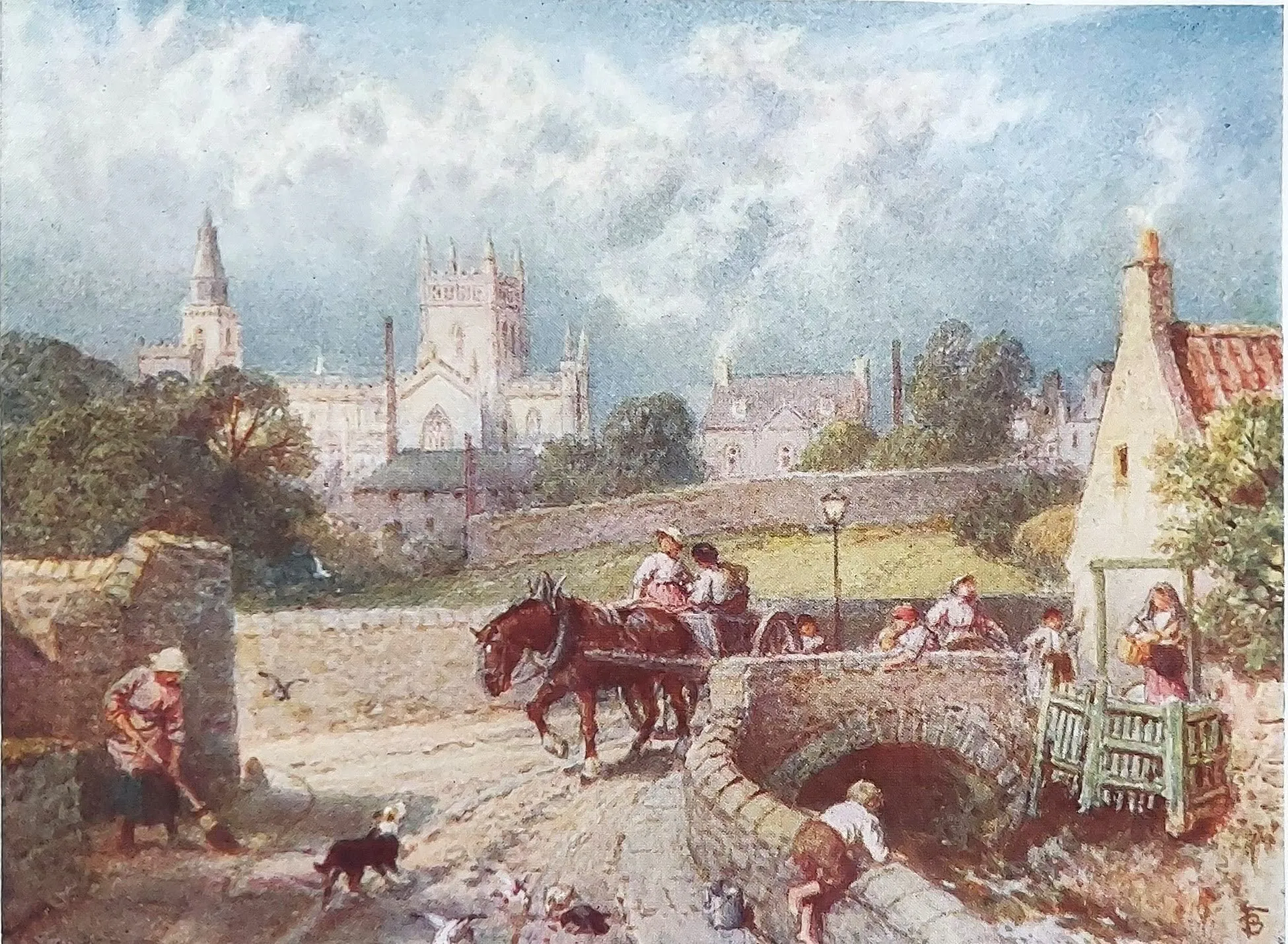
Image: Myles Birket Foster, Dunfermline Abbey.