Historic Dunfermline
Dunfermline on a Renaissance Map in Florence
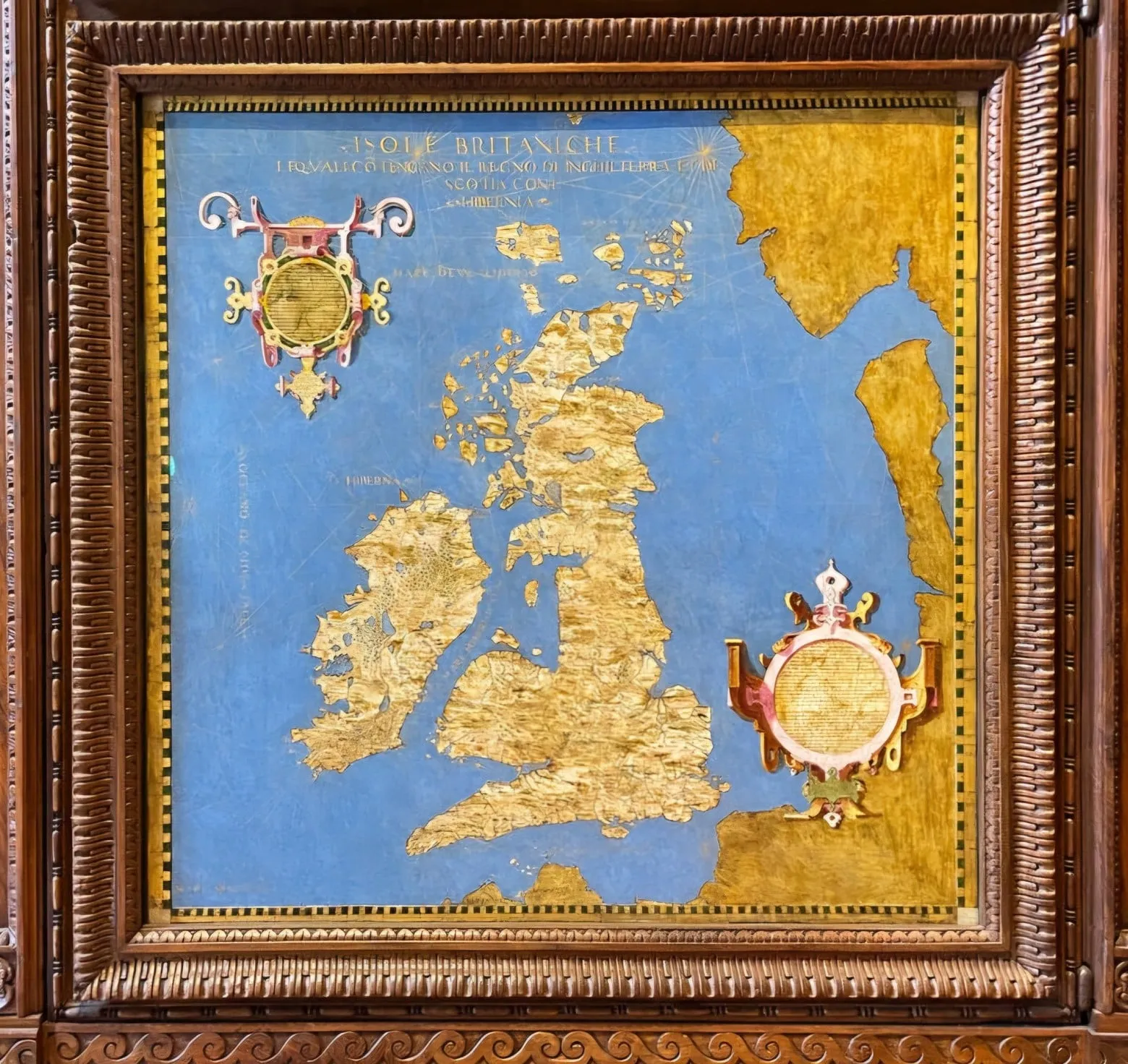
Did you know that the map of Britain in the Medici Map Room in the Palazzo della Signoria in Florence by Ignazio Danti confirms that in medieval times, Fife was very much on the tourist route for pilgrims visiting the shrine of St. Margaret in Dunfermline and the remains of St. Andrew in St Andrews?
Ignazio Danti’s beautifully detailed map of Britain, painted around 1565 for the Medici rulers in Florence, offers more than just a geographical view — it subtly captures the major religious and pilgrimage centers that shaped medieval travel. Fife, in particular, stands out. Danti clearly highlights St Andrews, long recognized across Europe as the resting place of the apostle’s relics and a major pilgrimage destination. While Dunfermline may not be prominently named on the map, its spiritual importance is unmistakably implied.
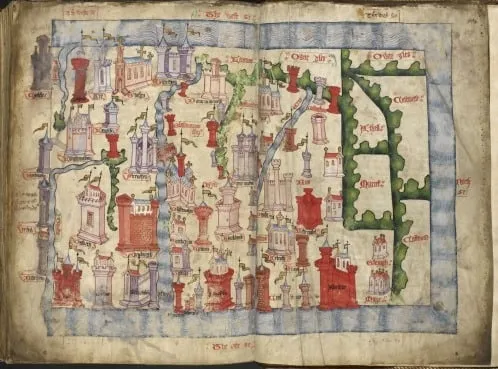
However, the earliest surviving detailed map of Scotland was compiled by John Hardyng, who was born in 1377 or 1378, probably in Northumberland, and lived most of his life during the Hundred Years’ War between England and France. Hardyng is best known for his verse Chronicle of the history of Britain, in which he set out his fervent belief in the right of English kings to rule over Scotland. He was so determined to prove his case that he forged a series of documents purporting to provide corroborating historical evidence.
In 1457, Hardyng presented the first version of his Chronicle to King Henry VI of England as part of a failed attempt to instigate an invasion of Scotland. The Chronicle is accompanied by a colourful map, spread across two pages, which depicts a very rectangular Scotland with the west at the top. Hardyng likely drew on his earlier years of reconnaissance in Scotland when compiling his map. It includes much more topographical information and many more towns across Scotland than earlier surviving maps. The castles and town walls are remarkably varied, while in Glasgow and Dunfermline, churches are drawn instead.
Source: https://blogs.bl.uk/
Photographs